
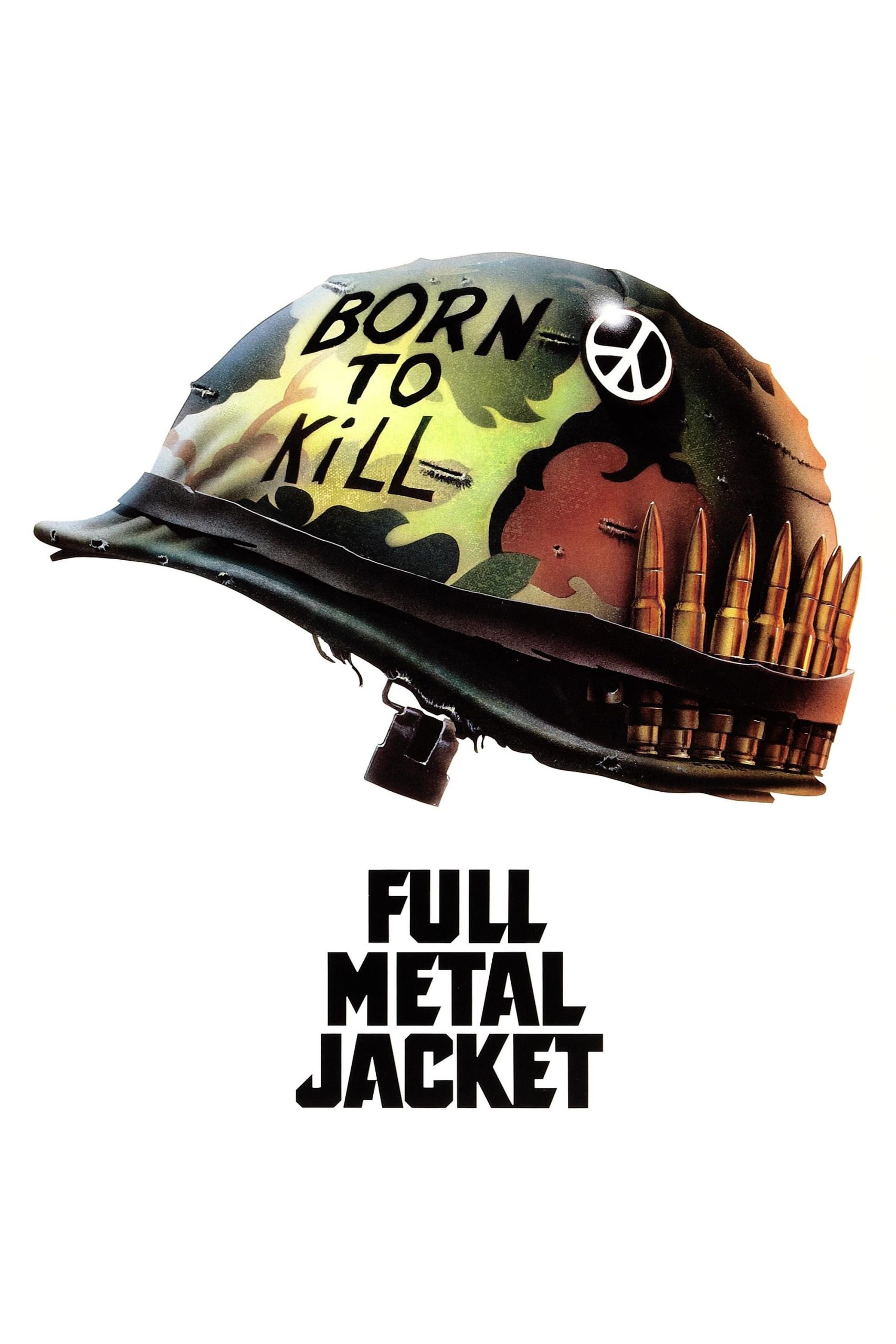
It’s difficult for me to watch Full Metal Jacket without being thrown back to late evenings in my twenties, when I first chanced upon it alone on television. The harsh fluorescence of Stanley Kubrick’s Vietnam, punctuated by brutal humor and sudden violence, lodged deep in my memory as something distinct from every other war film I’d encountered. There was no redemptive heroism, no swelling orchestral triumph. Instead, an unrelenting honesty pervaded every frame, and I found myself both repelled and strangely captivated. What fascinates me most is the chilling precision with which it maps the psyche—not just of its characters, but of a whole era’s wounded masculinity and moral confusion.
What the Film Is About
On its surface, Full Metal Jacket documents the journey of young marines from the dehumanizing grind of boot camp to the chaos of urban warfare in Vietnam. But it’s not the orderly progression or even the historical backdrop that matters most to me: it’s the sense of spiritual corrosion, the profound loss of individual identity that each character endures as they confront both institutional cruelty and the war itself. There’s a duality running through the movie—a split between public bravado and inner fear—that Kubrick exposes with unwavering clarity.
I’ve always felt that the central conflict is less about the Americans versus the Vietcong, and more about what remains of the self after such relentless indoctrination and violence. Through Private Joker and his fellow soldiers, the film probes at the ways war mutates notions of morality, camaraderie, and manhood. It’s a story about the high price of survival, the psychic rift between play-acting and reality, and the inescapable sense that the enemy is not just “out there,” but within.
Core Themes
The idea of identity—how it’s constructed, obliterated, or weaponized—is one of the themes I find most compelling. From the enforced uniformity of the recruits in Parris Island to the ways in which each soldier crafts a hardened mask in combat, the film’s obsession with the fragility of the self feels almost prophetic. Released in 1987, as America was still processing the traumas and failures of the Vietnam War, Kubrick’s film pierced through public silence with its portrayal of institutional power eroding individuality. That theme resonates as powerfully today, in an era obsessed with identity, conformity, and resistance.
Another dominant theme is the dehumanizing machinery of modern warfare. Every aspect, from the relentless berating by Gunnery Sergeant Hartman to the industrial brutality of urban combat, illustrates how people are systematically stripped of empathy. Kubrick suggests that war is not just fought with bullets and rifles, but with the slow, methodical crushing of spirit and conscience. Watching it now, I see parallels in contemporary discussions about toxic masculinity and systemic violence—themes that, astonishingly, have lost none of their relevance.
Symbolism & Motifs
What sets this film apart in my view is the recurring visual and auditory motifs that subtly reinforce its messages. The duality motif is perhaps the most potent: Private Joker’s helmet marked “Born to Kill” juxtaposed with a peace sign pin is an image that lingers—a portrait of inner conflict, cynicism, and fractured ideology. To me, this small artifact captures the entire film’s argument about the contradictions of war and human nature.
There’s also the constant evocation of animalistic imagery: marines made to crawl, bark, and behave like creatures, as if their humanity is being systematically dismantled. Even the relentless cadence drills become a kind of ritualistic chant, stripping individuality in favor of tribal belonging. The use of music—whether the ironic cheer of “Surfin’ Bird” or the ghostly refrain of the “Mickey Mouse March”—serves as an unsettling counterpoint, highlighting the absurdity and horror of violence dressed in the garb of normalcy.
Key Scenes
The Breaking Point: “This is my rifle. There are many like it, but this one is mine.”
I cannot discuss Full Metal Jacket without mentioning the iconic boot camp sequence, especially when Private Pyle recites the Rifleman’s Creed. The mechanical rhythm of his voice alongside the haunting visuals of uniformed recruits hammers in the loss of self. This moment is crucial because it establishes the film’s central question: Who do we become under unyielding pressure? Watching Pyle’s transformation is as tragic as it is inevitable—one of the purest visual expressions of dehumanization I’ve encountered in cinema.
Unpredictable Violence: The Traumatic Night in the Barracks
The scene in which Pyle exacts violence upon Sergeant Hartman and himself is, for me, where the film’s emotional stakes crystallize. Kubrick carefully builds to this explosion, making it inevitable yet shocking. This moment isn’t just about personal breakdown; it’s about the system devouring its own. The fluorescent-lit bathroom, the slow movements, the echoing gunshots—these images stay with me, underscoring how the line between victim and perpetrator can blur in the crucible of indoctrination.
The Urban Mire: The Sniper in the Ruins
Late in the film, the encounter with the Vietnamese sniper in the bombed-out city serves as a final test for Joker and his platoon. In this grim dance of predator and prey, Kubrick brings every earlier theme to fruition. With the death of the sniper—revealed to be a young girl—the façade of macho posturing shatters. This choice, to linger on the face of the mortally wounded enemy, is what sets Kubrick apart: he forces us to confront the cost, stripping away illusion. Joker’s ultimate choice is not clean, not triumphant—just another scarlet knot pulled into his mind’s fabric.
Common Interpretations
Critics frequently focus on the duality of man, the film’s anti-war stance, or Kubrick’s clinical eye for detail. Reviews often dissect the film into two discrete halves—boot camp as a miniature hell, and Vietnam itself as a fever dream of moral chaos. While I see value in this bifurcation, I’ve always been struck by the continuity: the same machinery and indifference that breaks Pyle is at work wherever these men go. The biggest divergence in my view is that, for many, the film’s coldness is a flaw; but for me, it’s a warning. By refusing catharsis or simple moral resolutions, Kubrick allows us to see a larger truth about the systems we inhabit—military or otherwise.
Some critics have lamented the lack of emotional engagement in the second half, claiming that the film loses its focus after the unforgiving precision of the boot camp. I find instead that this narrative dissolution mirrors the chaotic world the soldiers inhabit. Vietnam, in its disarray, becomes a mirror for the fragmented psyche—a creative risk that pays off as a more honest reflection of war’s legacy.
Films with Similar Themes
- Apocalypse Now – Like Full Metal Jacket, this film interrogates the madness and moral absurdity of Vietnam, tracing the unraveling of identity in the shadow of institutional power.
- Platoon – Stone’s searing portrait of conflict and camaraderie echoes Kubrick’s focus on the psychic toll of war and ethical ambiguity.
- The Deer Hunter – This film likewise examines how violence and war reshape men, both abroad and at home, probing the cost of survival and the inability to return unchanged.
- Paths of Glory – An earlier Kubrick work, it explores military authority, dehumanization, and the senselessness of war with the same icy clarity present in Full Metal Jacket.
Final Thoughts on a Lingering Nightmare
To approach Full Metal Jacket today is to grapple with more than just its Vietnam setting or legacy; it’s to question how much of our inner self is surrendered to the demands of society and conflict. The film remains urgent because it doesn’t offer tidy answers or moral comfort, insisting that we examine the roots of cruelty and the fragile boundaries of identity. Reflecting on this story in today’s landscape, I’m reminded that great films don’t just depict history—they challenge us to confront our own complicity and blindness.
If you found value in my perspective, you might also enjoy exploring my thoughts on other cinematic landmarks such as Apocalypse Now and Paths of Glory.
To broaden this interpretation, you may also explore how critics and audiences responded over time.
🎬 Check out today's best-selling movies on Amazon!
View Deals on Amazon