
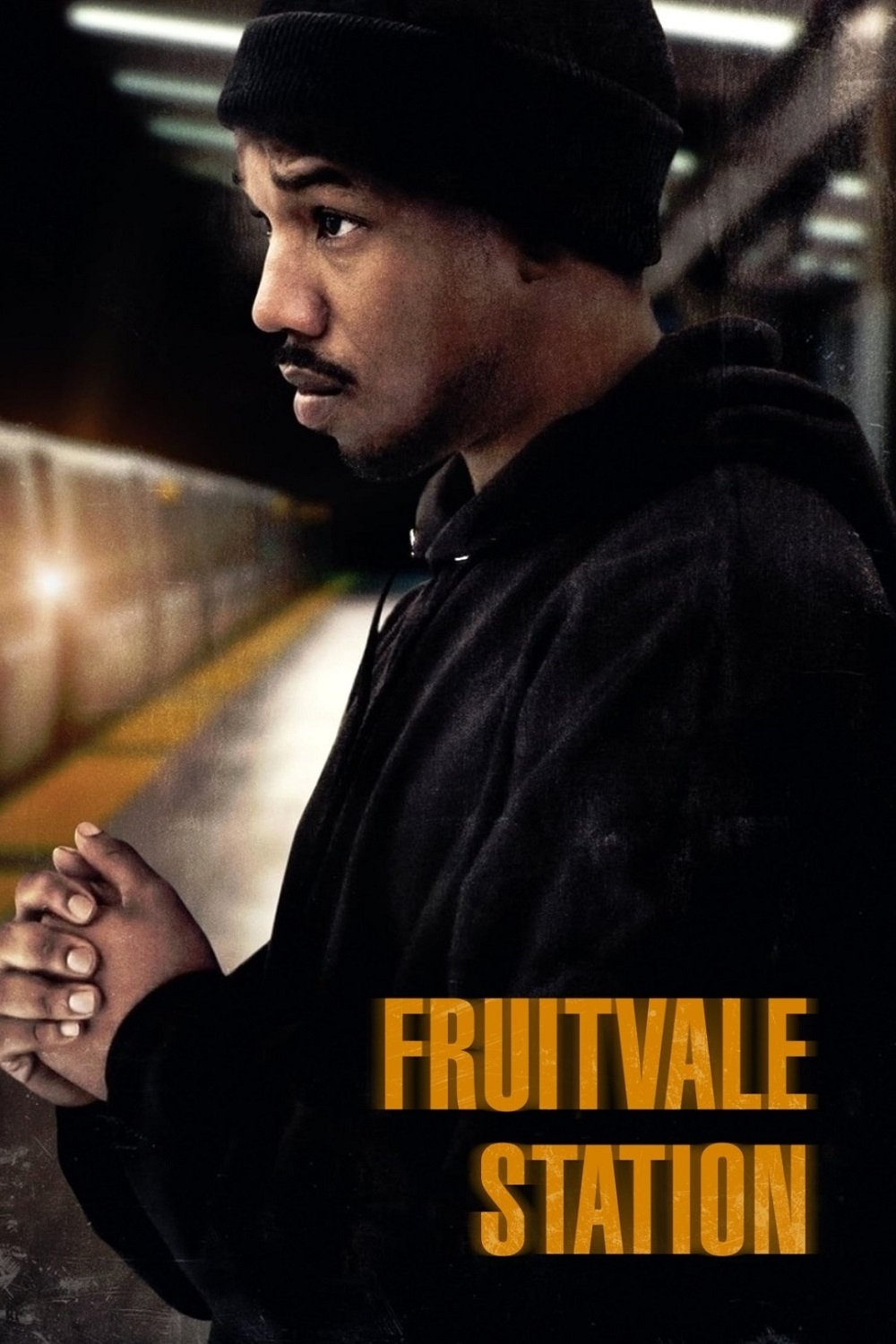
The Morning That Lingers Long After
Every time I watch Fruitvale Station, I wake up the next morning with a heaviness that doesn’t quite dissipate, as if the world has suddenly become more fragile and precious. I can’t recall another film that so ruthlessly strips away the distance between audience and subject; there’s no room for complacency, no comfort in the worn-out idea that tragedies like Oscar Grant’s will always belong to someone else, somewhere else. The film doesn’t just tell me about injustice—it forces me to feel its ceaseless grip, to reckon with the randomness that turns ordinary moments into seismic ruptures. This is less a biopic and more an elegiac meditation on how a life, brimming with contradictions and hope, becomes a rallying cry against oblivion.
One Day as a Universe: The Compression of Fate
What strikes me most about Ryan Coogler’s vision is his determined focus on the span of a single day. So much of cinema stretches time, pushes us through months and years in the blink of an edit, but here, the mundane is elevated to mythic proportions. Every minor choice Oscar makes, every conversation, every glance, is imbued with the unspoken knowledge—shared only between filmmaker and audience—that these are his final hours. This technique doesn’t manipulate my emotions so much as it implicates me. I find myself searching for cosmic signs, for some sliver of hope that this trajectory might swerve, that history might crack open and release Oscar from its grip. The film dares me to see the quiet poetry in the ordinary, to witness how fate isn’t always the product of grand gestures, but emerges from the granular fabric of daily existence.
Intimacy as Defiance: The Value of Unfiltered Lives
Coogler’s approach is radical in its insistence on showing Oscar as neither a saint nor a sinner, but as achingly, recognizably human. The film’s greatest act of resistance is its refusal to reduce Oscar to an icon or a statistic. Instead, I am made complicit in his life’s rhythms—the affectionate teasing with his girlfriend Sophina, his conflicted tenderness towards his daughter Tatiana, and even his moments of ambiguity and regret. By sketching out the full spectrum of Oscar’s personality, the film shatters the binary narratives that so often flatten stories like his into digestible headlines. The intimacy feels almost transgressive; I come to understand that empathy, here, is revolutionary. It’s not that Oscar “deserves” to be remembered because he was perfect—he deserves to be remembered because he lived.
The Echo of Surveillance: Cell Phones, Memory, and Bearing Witness
I can’t shake the image of spectators at Fruitvale Station holding up their cell phones, recording the chaos as it spirals toward its unimaginable conclusion. This motif of bearing witness feels eerily prophetic, a meditation on how stories of violence circulate and mutate through digital eyes. The film suggests that the act of recording becomes both evidence and eulogy—an attempt to assert truth in a world eager to rewrite or erase it. I am forced to confront my own complicity as a spectator: Am I a witness or a voyeur? Do I honor Oscar’s memory by replaying his final moments, or does that freeze him in the agony of his last breath? The film blurs these boundaries, leaving me unsettled and painfully aware that technology, for all its promises, cannot shield us from loss or injustice.
Motherhood Amidst the Maelstrom
Octavia Spencer’s performance as Wanda, Oscar’s mother, devastates me in ways I don’t often find in cinema. There is a quiet ferocity to her love, a sense of maternal vigilance that refuses to yield to cynicism or despair. Through Wanda, the film explores the generational weight of trauma and the impossible calculus parents perform in trying to keep their children safe in an unpredictable world. When she asks Oscar to take the train to San Francisco instead of driving, her plea seems both mundane and fateful—one casual comment rippling outward to alter the course of so many lives. For me, this thread in the film is a reminder that the personal always collides with the political; survival is never just an individual struggle, but a family’s daily act of courage.
The Sound of Unfinished Conversations
The dialogue in Fruitvale Station is deceptively simple, but I find myself haunted by the things left unsaid, the words cut off by time and tragedy. The power of the film lies in its unfinished sentences, the sense that Oscar’s story is only a fragment of a much larger, ongoing conversation about race, justice, and human dignity in America. I hear echoes of pain and resilience not just in Oscar’s words, but in the silences that follow them—the hesitant apologies, the awkward laughter, the longing for redemption. Watching these moments, I am reminded that closure is a privilege denied to so many. The film leaves me suspended in that space of uncertainty, where grief and hope coexist uneasily.
The Unbearable Weight of Realism
There’s an unrelenting authenticity to Coogler’s direction that keeps me from slipping into comfortable detachment. The film’s handheld camerawork, natural lighting, and non-professional extras all serve to collapse any barrier between fiction and reality. This realism is not an aesthetic flourish, but a deeply ethical choice—one that insists the audience cannot look away. In the everydayness of Oscar’s life, I recognize echoes of people I know, neighborhoods I’ve walked, moments I’ve cherished or overlooked. The film’s artistry lies in its refusal to dramatize the violence—when it comes, it is abrupt, almost anti-cinematic, rendered with a matter-of-fact brutality that makes it all the more horrifying. There is no catharsis here, only the ache of recognition.
What Remains When the World Moves On
After the credits roll, I find myself haunted by the ordinariness of Oscar Grant’s existence, and the enormity of what is lost when a life is cut short by violence. The film is not an elegy for a perfect victim, but a rallying cry for the sanctity of everyday lives, especially those pushed to the margins by systemic indifference. I can’t separate the film’s artistry from its activism; each feeds the other, turning Oscar’s story into a canvas for empathy, anger, and—perhaps most crucially—remembrance. Fruitvale Station doesn’t offer me easy answers or neat resolutions. Instead, it demands that I bear witness, that I hold this grief in my chest and allow it to change the way I see the world.
If This Film Resonated With You
For anyone as deeply moved by Fruitvale Station as I am, two classic films come to mind—each exploring the collision between ordinary lives and immense social forces, each refusing to look away from injustice:
- Do the Right Thing (1989)
- The Bicycle Thief (1948)
If you’re curious about how this film was originally perceived or how it compares to similar works of its era, these resources may be helpful.
🎬 Check out today's best-selling movies on Amazon!
View Deals on Amazon