
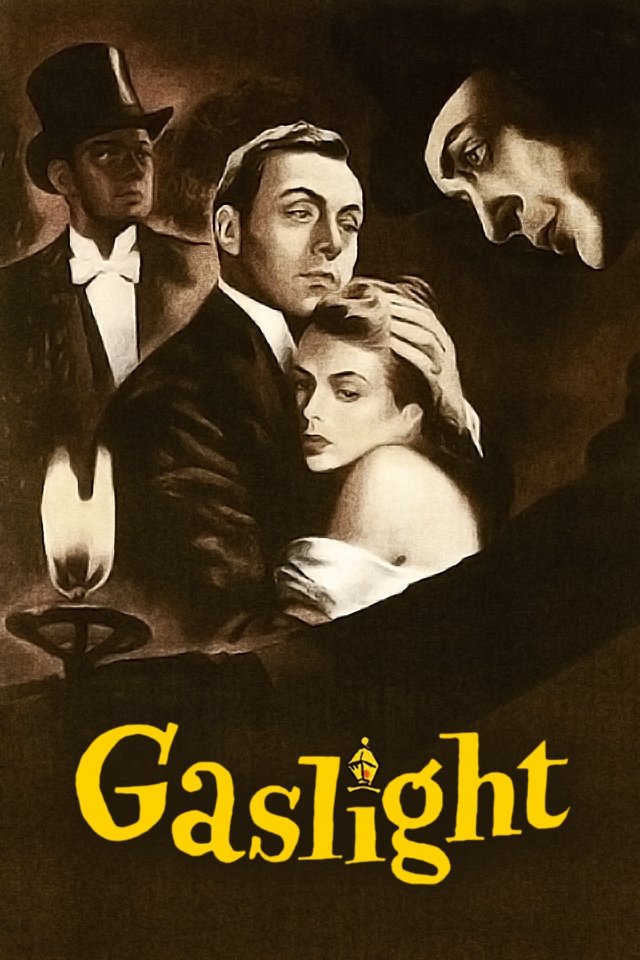
The Flicker of Doubt: My Immersion into Gaslight’s Dark Corridors
My first encounter with “Gaslight” left me unsettled, not just by the tension at its surface, but by the quiet, creeping sense of psychological unease that lingered hours after the credits faded. I felt as if a thin film had settled over my perception—a trace of the film’s singular intent, which was never just about a crime or a straightforward unraveling. “Gaslight” isn’t merely a period thriller; it’s a relentless excavation of trust, memory, and the terrifying fragility of reality itself. I found myself questioning not just the protagonist’s grasp on her world, but my own ways of negotiating certainty and doubt. That, to me, is the film’s most enduring haunt: it’s about what happens when someone begins to doubt their very senses.
When Love Becomes a Trap: The Poison of Manipulation
Watching Ingrid Bergman’s Paula spiral in “Gaslight,” I realized early on that the marriage at the film’s core is not a union but a prison. The film’s director, George Cukor, crafts a world where affection and control bleed into each other, leaving Paula isolated in a web spun with calculated deceit. What I find most chilling isn’t the overt violence, but the incremental erosion of Paula’s autonomy. Each gentle correction from her husband—each misplaced object, each faint flicker of the gaslights—builds a fortress of self-doubt around her. I have rarely seen a film so adept at turning the intimacy of domestic life into a source of psychological dread. Cukor’s lens lingers on the ordinary—lamplight, mirrors, a brooch—and transforms them into instruments of torture, flattening Paula’s reality into something pliable and dangerous.
Artifacts of Doubt: The Language of Objects
Every time the lights dim in the Allingham house, I sense not just fear, but a subtle, coded message. The house itself becomes a living map of Paula’s mental state. Objects vanish or reappear, carrying enormous symbolic weight. That infamous brooch isn’t simply an accessory; it’s a lodestone for Paula’s unraveling confidence. The painting, the letter, even the gaslights themselves—all become silent witnesses to her torment. What strikes me most is how the film weaponizes these seemingly trivial objects. They carry the audience along Paula’s journey, forcing us to interpret and reinterpret reality alongside her. The audience, complicit in her confusion, is made to ask: how much of what we see can we trust?
Sound and Silence: The Film’s Invisible Hand
One of the more insidious elements of “Gaslight” is its use of sound—not as mere accompaniment but as an agent of destabilization. The footsteps in the attic, the echo of a distant voice, the low, constant hiss of the gaslights—these are not just effects, but direct assaults on the sanctity of Paula’s mind. I’ve found myself listening as intently as watching, attuned to every creak and whisper that signals another phase in her psychological breakdown. Silence, too, becomes loaded with menace. The pauses between words, the spaces between notes, give the sense that something monstrous is lurking just out of sight. It’s as if the house itself conspires with Gregory, absorbing and amplifying his manipulations.
The Mastery of Ingrid Bergman: A Shifting Identity
I cannot write about “Gaslight” without reflecting on Ingrid Bergman’s performance, which remains for me one of the most subtly harrowing in all of classic film. Bergman’s expressive eyes telegraph a desperate hunger for affirmation, but also a flickering defiance that refuses to die out completely. Paula’s vulnerability is never played for pity. Instead, Bergman imbues her with an authentic, frustratingly human tenacity. I see her struggle not just to recall facts, but to hold onto her sense of self. For me, this is the crux of “Gaslight”—the slow grinding-down of identity under the weight of another’s will. It’s a cautionary tale about the dangers of invalidation, of the slow violence that can occur when another person usurps one’s reality.
Society’s Silent Complicity: The Locked Doors of Victorian Respectability
Each time I return to “Gaslight,” I’m struck by its incisive portrait of a society that enables and perpetuates abuse. The neighbors, the servants, even the police all seem constrained by the social norms of the era—a structure that privileges decorum over truth. The film critiques not just personal manipulation, but the way institutions and communities can become enablers through inaction or disbelief. Paula’s desperation is magnified by her isolation; her cries for help are muffled by the thick curtains of propriety. Watching this, I can’t help but reflect on how societal expectations can be as imprisoning as Gregory’s schemes. The house’s locked doors and shuttered windows are more than literal—they are metaphors for the barriers erected by custom and fear of scandal.
The Gaslight as a Metaphor: The War on Perception
The titular gaslight has become a cultural shorthand for manipulation, but I’m always struck by how precisely the film explores this metaphor. Every time the flames dim, it signals more than a shift in voltage; it is an assault on Paula’s ability to trust her own senses. The gaslight is a pulse, a signal of something amiss, urging both Paula and the audience to question what they’re being shown. The slow, deliberate dimming of the lamps—timed to Gregory’s secret excursions—works on Paula’s psyche until she is primed to believe anything he says. I see this as a larger commentary on the human need for validation: how, deprived of it, our reality can be manipulated by those who wish to control or exploit us. In this way, the film’s message transcends its plot, speaking to anyone who’s ever doubted their own instincts under the influence of another.
Redemption and Reckoning: The Shattering of Illusions
Though the film builds a nearly unendurable atmosphere of oppression, I always find catharsis in its final act. The turning point is not just the exposure of Gregory’s guilt, but Paula’s reclamation of her agency. The moment she understands the scope of her husband’s deception, there is an almost physical sense of release—both for Paula and for me as a viewer. This isn’t a simple triumph, but a hard-won reconstitution of the self. The world does not restore itself to order; Paula’s wounds are real and lasting. But her ordeal becomes a testament to the resilience of identity, even when battered by relentless psychological assault. I read the ending as a statement about healing: trust and selfhood can be rebuilt, but only after confronting the full extent of the damage.
Kindred Shadows: Films That Echo Gaslight’s Psychological Complexity
If “Gaslight” leaves you, as it does me, hungry to explore more films that delve into the darkness of perception and the fragility of the mind, I recommend seeking out two classics. First, “Rebecca” (1940), which envelops its protagonist in an equally insidious web of doubt and haunted memory. Second, “Notorious” (1946), another Ingrid Bergman vehicle, which navigates the blurred lines between trust, betrayal, and self-discovery with similar intensity. Both films, like “Gaslight,” probe the shadowy spaces where love and control collide.
If you’re curious about how this film was originally perceived or how it compares to similar works of its era, these resources may be helpful.
🎬 Check out today's best-selling movies on Amazon!
View Deals on Amazon