
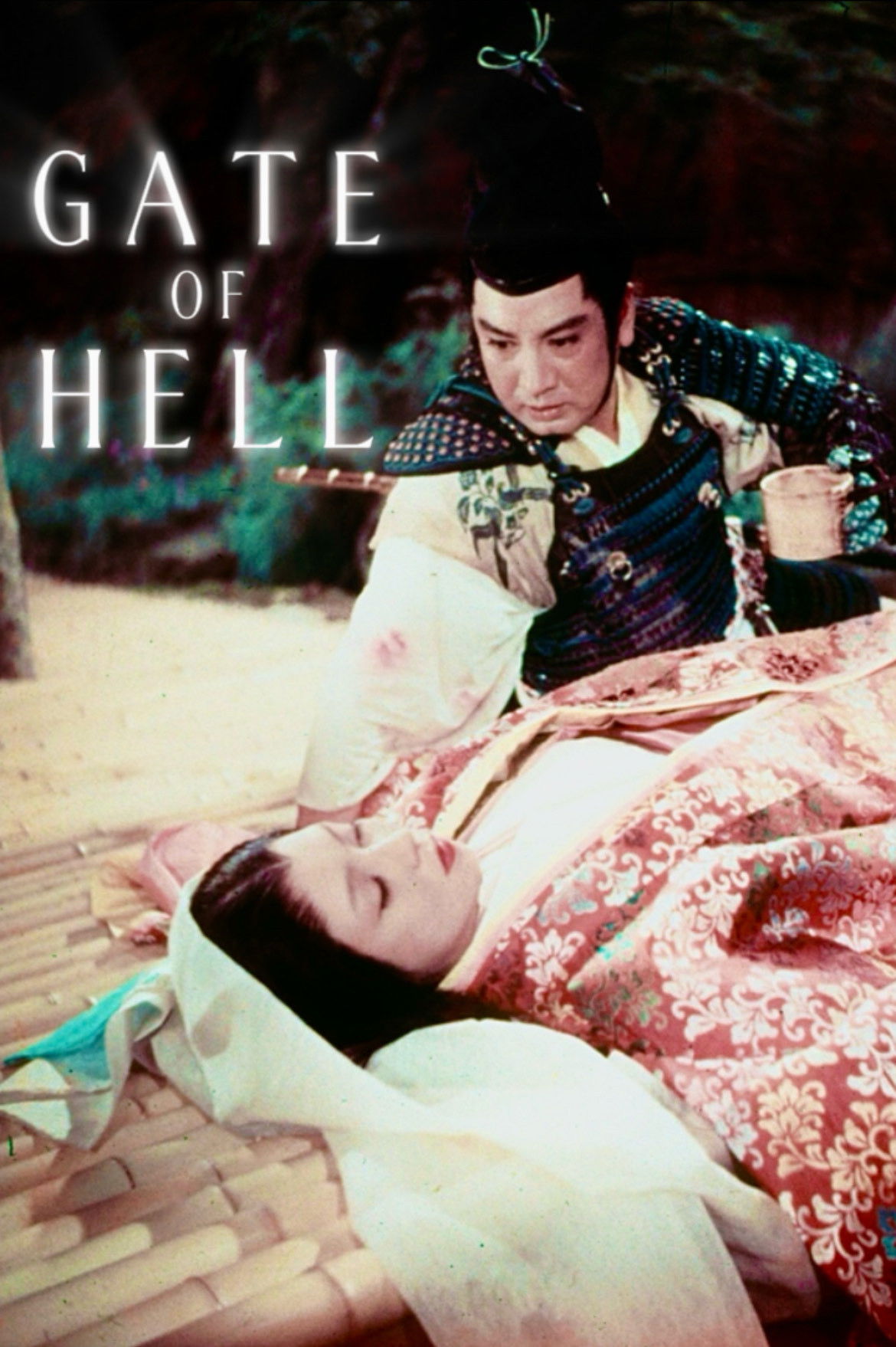
I remember the first time I saw Gate of Hell was during a humid summer night, projected onto a modest screen in a small art house theater with only a handful of other cinephiles. The film’s colors seemed to glow within the darkness, but what truly struck me was the unsettling emotional temperature simmering just beneath its ornate surface. Watching it, I found myself hypnotized—not by spectacle alone, but by the chilling precision with which it exposes the consequences of obsessive desire. Every frame felt like an artifact, yet the story’s psychological tension was alive and urgent. Few films seduce and unsettle me quite the way Gate of Hell does.
The Emotional Heartbeat: What This Story Offers
At its core, the film is an exploration of devotion and delusion, played out against the backdrop of feudal Japan. The narrative pivots on the knight Morito, whose infatuation with Lady Kesa defies both reason and honor. What makes their emotional journey so haunting to me isn’t just the futility baked into Morito’s desire; it’s how quietly, inexorably, passion becomes obsession. The film asks: what is the cost of love when one’s heart eclipses all boundaries of right and wrong?
The central conflict lies not in any grand historical struggle, but in the clash between personal longing and duty. I see the film as a meditation on the agony of unrequited love and the violence that erupts when human yearning refuses to yield to reality. Utterly self-absorbed, Morito imagines his happiness as an entitlement, while Kesa’s agency slips away in a world that barely hears her voice. What remains with me is not the outcome itself, but the emotional bareness that director Teinosuke Kinugasa allows to unfold, often wordlessly, as lives collapse beneath their burdens.
Threads Beneath the Surface: Thematic Terrain
More than a doomed romance, Gate of Hell delves into themes of obsession, honor, and the fate of women within rigid hierarchies. What I find so enduring about these subjects is their relevance; obsession still warps perceptions, and cultures everywhere wrestle with the costs imposed by archaic ideals of propriety and loyalty. In 1953, Japan was rebuilding, looking backward and forward at once—this film’s preoccupation with tradition and consequence reflects that collective unease.
Kesa’s predicaments—her erasure, her silent suffering—were sadly familiar in societies both then and now. The film’s treatment of duty is complex; it doesn’t venerate blind loyalty, but it also doesn’t provide any satisfying escape from it. Instead, the narrative amplifies the agony of those caught between selfhood and expectation. For me, these layers grant the film its still-potent grip: it speculates on how desire and social order can become mutually destructive, and how what appears as honor can be, in effect, a cover for brutality or cowardice.
Color, Cloth, and Catastrophe: Visual Motifs and Their Meaning
Few films of the 1950s exploit color as audaciously as this one. The recurring motif of vibrant, lacquered costumes serves not just as a feast for the eyes, but as a counterpoint to the characters’ inner turmoil. Every time I revisit the film, I’m struck by how Kinugasa uses gold, scarlet, and deep greens not just as historical detail but as emotional amplifiers—the robes become armor, and in the end, trappings of entrapment.
The frequent presence of gates and screens provides a spatial metaphor for separation, liminality, and the illusory nature of control. These boundaries—with Kesa glimpsed through lattice or draperies—heighten the sense of longing and unattainable beauty. Watching these barriers, I feel their presence as psychological ones, suggesting that what characters desire most is what they are least able to seize. And, of course, the burning orange fire in the night sequences becomes a harbinger, mirroring Morito’s destructive passion. Each stylistic flourish is meticulously chosen to externalize inner conflict.
Pivotal Moments That Changed My Perspective
The Intrusive Proposal: When Honor Collides with Desire
There’s a moment after the rebellion is suppressed, when Morito is rewarded with any prize he wishes. He chooses Kesa, bluntly, his single-mindedness shocking even within his own society. This scene lays bare the violence latent in “honorable” requests. I remember realizing, in that moment, how easily the machinery of authority can be hijacked by personal compulsion. It’s a turning point because it transforms the film from historical drama into a harrowing study of entitlement. I always leave this scene unmoored, questioning where admiration for noble virtue ends and toxic obsession begins.
Kesa’s Midnight Solitude: A Woman’s Silent Calculus
Kesa’s anguished decision in the film’s final act—her preparations in the middle of the night, shot with exquisite tenderness—remains seared in my memory. Her silent suffering, her attempts to shield her husband by sacrificing herself, elevate the film’s tragic dimensions. I see this as the true climax, not the violent outburst that follows. Here, the camera lingers on her face, capturing a dignity that persists even as agency is denied her. The emotional resonance of this scene is immense; I always feel its quiet devastation long after the fade to black.
The Deadly Mistake: The Meaning of Loss Exposed
The scene in which Morito, believing he is killing Kesa’s husband, instead murders Kesa herself, is perhaps the most visually and thematically wrenching. The act is filmed with a nightmarish detachment—no melodrama, only cold consequence. For me, this scene reveals the hollowness at the core of Morito’s passion: his desire has resulted only in annihilation. It is not just a personal tragedy, but an indictment of a system that valorizes unyielding will at the expense of empathy and understanding.
Standard Readings and My Disquiet
Many critics have hailed Gate of Hell as an elegant period piece—a masterpiece of painterly mise-en-scène, lauded for its use of early color film stock. It is often positioned as a tale of tragic love, a lament for the consequences of unbridled emotion. While I appreciate these views—the film’s technical and aesthetic achievements are undeniable—I find that such interpretations can underplay its darkness. What unsettles me most is not the beauty, but the almost clinical manner in which desire mutates into violence. Some readings treat Morito as a misguided or simply unlucky figure; I see him as something darker—a warning about the costs of unchecked obsession and privilege.
The acclaim for Kesa’s quiet stoicism is well-deserved, yet I feel the tragedy deepens when I consider how rare it is, in cinema or life, to see a woman’s inner crisis portrayed with such restraint and shattering effect. For me, the film’s horror is in what it leaves unspoken: the knowledge that Kesa’s choice is not an act of selfless love, but an act of desperation within a world indifferent to her suffering.
Stories Bound by Similar Shadows
- Rashomon (1950) – This Kurosawa classic, like Gate of Hell, centers on the malleability of truth and the ruinous impact of obsession in feudal Japan.
- Ugetsu (1953) – Mizoguchi’s fable examines the collision of ambition, superstition, and feminine suffering, echoing the psychological and supernatural textures found here.
- The Red Shoes (1948) – Though set in another world, this British film’s portrayal of artistry, desire, and self-destruction feels spiritually linked to the emotional stakes of Kinugasa’s work.
- Black Narcissus (1947) – Powell and Pressburger’s meditation on repressed passions and spiritual crisis finds kinship with Gate of Hell in its use of color, mood, and theme.
Why the Gate Remains Open—A Personal Closing
For anyone coming to Gate of Hell in the present, I suggest surrendering to its surface beauty—but not letting the kaleidoscopic visuals distract from the film’s chilling meditation on the nature of power, desire, and suffering. Understanding these themes broadens not just my appreciation of Kinugasa’s art, but my sense of how cinema can illuminate universal emotional truths. In a world still wrestling with the boundary between devotion and control, the film’s questions remain unresolved and urgent. To see it today is to encounter a mirror, however dark, reflecting anxieties that never truly fade.
Related Reviews
If you found value in my perspective, you might also enjoy exploring my thoughts on other cinematic landmarks such as Ugetsu and The Red Shoes.
To broaden this interpretation, you may also explore how critics and audiences responded over time.
🎬 Check out today's best-selling movies on Amazon!
View Deals on Amazon