
This Isn’t Science Fiction—It’s a Mirror
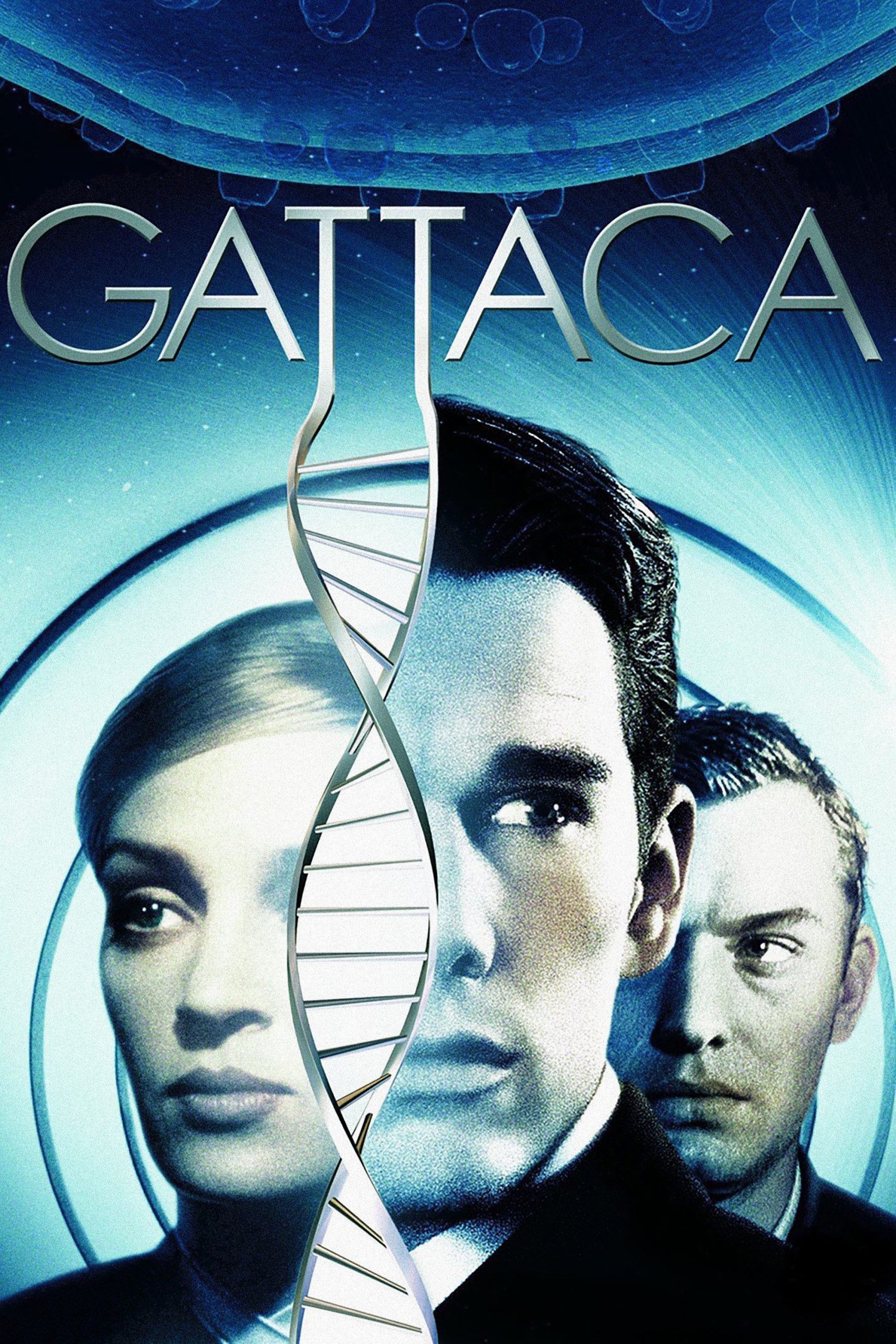
Watching Gattaca for the first time, I felt an uncomfortable recognition: the world it shows isn’t a distant future, but a razor-sharp reflection of the subtle hierarchies I brush against every day. Right from the opening moments, I wasn’t seeing a sterile laboratory, but the familiar chill of a society obsessed with “potential”—one that quietly tallies and judges, hunting for flaws behind polished facades. The film’s chilling relevance lies not in its genetic engineering, but in the precision with which it exposes the machinery of discrimination that powers its world. As I watched Vincent, played with raw tenacity by Ethan Hawke, erase his identity strand by strand, I recognized the small, daily erasures so many of us perform to fit where we’re told we don’t belong.
The Tyranny of Perfection
What unsettles me most about Gattaca is not its vision of technology, but its view of perfection itself. The film constructs a universe where every gene, every microscopic thread of DNA, is evaluated for worth. It’s the ultimate meritocracy—on its surface, anyway. But the deeper I plunge into Vincent’s story, the more that meritocracy reveals itself as a suffocating tyranny. The script isn’t just a warning about genetic engineering; it’s a quiet scream against the very idea of “worthiness” being assigned by arbitrary standards—whether by bloodlines, resumes, or social status. Each glass wall and pristine hallway becomes claustrophobic, not because the society is overtly cruel, but because it is utterly convinced of its own fairness. That’s what terrifies me most: a system so orderly, so logical, that its violence is invisible.
Faith, Fate, and the Fragility of Determinism
As I navigated Vincent’s desperate attempts to pass as “valid,” I was struck by how Gattaca uses the language of fate against itself. Here, destiny isn’t written in the stars, but embedded in the double helix of one’s DNA. The film’s core tension revolves around the collision between genetic determinism and human will. Throughout his ordeal, Vincent clings to the belief that spirit can outpace biology, that sheer determination and devotion might matter more than any preordained sequence of nucleotides. His brother Anton, the genetically enhanced “ideal,” is both mirror and antagonist, embodying the quiet despair of someone told every victory is inevitable. In this confrontation, I see not just a sibling rivalry, but a philosophical duel about whether we are the sum of what is inside us or what we choose to become. Every beat of the narrative, every frantic scrubbing of skin and hair, becomes a battle between faith and fatalism.
Spaces Built to Exclude
One of the most haunting aspects of the film is its production design—the architecture of exclusion. The endless glass panels, the corridors bathed in icy blue light, the constant surveillance—these are not just aesthetic choices. The physical environment of Gattaca is constructed as a living, breathing metaphor for social barriers. Every reflective surface dares the “invalids” to see themselves in their proper place: outside, always watching, never belonging. It reminded me of times I’ve stood outside closed doors, sensing they were built precisely to keep people like me out. The meticulous cleanliness isn’t purity; it’s the sterilization of possibility. In Gattaca, the future is not contaminated by disease, but by hope—the hope that someone unwanted might slip through the cracks.
Genetics as a Stand-In for All Prejudice
The brilliance of Gattaca is how it universalizes its premise. DNA in this world is just the latest pretext for exclusion—a cold, scientific justification for the age-old tendency to sort, separate, and control. This is a film about eugenics masquerading as efficiency, about bigotry dressed up in the language of “progress” and “fitness”. When Vincent assumes Jerome’s identity, it’s a literal passing—a ritual as old as prejudice itself. I see in this act every whispered name change, every accent softened, every attempt to pass as “normal.” The film’s cold bureaucracy, from blood tests to retina scans, strips away the romance from its science fiction. What’s left is a procedural nightmare where people are denied their dreams not because of who they are, but because of what they can’t change. Gattaca lays bare the hollowness of a world that believes in equality, but only for those who meet its secret standards.
Love and Desire in a World Without Flaws
I find the film’s approach to love especially poignant. In a society built around the flawlessness of genes, how does intimacy survive? Uma Thurman’s Irene, haunted by her own imperfections, finds herself drawn to Vincent precisely because he is a mystery—an anomaly in a clinical world. The relationship that unfolds between them is less a traditional romance than a shared rebellion: two people daring to believe in each other’s secrets. There’s a moment when Irene takes Vincent’s hand and listens for his heartbeat, as if searching for evidence that risk and vulnerability still exist. Love becomes an act of subversion—an assertion that connection cannot be regulated, cataloged, or engineered. That, for me, is one of the film’s most hopeful undercurrents: even in a world obsessed with perfection, the truly human is what cannot be predicted or measured.
Jerome’s Tragedy: The Shadow Side of Success
I often linger on Jude Law’s performance as Jerome, the “borrowed ladder.” While Vincent’s struggle is about overcoming obstacles, Jerome’s tragedy is the emptiness found at the summit of achievement. Engineered to be flawless, Jerome is crushed not by failure, but by the expectation of perpetual excellence. Gattaca dares to suggest that perfection is not liberation, but a new prison. Jerome’s bitterness and eventual sacrifice aren’t melodramatic flourishes—they’re the inevitable byproducts of a society that values only the pinnacle, never the journey. I’m reminded that success, when stripped of struggle and serendipity, can become a kind of death. The film’s sharpest irony is that both Vincent and Jerome are equally trapped—one by what he lacks, the other by what he can never live up to.
The Weight of Small Acts
Some of the most moving moments in Gattaca are almost silent: the meticulous collection of skin flakes, the careful positioning of a strand of hair, the unspoken camaraderie between Vincent and those who help him. In these small, deliberate acts, I see a meditation on resistance. The film suggests that rebellion need not be loud or spectacular; it can be quiet, methodical, the slow accumulation of courage in the face of constant surveillance. I found myself inspired by the idea that even in the most restrictive environments, ingenuity and solidarity can flourish—for a while, at least. The minutiae of Vincent’s daily rituals become sacred acts, ennobling the mundane in the service of the impossible.
What Gattaca Leaves Me Questioning
As the credits rolled, I didn’t feel uplifted or despairing, but unsettled. Gattaca’s power lies in the questions it leaves simmering beneath the skin: How much of who I am is negotiable? Where do I draw the line between adaptation and erasure? What hidden rules do I obey without realizing? The film’s true legacy, for me, is its refusal to offer easy answers. Every time I revisit it, I find myself re-examining the criteria by which we judge merit, the invisible systems that decide who gets to dream, and the stubborn spark that makes us human despite everything set against us.
If You Want to Continue the Conversation
If the bleak beauty and ethical quandaries of Gattaca haunted you as they did me, I’d recommend exploring two classics that echo its tension between individual spirit and institutional control: Brazil (1985), with its surrealist take on bureaucracy crushing the soul, and 1984 (1956), a chilling account of identity obliterated by omnipresent authority. Both films, like Gattaca, ask what it costs to be human when the world demands something less—or something impossible.
If you’re curious about how this film was originally perceived or how it compares to similar works of its era, these resources may be helpful.
🎬 Check out today's best-selling movies on Amazon!
View Deals on Amazon