
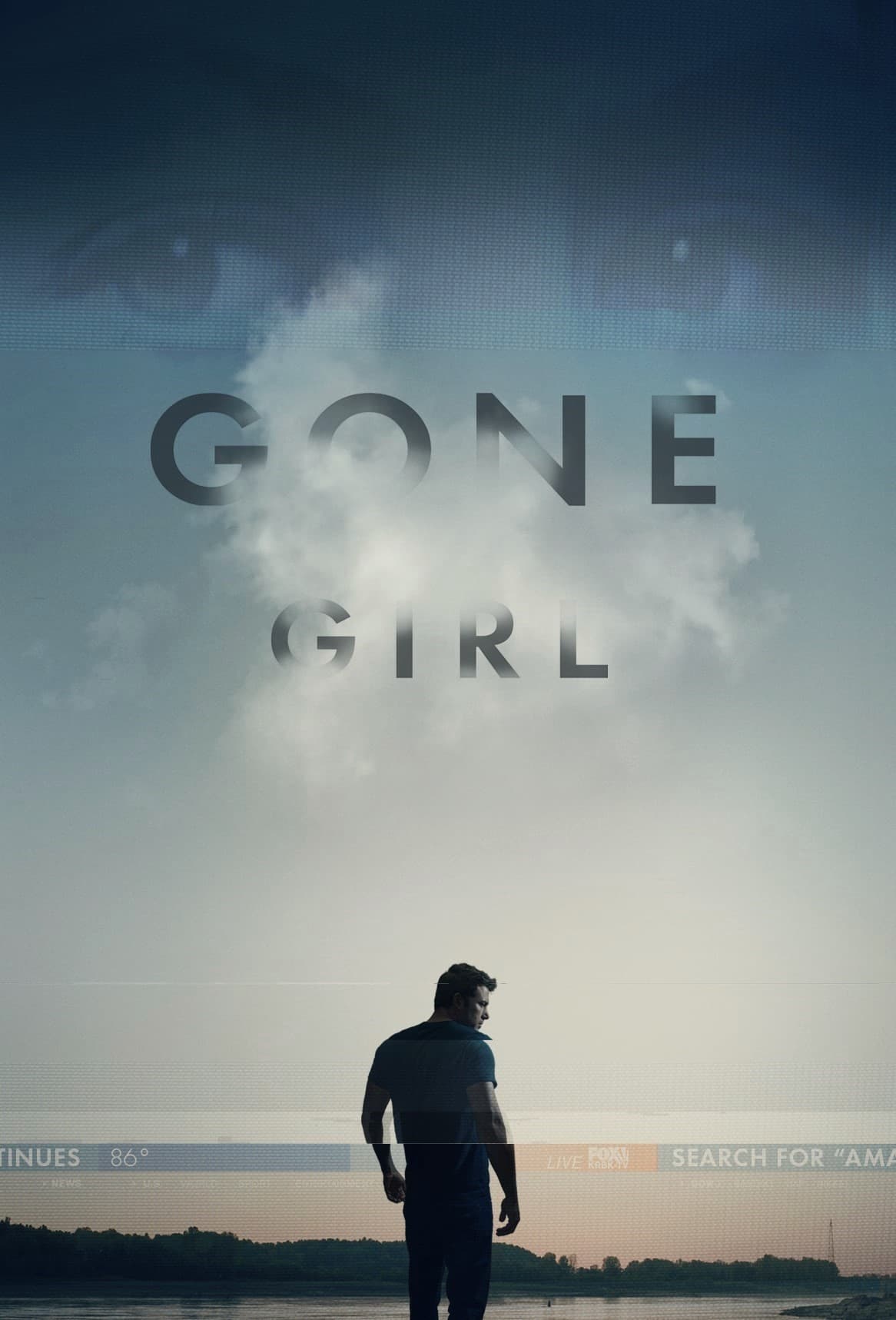
When I first watched “Gone Girl,” I remember feeling an unsettling chill creep over me—not because of its violence or its mystery, but because it dared to crawl under the skin of marriage itself. Here was a film that seemed tailor-made to puncture every comfortable fantasy we spin about trust, intimacy, and the couple as an institution. It wasn’t just a thriller. It felt like watching an x-ray of my own worst anxieties about love, performance, and self-destruction come alive, slick with David Fincher’s signature surgical precision. What I find irresistible about “Gone Girl” lies in this sense of danger—a mirror held up, not just to its characters, but also to the very spectators who claim to understand them.
What the Film Is About
At its core, “Gone Girl” is a duel disguised as a disappearance mystery. What appears as a story about the hunt for missing Amy Dunne is, for me, a much deeper excavation of the psychological battleground between two people who have learned to weaponize both love and loathing. The film is structured like a puzzle box, but what’s inside isn’t simply whodunit—it’s the corrosive nature of expectations and the dark bargains that sometimes hold relationships together long past their breaking point.
The emotional journey here is both harrowing and seductive. As Nick and Amy’s secrets unravel, I felt myself yanked back and forth—empathizing, judging, then suddenly questioning even my own judgments. The film’s central conflict is not just whether Nick is responsible for Amy’s disappearance, but rather, how both characters manipulate—and are manipulated by—the judgment of others: the police, the media, and even the viewer. Fincher invites us to become complicit, perpetually unsure of the objective truth, and I left with the all-too-familiar ache that sometimes, knowing someone might just be the grandest illusion of all.
Core Themes
The first and loudest theme in “Gone Girl” is the performative self—the idea that marriage, and perhaps all relationships, are acts of mutual storytelling. How much of anyone’s personality is performance? How much do we shape ourselves for the audience we love or the world we despise? From Amy’s poison-dipped diary entries to Nick’s rehearsed television interviews, every major beat in the film revolves around the gap between our genuine selves and the versions we choose to sell.
Power—particularly the power of narrative—is another theme that stays with me. The question of who gets to tell the story is always central; and more to the point, who is believed. In 2014, the theme crackled with topical urgency, arriving at a moment when social media and tabloid news cycles were exposing the chasms between reality and constructed public image. Today, as the world grapples with deepfakes, curated social feeds, and misinformation, “Gone Girl” feels, if anything, even more prescient. The film leaves me wondering: in a world built on optics, can there ever be an authentic truth?
Lastly, the relentless scrutiny of gender roles—by turns savage and satirical—makes the film as relevant as ever. Amy’s infamous “Cool Girl” monologue isn’t just a dig at her own cynicism; it’s a scalpel aimed at the performative demands placed on women. Watching it now, I still feel the sting of its accuracy in our still-unequal world.
Symbolism & Motifs
The recurring image of the ever-present media swarm stands out most for me—a swirling, carnivorous mass that both shapes and is shaped by the protagonists. The intrusive cameras and chyrons crawling across television screens are more than background noise; they’re a constant visual reminder of how little distance there truly is between one’s private life and the public spectacle.
Another motif that resonates is the motif of doubling and reflection. Mirrors and glass surfaces crop up again and again, subtly reinforcing the idea of duality, of hidden selves, of realities behind appearances. Both Nick and Amy are haunted by their reflections: the people they’ve become, the parts of themselves they hoped no one would see. Fincher’s careful framing—so often trapping his characters in panels of glass or boxed-in spaces—visually enforces the suffocating effects of these false selves.
Finally, the use of gifts—literal and figurative—haunts the film from its scavenger hunt structure to the way love itself becomes transactional. The recurring motif of Amy’s cryptic clues serves as both an invitation and a veiled threat, embodying the way intimacy in “Gone Girl” is always tinged with suspicion.
Key Scenes
The Anniversary Treasure Hunt: Invitation or Threat?
Early on, Amy’s orchestrated treasure hunt on the morning of her disappearance is presented as a charming marital ritual. What I found so potent is how the game’s clues shift, in hindsight, from playful to sinister. This scene crystallizes the sense that every shared memory between Nick and Amy is subject to revision and second-guessing. Each location—each clue—feels less like nostalgia and more like a minefield. It’s here I first felt the full weight of how performance and manipulation infect not just what couples tell each other, but how they remember what’s been shared.
“Cool Girl” Monologue: Mask as Revelation
I cannot discuss “Gone Girl” without highlighting Amy’s acid-tipped “Cool Girl” voiceover—a moment that redefines the entire narrative. Rosamund Pike’s performance in this montage is transformative, delivering social commentary that shreds through genre boundaries with terrifying clarity. Here, the film’s investigation of gendered expectation becomes a manifesto, exposing the intricate, exhausting lies women are pressured to maintain. Pike’s delivery remains burned into my memory, both for its style and its substance.
The Return: Triumph or Defeat?
The moment Amy returns home, battered and dripping with fabricated trauma, is perhaps the most viscerally unsettling of all. Here, the film not only subverts the triumphant homecoming trope, but transforms it into a grotesque public spectacle. Watching Nick’s realization sink in—trapped once more by performance, optics, and shared secrets—I glimpsed one of the bleakest, most fascinating truths in modern cinema: sometimes, the show must go on, no matter the cost to one’s soul.
Common Interpretations
Most critics situate “Gone Girl” as a sharp satire of marriage and media sensationalism, praising its dissection of the American couple’s dark underbelly. It’s often read as an indictment of the way society weaponizes gendered narratives, with Amy seen as both victim and avenger. Some call her a cipher, a monstrous exaggeration of post-feminist anxieties; others find in her a razor-edged rebuke of patriarchal hypocrisy.
I tend to bristle at readings that reduce Amy to pure villainy or Nick to mere buffoon. To me, the power of the film lies in its refusal to offer clean anti-heroes or easy answers. Where critics frequently praise the plot mechanics or the media-skewering, I’m more drawn to its psychological undertow—the bleak suggestion that intimacy itself is always a compromise between what we want to reveal and what we dare not confess. Its final beats invite not outrage or catharsis, but something more complicated: a recognition of the ways we are all complicit in each other’s stories, truthful or not.
Films with Similar Themes
- Eyes Wide Shut (1999) — Like “Gone Girl,” Kubrick’s film interrogates the masks worn within marriage and the bargains struck to maintain intimacy at any cost.
- Fatal Attraction (1987) — This film’s examination of infidelity, obsession, and gendered power plays resonates with the cautionary undertones of Fincher’s work.
- Prisoners (2013) — Both films slice open the idea of certainty and guilt in the midst of a missing person case, exposing the moral quandaries faced by those under suspicion.
- Double Indemnity (1944) — The noir classic’s toxic partnership, constructed on secrets and mutually assured destruction, prefigures the dynamics at the heart of “Gone Girl”.
Final Thoughts: Re-Engaging with the Enigma
“Gone Girl” invites viewers to submit themselves to a vortex of manipulation, but it never lets us remain passive. Approaching the film today means confronting not just its puzzles, but the larger questions it poses about what it means to really know—and be known by—another person. For me, the film’s enduring value is not what it reveals about its characters, but what it exposes in the act of watching itself. If we scrutinize ourselves as closely as we do Nick and Amy, perhaps its most unsettling lessons begin to make sense.
Related Reviews
If you found value in my perspective, you might also enjoy exploring my thoughts on other cinematic landmarks such as Eyes Wide Shut and Double Indemnity.
To broaden this interpretation, you may also explore how critics and audiences responded over time.
🎬 Check out today's best-selling movies on Amazon!
View Deals on Amazon