
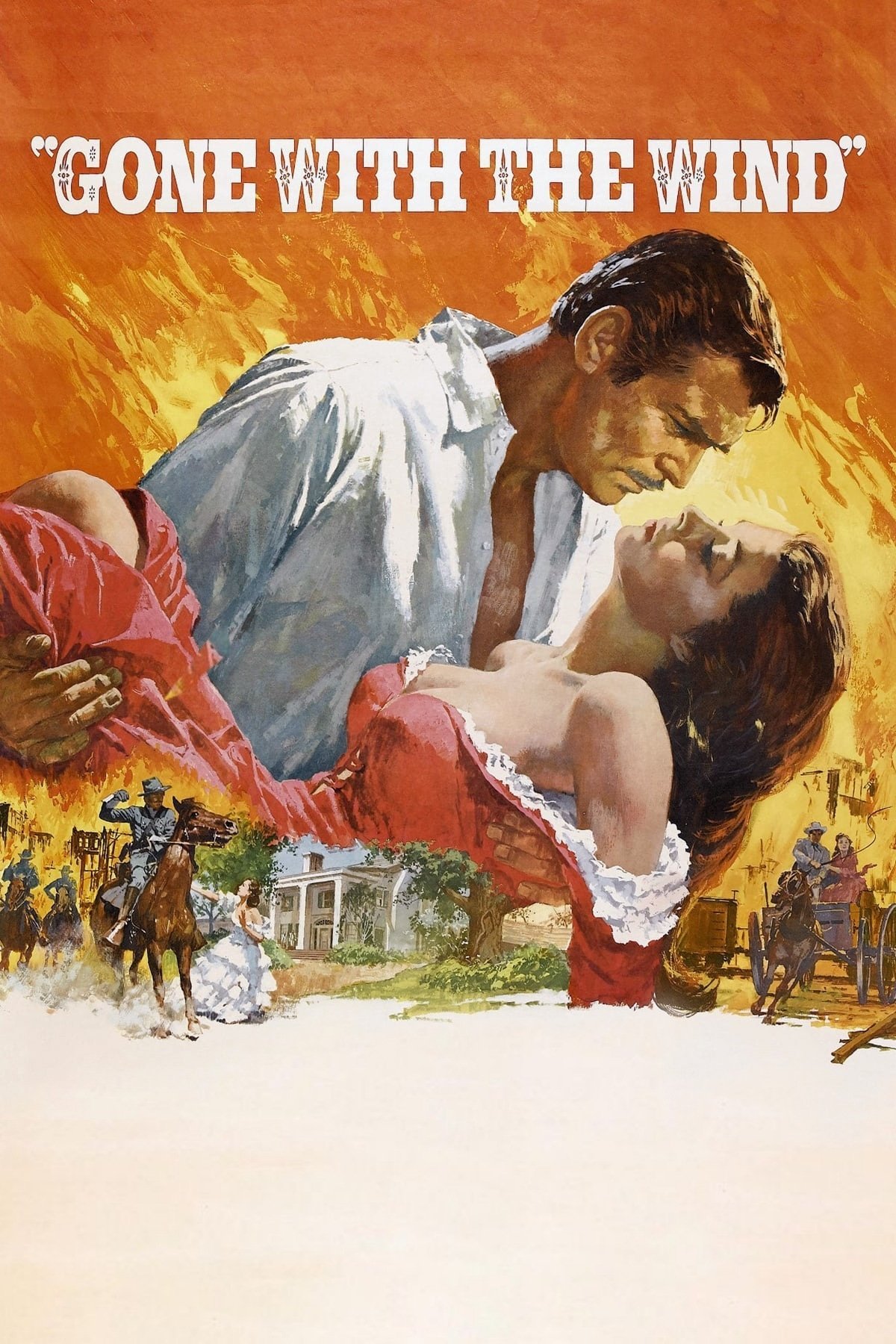
How the Ashes of Tara Still Smolder in My Mind
I can still feel the Georgia soil—so vivid, so tactile—under my feet every time I revisit “Gone with the Wind.” This isn’t just a film for me; it’s an atmospheric force that wraps itself around my senses, pressing me to confront what lingers beneath its lush surface. This movie endures not because it is a mere love story or a Civil War epic, but because it probes the ruins of human pride, the seductive illusions of nostalgia, and the complicated legacy of survival. When I first watched it, the world it conjured felt intoxicatingly romantic, but the longer I dwelled with Scarlett and the shadows that haunt Tara, the more I recognized its willingness to interrogate the myths it so lovingly stages.
The Seduction of Memory and the Weight of Myth
What strikes me with every viewing is how “Gone with the Wind” weaves a spell of nostalgia that is anything but innocent. The film’s opening titles—bold, sepia-tinged, grandiose—promise a story of “a civilization gone with the wind.” I couldn’t help but notice how this frames everything we’re about to see as loss, as memory, as the exquisite ache of what can’t be reclaimed. Throughout, the camera glorifies Tara’s pillared porch, the gallantry of the South, the glamour of balls and bonnets. But underneath that glaze, I detect a gnawing sense of dishonesty—a recognition that this memory is curated, selective, deeply flawed.
For me, this mythmaking serves as both seduction and warning. Yes, we’re invited to mourn a world swept away, but we’re also pushed to question what was really lost and whose stories are being sacrificed for this grand elegy. The film, in its unrelenting focus on the personal over the political, exposes how nostalgia can be wielded as armor against a harsher reality—both for Scarlett and the South she represents.
Scarlett O’Hara: Survival as Religion
Scarlett, with her tempestuous beauty and bottomless cunning, fascinates me as few characters ever have. She isn’t an icon of virtue, and her survival is not neatly heroic—rather, it is primal, almost animalistic. Watching her, I see a woman who turns self-preservation into both an act of love and an act of violence. When Scarlett claws her way through a devastated landscape, what she really clings to is the illusion of control in a world that has spun far past her grasp.
Her famous vow in the fields—”As God is my witness, I’ll never be hungry again”—hits me not as triumph but as a raw assertion of will. This single moment encapsulates the film’s relentless examination of what it takes to endure: pride, selfishness, resilience, denial, all braided together. I find myself awed and unsettled by how far she’ll go, how much she’ll sacrifice, including her own happiness. In Scarlett’s gaze, I see a mirror to the nation’s own capacity for denial and reinvention, willing to rewrite its wounds as virtues.
Rhett Butler and the Allure of Broken Ideals
While Scarlett wields survival like a weapon, Rhett Butler brings a different kind of clarity. He is both an insider and outsider, a man whose charm is sharpened by his cynicism and who never truly belongs to the mythic South that enthralls Scarlett. I’m endlessly intrigued by his ability to see through the facades propped up around him—he mocks the pretensions of honor, the futility of lost causes, and the lies people tell themselves to keep moving forward.
Yet even Rhett gets pulled under by the current of longing and hope. His love for Scarlett, though laced with irony and frustration, is also an act of self-delusion. He wants to believe in redemption, in the possibility of a love that could withstand such devastation, but both he and Scarlett are creatures of their own wounds. Watching their push and pull, I’m left wondering if the real tragedy isn’t their failure to love each other, but their inability to escape the ghosts of their own making.
The Silence That Screams: Race, Power, and Omission
There’s no way I can think about “Gone with the Wind” and not grapple with what it obscures. The film’s most damning legacy lies in its romanticization of a slave-owning society, its silencing of Black voices, its picturesque rendering of suffering and oppression as mere backdrop to white drama. When I see Mammy, Prissy, Pork—characters who are unforgettable because of their performers’ talents—I am also haunted by how little interiority or true agency they’re allowed. Their loyalty is assumed, their pain aestheticized, their history rendered invisible.
This isn’t just a flaw—it’s a statement. The film’s very grandeur, its artistry, is entwined with the structures of power and erasure it refuses to fully acknowledge. I feel a kind of ache in the pit of my stomach as I watch these scenes, knowing that what’s left unsaid, what’s unshown, is every bit as important as what is brought to the fore. Gone with the Wind, for all its opulence, is a monument to selective memory—a myth-making machine as much as a love story or epic.
Ruin as Rebirth: The Meaning in the Rubble
The most enduring visual for me isn’t the grandeur of Tara before the war, but its aftermath: stark, gutted land; the camera pulling back to a desolate horizon; bodies and dreams scattered like so much ash. This is not just the destruction of a place, but the shattering of illusion, the stripping away of all that comforted and blinded. And yet, I’m struck by how the film positions ruin as the necessary ground for new beginnings.
Scarlett’s resilience in the face of annihilation becomes both a warning and a testament. Her refusal to surrender becomes a rallying cry that is both noble and chilling—a reminder that creation often rises from the ashes of what has been destroyed, but not always in forms we recognize or want. I find myself torn between admiration and discomfort at the film’s ambiguity, its refusal to settle for easy answers. In many ways, this honest messiness is what gives the movie its staying power: its admission that survival comes at a cost, and that the past, no matter how grand, cannot be reclaimed unchanged.
The Fleeting Nature of Love Amid Catastrophe
If there’s one truth that “Gone with the Wind” hammers home for me, it’s that love—intense, all-consuming—can be the most fragile thing in a world turned upside down. The romance between Scarlett and Rhett is a slow-motion collision, beautiful and ruinous, built on need more than understanding. Every time I watch them, I’m reminded that their love is shaped by the same forces that shape their world: pride, loss, the desperate urge to find something solid amid the wreckage.
What tugs at me isn’t their eventual separation, but the sense that love here is always threatened by the very qualities that make survival possible: stubbornness, selfishness, refusal to yield. Their inability to surrender their illusions, their refusal to truly see one another, is both heartbreakingly human and tragically inevitable. The film suggests—sometimes generously, sometimes cruelly—that in cataclysm, what we most need is also what we’re least able to hold onto.
The Artifice of Beauty: Visual Splendor and Its Discontents
I lose myself in the colors, the grand tracking shots, the meticulous costuming—”Gone with the Wind” is intoxicating in its visual excess, and I confess to being seduced by it every time. But there’s a tension here that I find endlessly fascinating: the beauty is deliberate, overwhelming, designed to distract from the ugliness beneath. The film is self-aware in this, referencing the performance of gentility and the spectacle of Southern life while showing us just how quickly those trappings can dissolve.
The lush landscapes, the fiery devastation of Atlanta, the opulent dresses—all are part of a fantasy that the film both celebrates and critiques. There’s a sense in which the very act of watching is implicated in the deception, as if I too am being tested to see how much of the myth I’ll accept. The artistry here is not just technical; it’s deeply, even uncomfortably, psychological. Each frame asks me to grapple with my own longing for beauty, my own complicity in seeing what I want to see.
Learning to Live with the Unanswerable
Every time the film closes on Scarlett’s defiant promise—”Tomorrow is another day”—I’m left suspended between hope and resignation. This isn’t just optimism; it’s the human instinct to push forward when nothing makes sense, to rebuild from shards of what’s been lost, to cling to myth when reality is too jagged to hold. I realize that “Gone with the Wind” isn’t about answers. It’s a meditation on endurance, loss, and the cost of clinging to dreams that can never be restored whole.
Living with this film means accepting contradiction: being seduced and repulsed, enthralled and uneasy, inspired and chastened. For me, its legacy isn’t in the story it tells, but in the way it forces me to wrestle with what remains unsaid, unresolved, and unfinished—just like life itself.
If These Themes Resonate with You
For those who are moved by the tragic grandeur, the interrogation of memory, and the fraught beauty of survival, I always find myself returning to two other classics: Wuthering Heights (1939) and The Heiress (1949). Both linger in that same shadowy territory—where longing, loss, and resilience are as devastating as they are unforgettable.
If you’re curious about how this film was originally perceived or how it compares to similar works of its era, these resources may be helpful.
🎬 Check out today's best-selling movies on Amazon!
View Deals on Amazon