
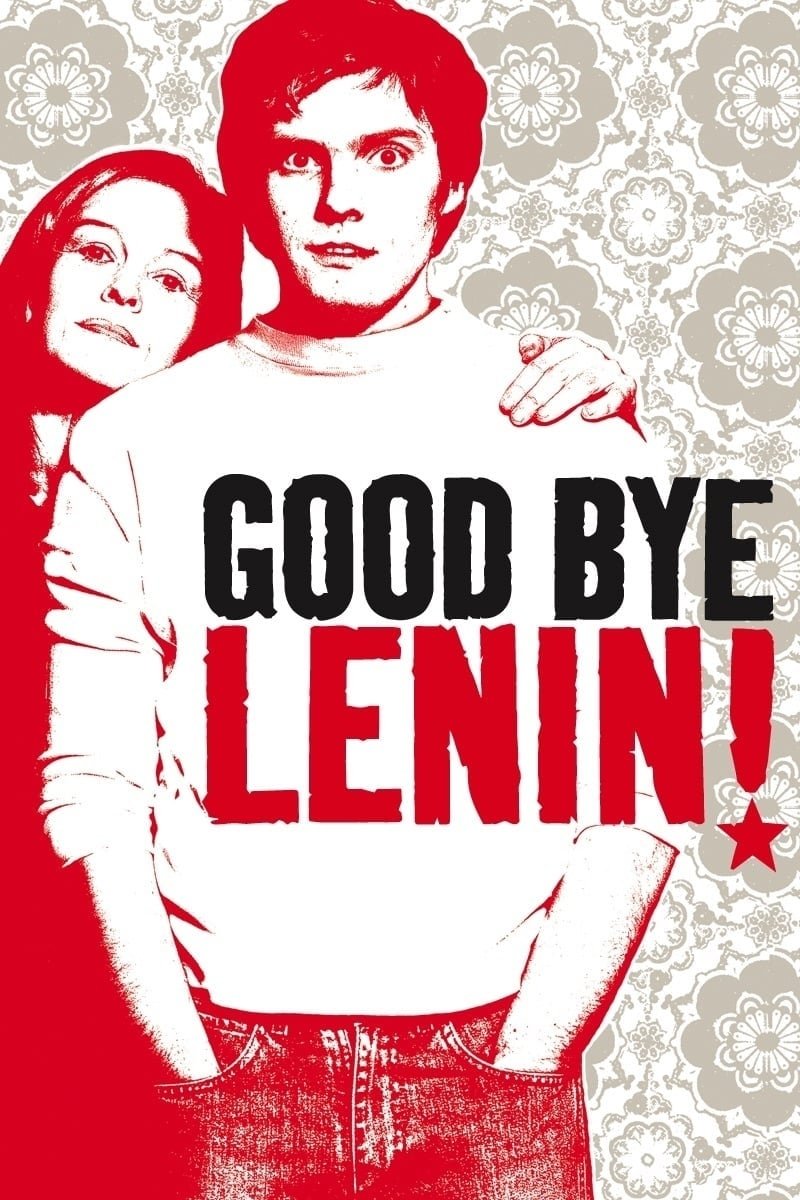
Once, while passing through former East Berlin, I paused at a street corner, imagining what the city must have felt like at the very instant the Wall cracked open. “Good Bye, Lenin!” brings that tectonic moment alive in a manner I have rarely seen onscreen. What hooks me isn’t simply history or nostalgia—it’s the collision of private love stories against the vast backdrop of national upheaval. The film pulses with the ache of things lost and never properly mourned. Watching it, I recognize the peculiar blend of hope, sorrow, and the compulsive drive to maintain illusions that so often defines families—and perhaps, entire nations. It’s more than a time capsule. For me, it’s a meditation on how the world turns upside down outside someone’s window while, inside, devotion and denial quietly spiral together.
What the Film Is About
At the heart of “Good Bye, Lenin!” lies a son’s desperate attempt to shield his mother from the brutal transformation of her world. The emotional core coils around Alex, whose mother lapses into a coma just before the Berlin Wall falls. When she awakens, frail and unmoored, her fragile heart cannot risk the shock of learning that everything she believed in—the German Democratic Republic, socialism, the very fabric of her home—is now erased. So Alex embarks on an elaborate charade, recreating the old East within the tiny world of his mother’s bedroom, manufacturing news reports and orchestrating daily deceptions. The film is a tragicomedy of devotion and invention, but its ache runs much deeper.
This is not just about protecting a loved one from pain; it’s about the impossible urge to freeze time, to conjure a past whose disappearance leaves only vertigo in its wake. For me, the brilliance of this film lies in the way it fuses the grand collapse of an entire state with the intimate crumbling of a family’s certainties. As Alex’s charade grows, so too does the audience’s awareness that nostalgia can be both sanctuary and prison—a shield from chaos, but also a refusal to let go. Every fabrication is a lament for something more than politics: the loss of innocence.
Core Themes
Among countless layered meanings, what resonates most powerfully for me is the tension between memory and historical reality. The film asks: What does it mean to love someone so fiercely that you reimagine the world for them? This theme of personal myth-making extends to the national—East Germans, grappling with reunification, must also decide how much of the old world to preserve or discard. The film’s release in 2003 felt timely, with the aftershocks of the Wall’s collapse still reverberating and Germany wrestling with its identity. Yet, two decades on, the question is just as pertinent; every society and individual faces moments when the past seems worth saving, however imperfectly.
I am particularly struck by the film’s emphasis on truth versus comfort. It never settles for easy answers: Alex’s elaborate fictions shield his mother but ultimately confront the audience with a deeper question about complicity. At what point does nostalgia become a betrayal of reality? And can there be dignity in illusions chosen out of love? These are themes that have only grown in relevance with time, challenging us to reflect on the collective myths we continue to construct about our own recent past.
Symbolism & Motifs
What sets “Good Bye, Lenin!” apart for me is its deft deployment of visual and material symbols that encapsulate seismic social shifts. The jars of Spreewald pickles, the worn furniture, the parade of East German consumer goods all become enchanted relics—totems of a world whose meaning has abruptly expired. I am fascinated by how these objects are invested with talismanic power by Alex, who must source, counterfeit, and present them to his mother as if nothing had changed. Their presence is not quaint; it’s deeply melancholy, a record of how sweeping change can be measured in the tiniest fragments of everyday life.
Television broadcasts occupy a central motif. The homemade news bulletins staged by Alex, with their absurd invention and borrowed authority, perfectly illuminate the blurring of fact and fiction. It is the mediated image, not just raw events, that shapes reality for his mother—and, by extension, for anyone choosing which version of the past to remember. In this way, the television becomes both mask and window, channeling the film’s most withering question: Is it possible to create a kinder world out of narrative alone?
Key Scenes
The Lifted Curtain: Socialist Truths Rewritten
For me, few moments are as devastating—or as richly comic—as the sequence where Alex stages a counterfeit news broadcast explaining why West Germans are suddenly flooding into the East. The ingeniously inverted logic, in which the old world supposedly triumphs over Western consumerism, flips history on its head. What tips this pastiche from farce into tragedy is the tenderness with which Alex tries to give his mother hope. This is where the film’s moral ambiguity burns brightest: the impulse to protect collides with the impossibility of sustaining the lie.
The Transforming Landscape: Coca-Cola Over the Skyline
Another indelible image for me arrives quietly: Alex and his sister stare across the city as a giant Coca-Cola banner is unfurled over an East Berlin apartment block. The silent spectacle speaks volumes—capitalism’s triumph rendered as creeping visual inevitability. It marks the vanishing line between old and new, reminding me how revolutions are experienced not just in parliaments but in the mundane transformation of public space. This intrusion of Western branding—pervasive and inescapable—serves as a subtle condemnation and elegy all at once.
The Mother’s Awakening: Truth on the Balcony
There’s a quiet, shattering scene when Alex’s mother, frail and disoriented, sits on the balcony and glimpses modern traffic, West German cars, and strange new people on the street below. For me, this brief unmasking, filtered through her confusion, is where the confusion between inside and outside peaks. The world has changed utterly, but domestically—thanks to Alex’s desperate inventions—her reality holds together a moment longer. This scene renders the clash of epochs in heart-wrenchingly intimate terms, capturing the violence of change as felt not by the powerful, but by the vulnerable.
Common Interpretations
Many critical readings of “Good Bye, Lenin!” stress its bittersweet farce and satire of Ostalgie, the specific nostalgic longing for East German certainties. This interpretation is not unfounded—the film is full of gently ironic touches and comedic asides about the absurdities of both socialism and consumer ascendance. Some have called it a sly indictment of how history is rewritten not just by victors, but by ordinary people looking for dignity in loss.
But I see it as more than a comedy of errors or a critique of political mythmaking. What moves me is the film’s refusal to clearly celebrate or demonize either East or West. The mother’s convictions are treated with dignity, not as a punchline; Alex’s fabrications are love letters, not just deceptions. Where some critics focus on the film’s nostalgia as a purely regressive impulse, I feel that the film recognizes nostalgia as a necessary act of mourning—a bridge between trauma and acceptance. For me, it captures the way love for individuals entwines with the difficulty of letting go of a shared past.
Films with Similar Themes
- The Lives of Others (2006): Like “Good Bye, Lenin!”, this film probes the cost of surveillance and personal loyalty in the shadow of East German authority. Both interrogate the price of truth and the need for connection amid repression.
- The Death of Mr. Lazarescu (2005): Although set in Romania, this film traces the human cost of crumbling institutions, illuminating how personal travails reflect larger social failures, much like the intimate turmoil in “Good Bye, Lenin!”.
- The Truman Show (1998): Both films dwell on the construction of artificial realities out of psychological necessity, silently raising the question of whether the comfort of a curated world can outweigh the surface violence of truth.
- Underground (1995): Emir Kusturica’s epic similarly blurs the boundary between collective myth and personal memory, suggesting that history is often constructed out of necessary, sometimes self-serving, fictions.
Conclusion
For contemporary audiences, “Good Bye, Lenin!” offers more than a slice of German reunification; it provides a lens to interrogate the ways memory, love, and history collide. I find the film’s emotional complexity rewarding, as every small lie reveals a deeper truth about human resilience and denial. Understanding its themes—of nostalgia, identity, and the hunger for connection—makes the film resonate far beyond its setting, turning a highly specific story into something universally poignant. I encourage viewers to watch with patience and empathy, attuned to the subtle ways personal and political ruptures endlessly mirror one another.
Related Reviews
If you found value in my perspective, you might also enjoy exploring my thoughts on other cinematic landmarks such as The Lives of Others and Underground.
To broaden this interpretation, you may also explore how critics and audiences responded over time.
🎬 Check out today's best-selling movies on Amazon!
View Deals on Amazon