
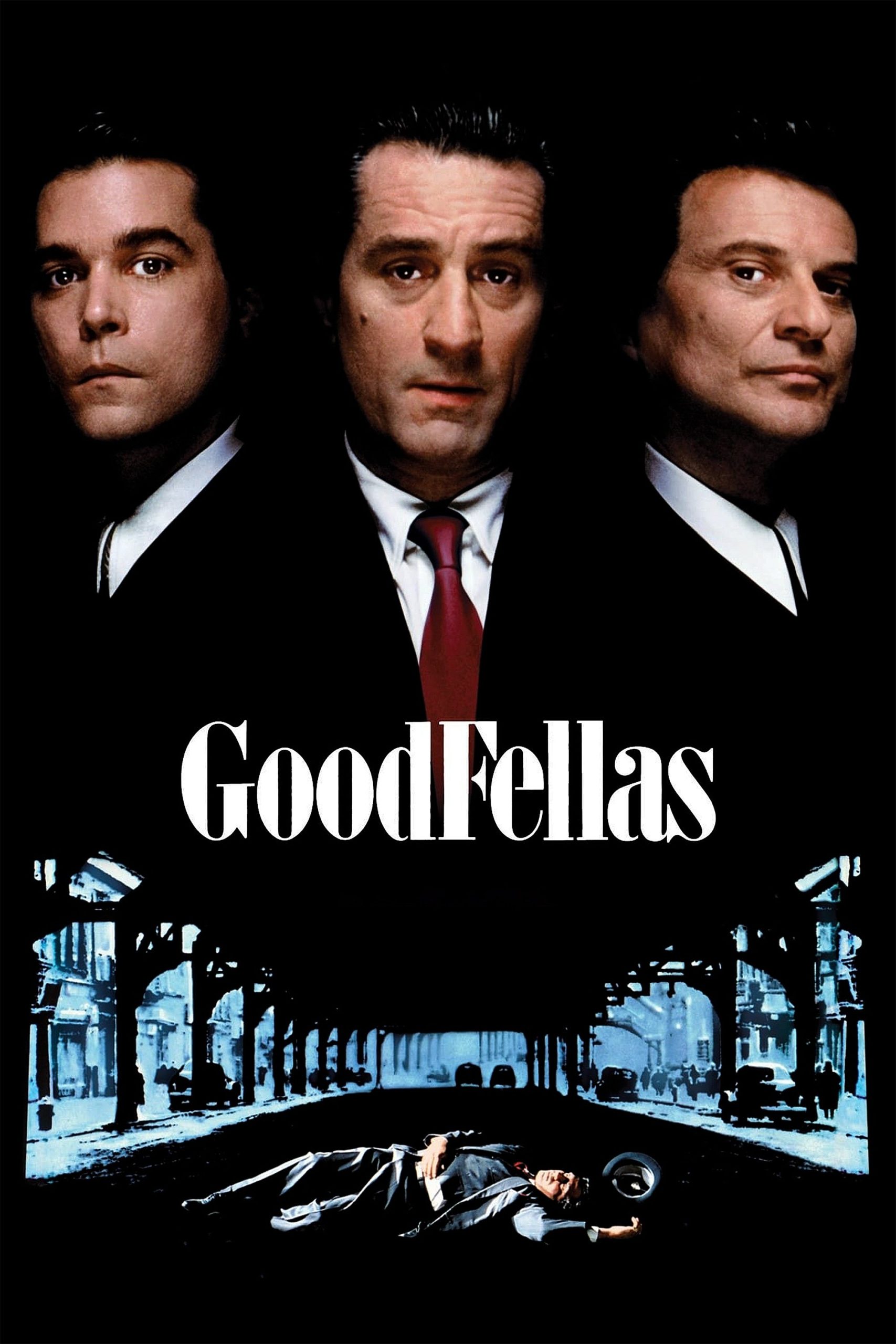
I can still remember the first time I saw a certain tracking shot snake through the kitchen of the Copacabana, the camera’s hypnotic movement blending seamlessly with laughter, threats, and seduction. “Goodfellas” didn’t just depict a world that terrified and fascinated me in equal measure—it seduced me into it. Every time I return to Scorsese’s vivid rendering of mob life, I find myself wondering what draws us, irresistibly, to such dangerous charisma and why the story feels both specific and oddly universal. It isn’t about the mobsters themselves, but about the parts of us—ambitious, restless, vulnerable—that recognize something familiar in their rise and fall.
What the Film Is About
At its core, “Goodfellas” traces the moral and emotional erosion of Henry Hill, a man whose greatest aspiration is spelled out in the iconic, yearning opening: “As far back as I can remember, I always wanted to be a gangster.” The film is structured around Henry’s journey—not as a simple cautionary tale, but as a relentless immersion in allure, adrenaline, and, ultimately, betrayal. As the film unfolds, the seductive logic of the gangster world reveals itself to be a labyrinth with no exit. There’s a fierce tension between the sense of belonging Henry craves and the psychological isolation that his choices inevitably create.
What gives “Goodfellas” its lasting power, for me, is the way it demolishes the myth of the honorable outlaw. I don’t see this as simply another crime saga; instead, Scorsese pushes me to inhabit the push and pull of loyalty and self-preservation. By the time Henry finds himself in witness protection, stripped of his former life’s glamour and terror, the film has become a meditation on the personal cost of living outside society’s rules. The central conflict—between camaraderie and the yawning void that follows when codes break down—feels perpetually relevant, not just to the criminal underworld, but to anyone searching for meaning in belonging and identity.
Core Themes
One of the most gripping elements for me is how “Goodfellas” interrogates power and the illusion of control. In this world, power is never secure; it’s provisional, transactional, and as fleeting as a well-timed joke. The film’s violence isn’t random—it’s both a language and a currency, used to maintain loyalty and mete out justice on terms wholly alien to conventional society. Watching Henry, Jimmy, and Tommy constantly look over their shoulders, I feel acutely how paranoia and anxiety are the hidden taxes of a violent life.
Another theme that strikes me as painfully current—even more so in an era obsessed with social capital and viral fame—is the corrosive nature of identity built on external validation. Henry’s world prizes reputation above all, but the higher he climbs, the lonelier and less certain he becomes. When I see his desperate attempts to maintain face, even as his life unravels, I’m reminded of how easily our sense of self can be hijacked by the roles we play for others. In 1990, as American culture grappled with the excesses of the previous decade and the onset of cynicism, these themes landed with a particular punch. Today, they ring out even louder in our hyper-mediated, image-driven society.
Symbolism & Motifs
Few films deploy visual symbols as deftly as “Goodfellas.” The recurring motif of food—whether it’s the extravagant spreads in prison or the meticulously prepared Sunday sauce—underscores both the communal pleasures and coded rituals of the mob lifestyle. For me, these scenes are about more than sustenance; they signal kinship, hierarchy, and the illusion of safety. The act of breaking bread together becomes an almost sacred rite, even as violence lurks just beneath the laughter.
There’s also the constant presence of doors, corridors, and windows: boundaries that are crossed, secrets that must be compartmentalized. These liminal spaces take on an existential resonance—every character seems to be leaving one life for another, never quite comfortable in their current skin. I always notice how Henry’s progression through increasingly claustrophobic environments mirrors his psychological entrapment, culminating in that famous, frenetic final act where his world closes in on him, both spatially and morally.
Significantly, Scorsese’s use of pop music as a motif of emotional tone and period detail is second to none. Songs become both timestamps and ironic commentaries on the action, transforming what could be simple montages into emotional set pieces. The juxtaposition of cheerful tunes with grisly violence forces me to confront the seductive surface and the horror beneath—a duality that defines the film’s worldview.
Key Scenes
The Copacabana Sequence: A World Revealed in Motion
No analysis of “Goodfellas” can ignore the legendary, unbroken tracking shot as Henry guides Karen through the Copacabana’s back entrance. This scene is, for me, the film’s statement of intent—an invitation for the audience to be wooed as Henry is. The choreography, the camera work, the swells of music: together, they encapsulate the allure of privilege, complicity, and forbidden glamour. It never feels rushed; it’s as if the night, like Henry’s ascent, could last forever. And yet, in its perfection lies the hint of artifice: a world too smooth, too seductive, warning us even as it draws us in.
“Funny How?”: Uncertainty and the Fragility of Status
When Joe Pesci’s Tommy erupts over the casual word “funny,” the sudden, disorienting threat cuts to the heart of what it means to survive in this universe. No matter how close the camaraderie, there’s always a knife-edge of danger—the rules are constantly shifting, and a joke can turn fatal with a glance. Every time I watch this scene, I feel that queasy uncertainty; the power dynamic is so fluid, so unpredictable, that the viewer becomes as unsettled as Henry himself. The brilliance here is how little violence is needed to convey the omnipresence of death.
The Frenzied Spiral: A Day in Free Fall
Late in the film, as Henry juggles drug deals, police helicopters, and a crumbling home life, Scorsese employs a dizzying, rapid-fire edit that mirrors Henry’s fractured mental state. For me, this sequence—filled with paranoia, sweat, and the relentless ticking of time—demonstrates how addiction, anxiety, and criminality converge in a self-destructive crescendo. It’s no longer about prestige or codes; it’s pure survival, with reality itself spinning out of control. Few films capture that sense of a life imploding quite so viscerally.
Common Interpretations
Most critics read “Goodfellas” as a cautionary tale, a stunning deconstruction of the gangster myth. They see it as a film about the American Dream gone rancid, and, in this, I agree—to a point. The common critical consensus highlights Scorsese’s refusal to either glamorize or outright condemn his subjects; instead, he invites us to bear witness. These readings often focus on the film’s technical mastery—the kinetic editing, the dynamic performances—as evidence that style and substance are inseparable here.
But where I diverge is in the notion that “Goodfellas” is strictly nihilistic or unrelentingly grim. I see a thread of tragedy—almost Shakespearean—in Henry’s yearning for belonging and meaning. The film doesn’t just illustrate bad decisions; it mourns, in its way, the lost possibility of another life. Scorsese’s empathy for his characters, even amid their brutality, is what lingers for me. It’s not simply a rebuke to criminal romanticism; it’s an anguished meditation on what we’re willing to trade away, and why.
Films with Similar Themes
- The Godfather – Like “Goodfellas,” this film interrogates family loyalty and the seductive, corrosive draw of organized crime, though with grander, almost operatic scale.
- Casino – Scorsese’s own epic about excess, betrayal, and the unraveling of trust, sharing “Goodfellas’” kinetic style and psychological depth.
- Scarface – Explores the immigrant’s pursuit of the American Dream and the moral bankruptcy born from unchecked ambition, mirroring Henry’s arc of acquisition and loss.
- Donnie Brasco – Focuses on the erosion of identity and the ethical compromises demanded by undercover life, echoing the sense of entrapment and divided loyalty.
Conclusion
For viewers today, “Goodfellas” remains a film that repays close, critical watching. Its themes of moral ambiguity, the cost of belonging, and the seductive nature of power have only grown more resonant as our cultural fascination with antiheroes has deepened. I always urge others to approach the film not simply as a crime saga, but as an urgent inquiry into what it means to find one’s place, only to watch it slip away. To truly connect with “Goodfellas” is to recognize our own vulnerabilities and the mechanics of desire that shape, and sometimes destroy, our lives.
Related Reviews
If you found value in my perspective, you might also enjoy exploring my thoughts on other cinematic landmarks such as The Godfather Part II and Mean Streets.
To broaden this interpretation, you may also explore how critics and audiences responded over time.
🎬 Check out today's best-selling movies on Amazon!
View Deals on Amazon