
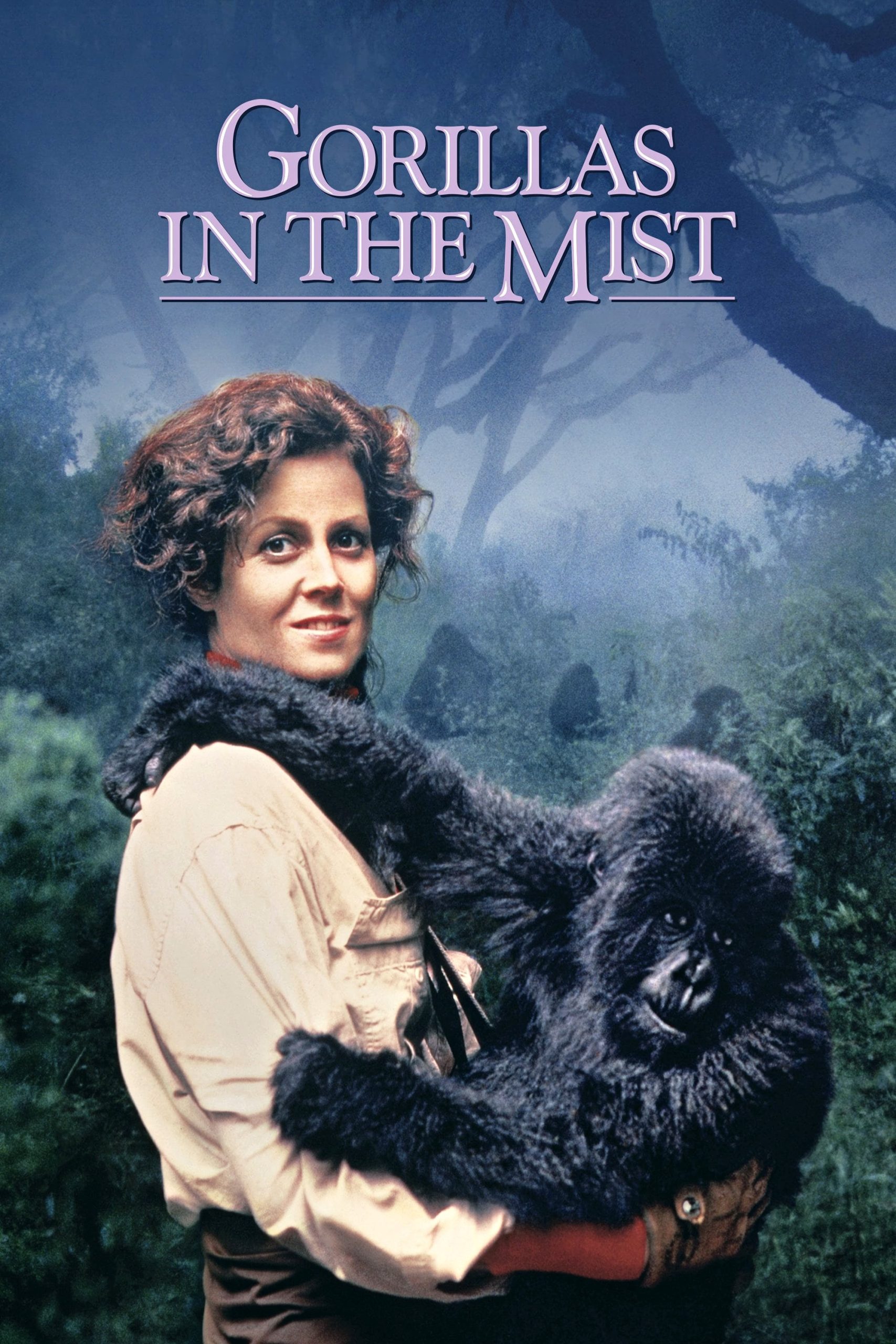
The Unruly Heartbeat of the Jungle
Few films have ever left me as raw and restless as “Gorillas in the Mist.” There’s something in the humid Congolese air of this movie that refuses to stay contained behind the glass of the screen. Watching it, I sensed that I had wandered into a world where humanity and wilderness thrum together—sometimes in harmony, often in discord. What makes this film truly arresting isn’t just its immersive scenery or the aching vulnerability of its gorilla subjects; it’s the uneasy question it asks about what it means to belong, to draw a boundary between reverence and intrusion. At its emotional core, this is a film about obsession—about the singular devotion that transforms both a person and the world she touches, for better or worse.
Dian Fossey: Transformation or Undoing?
Every time I return to Sigourney Weaver’s portrayal of Dian Fossey, I’m confronted by a vast contradiction. Was Fossey transformed by the jungle, or quietly undone by it? The film doesn’t traffic in easy answers. Instead, I feel the script gnawing at the complexities of activism, devotion, and self-destruction. Fossey’s crusade to protect mountain gorillas isn’t simply drawn as heroism; it’s rendered as a fever—one that burns bridges, isolates her from both locals and allies, and dissolves the boundary between empathy and obsession. The more she immerses herself in the lives of the gorillas, the further she drifts from the rhythms of her own species. Some might read her story as a tragedy of isolation, but to me, it’s a meditation on the cost of moral clarity in a world that rewards ambiguity. The film’s meaning lingers in this tension: to love passionately is to risk crossing a threshold, after which there is no return.
The Language of Silence Among Giants
What echoes in my mind after each viewing isn’t so much the spoken dialogue, but the haunting language of silence between humans and gorillas. These moments, where Fossey gently mimics a silverback’s posture or listens for subtle grunts, become the spiritual linchpin of the film. Communication here is not about mastery, but surrender—a willingness to listen on the animal’s terms rather than impose one’s own logic. I find the film profoundly subversive in its refusal to anthropomorphize the gorillas; it instead asks us to recognize the limits of our comprehension. In these silences, I sense a radical humility. The camera lingers, patient and unblinking, forcing me to sit with the discomfort of not knowing, not naming, not possessing. “Gorillas in the Mist” suggests that meaning, in both activism and intimacy, is cultivated in the vulnerable spaces between words.
Collision of Worlds: The Jungle Versus Civilization
When I consider the recurring motif of the thick, impenetrable jungle, I see more than a mere backdrop. The tangle of leaves and shadow is a living metaphor for the collision between different ways of seeing the world. Western scientists, local Rwandan villagers, poachers, and bureaucrats all inhabit divergent moral universes, and the jungle is the battleground where these universes grind against each other. The visual texture of the film—muddy boots, sweat-soaked shirts, the omnipresent mist—serves as a reminder that ideals are always tethered to the physical, often brutal, realities of place. To me, the jungle’s persistent encroachment is a reminder of nature’s indifference: it swallows both the innocent and the complicit, blurring the categories that the outside world insists upon.
Obsession and Moral Blindness
Throughout the film, Fossey’s unwavering commitment to the gorillas becomes indistinguishable from a kind of mania. This isn’t a failing, but rather, the film’s most honest impulse. I sense an undercurrent of warning in the narrative—the suggestion that single-minded moral vision can itself become a form of blindness. As Fossey alienates her allies and antagonizes her enemies, I’m struck by her inability to see the people around her as anything but obstacles or tools. This is one of the movie’s hardest truths: the pursuit of the good, when untethered from empathy or compromise, risks becoming tyrannical. I’m left wondering if the film is quietly indicting Fossey for her lack of self-awareness, or if it’s simply honoring the inevitable messiness of those who choose to fight uncompromising battles against impossible odds.
The Cost of Bearing Witness
What does it mean to bear witness to suffering—animal or human—and what toll does it exact? This is the question that haunts me as the credits roll. The film’s most wrenching scenes—gorillas mutilated by snares or the grim aftermath of poaching—are not presented as mere tragedies, but as indictments of passivity. There’s a palpable sense that to truly see, to allow oneself to be changed by what is seen, is to accept a kind of moral debt. Fossey’s descent into activism is not triumphant, but sacrificial; the more she witnesses, the less she can ignore, and the narrower her own world becomes. In this way, the film is a meditation on the price of radical empathy. It suggests that there is a loneliness, even a madness, that comes from refusing the comfort of willful ignorance.
Images That Refuse to Let Go
Some films live on in the mind as stories; “Gorillas in the Mist” lingers as sensation. I can’t shake the image of mist curling around a gorilla’s arm, or the way the camera lingers on Fossey’s face as she realizes her isolation. These visual moments are more than just atmosphere—they are the soul of the film, existing somewhere beyond language, in the realm of the felt and the intuited. The mist itself becomes a recurring symbol: obscuring, revealing, and always suggesting that clarity is fleeting. I see the mist as a poetic stand-in for the emotional fog that envelops Fossey—her motivations, her grief, her inability to see herself as anything but a guardian. In the end, it’s these images, not the plot, that haunt me; they are the film’s secret language, speaking to the ambiguity of devotion and the impossibility of clean endings.
What Remains When the Mist Lifts
Stepping away from “Gorillas in the Mist,” I’m left with more questions than answers. This isn’t a film that comforts or reassures. Instead, it dares to suggest that the line between savior and destroyer is always perilously thin, and that our deepest passions can both elevate and consume us. The true subject, I now realize, is not just the battle to save a species, but the cost of that battle to one’s own humanity. As I return to the world outside the theater, I find myself changed—aware of the ways in which our convictions both connect us to and separate us from the world we wish to rescue. And maybe that’s the heart of what this film is really trying to say: that meaning, in all its beauty and brutality, is found in the mist—in the places where certainty dissolves and all that’s left is the courage to care.
If This Resonated: Two Films I Would Choose Next
If the feverish devotion and moral ambiguity of “Gorillas in the Mist” moved you, there are two classic films that might deepen the conversation. I recommend “The Inner Circle” and “The Elephant Man.” Both wrestle in their own ways with ethical boundaries, human dignity, and the cost of bearing witness to suffering. Each is a reminder that the stories worth telling are rarely the cleanest, but almost always the most necessary.
If you’re curious about how this film was originally perceived or how it compares to similar works of its era, these resources may be helpful.
🎬 Check out today's best-selling movies on Amazon!
View Deals on Amazon