
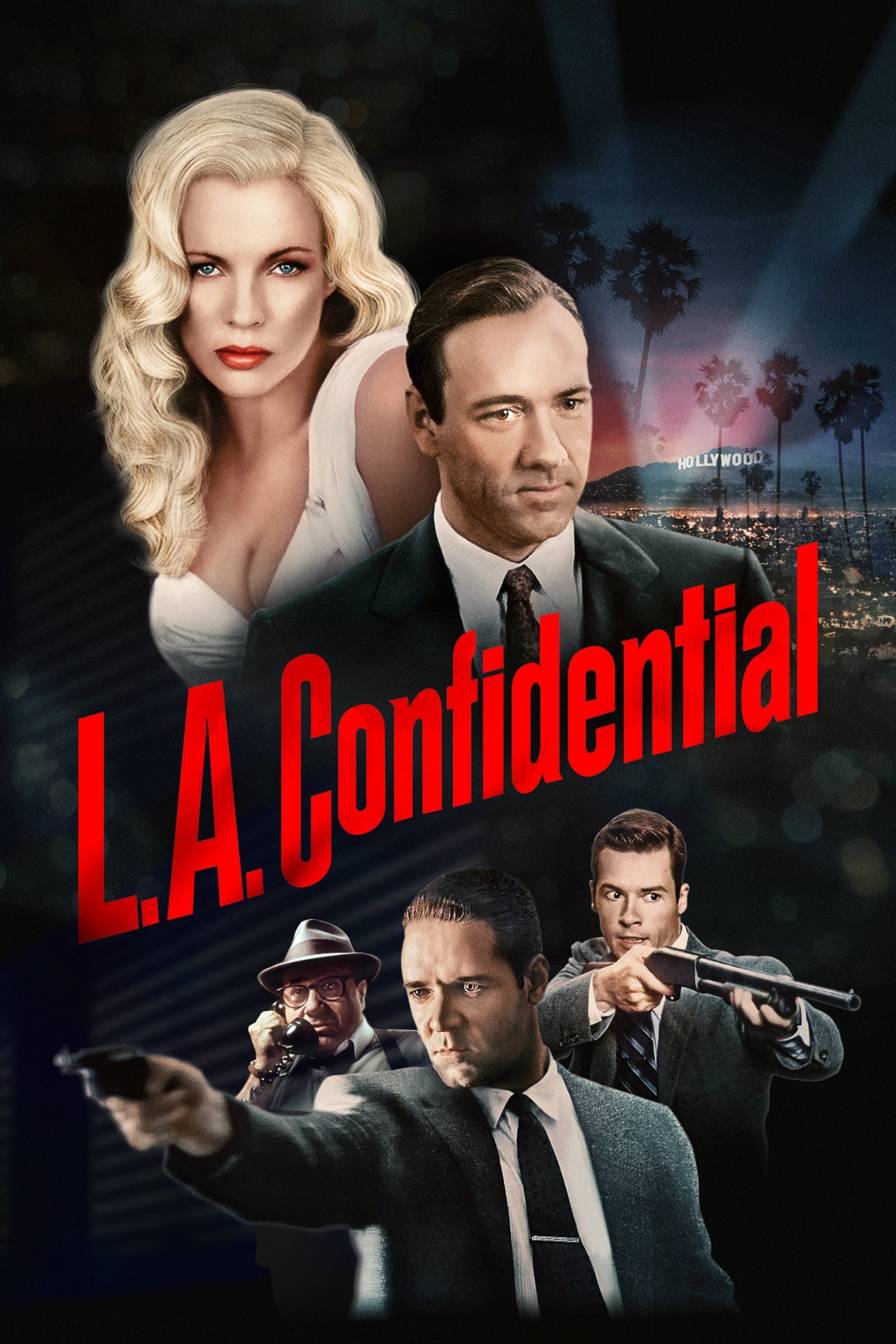
When I think of my earliest encounters with ‘L.A. Confidential,’ I don’t initially recall the detailed plot points or the big twist. Instead, I remember the way the film made me question the myth of Hollywood glamour. I was captivated by how the sunlight of 1950s Los Angeles, immortalized in cultural memory as golden and hopeful, suddenly felt harsh and corrosive. My fascination with the movie is rooted in its boldness: it takes the noir tradition out of foggy back alleys and dumps it under scorching daylight, proving that corruption thrives in plain sight, unbothered by the California sun or our romantic visions of the past.
A Dive Beneath the Surface of Glamour
‘L.A. Confidential’ is not just a whodunnit about a massacre in a downtown diner; it’s a feverish excavation of trust, ambition, and rot beneath polished surfaces. At its emotional core, the film is about three very different policemen encountering the limits of their own morality as they wade through a labyrinth of crime, betrayal, and institutional decay. What struck me most on my first viewing—and has only become more apparent with each revisit—is how the film never allows its characters a firm moral footing. Each step forward brings new revelations that compromise, implicate, or redeem. Director Curtis Hanson orchestrates this with surgical precision, intertwining the fates of Ed Exley, Bud White, and Jack Vincennes in a dance of alliances and betrayals that feels as emotionally exhausting as it is narratively propulsive.
Yet, what elevates the film is its understanding that the real casualties are not the obvious victims of violence, but the people who started with good intentions and gradually lost themselves. Watching Kim Basinger’s Lynn Bracken, I’m reminded that innocence is almost never rewarded in noir; survival comes at a cost. ‘L.A. Confidential’ is a story about the damage inflicted not just by others but by the compromises we make with ourselves, all in service of something bigger—fame, justice, love, or simply survival.
Tangled Ambitions: Themes that Resonate
What continually draws me back to ‘L.A. Confidential’ is its refusal to offer easy answers about power, identity, and the cost of integrity. In a city that purports to sell dreams, we watch as those with power manufacture realities—planting evidence, manipulating stories, selling idealized versions of themselves and others. There’s a particular kind of horror in watching Ed Exley chase his father’s murdered memory, only to realize that heroism in this world is deeply complicit in corruption. Even the most righteous act—arresting a suspect, testifying against a colleague—ripples out with unforeseen consequences.
In 1997, the film’s themes pulsed with a kind of double resonance. On release, America stood at the cusp of a new century, coming off a decade beset by police scandals, shifting racial landscapes, and a renewed skepticism toward institutions. Watching the LAPD of the 1950s tear itself apart from within, I felt echoes of modern anxieties: Can any institution be trusted? Can any individual remain untouched by the system he serves? The film’s social commentary feels even more contemporary today. For me, its greatest theme is that the lines between good and evil are always moving—and that, in the end, it’s how we accept or deny that reality that defines both individuals and societies.
Undercover Truths: Symbols and Visual Signatures
‘L.A. Confidential’ masterfully deploys visual motifs and recurring symbols to deepen its narrative complexity. The recurring image of glass—shattered, frosted, or otherwise obscured—reminds me how nothing in this world is seen clearly. Whether it’s the foggy pane of a police interrogation room or the mirrored walls of Lynn’s home, these reflections entrust me with the knowledge that truth here is always refracted through personal or institutional agendas.
Another motif that haunts me with each viewing is the use of sunlight and shadow. Unlike classic noirs, the film often places corruption directly under a merciless sun. This inversion of expectation—exposing secrets rather than hiding them in darkness—serves as a signature visual metaphor for Los Angeles itself, a city that wields its beauty as both a weapon and a shield. And let’s not overlook the recurring references to Hollywood and celebrity: the ‘Fleur-de-Lis’ girls are literally manufactured imitations, stand-ins for lost stars. Their existence as mirages of perfection becomes the film’s most cynical comment on the city’s obsession with image over substance.
Pivotal Moments That Shatter Illusions
The Night Owl Massacre: The Catalyst
From the moment the Night Owl Café massacre erupts, the tone is set. I see this not just as the plot’s inciting incident, but as the shattering of a communal illusion: the city’s façade of peace obliterated in an orgy of violence. This event ties together the plot threads, yes, but it also forces each major character to confront his own motivations—proving that a single act of violence can expose the true nature of everyone involved.
Rollo Tomasi Revealed: Personal Motivations Unmasked
The revelation of the “Rollo Tomasi” myth is a moment I find endlessly fascinating. What started as Exley’s philosophical ghost—a symbol of the unpunished criminal—becomes an indictment of Exley himself. In that instant, the pursuit of justice collapses into the pursuit of personal vindication. This philosophical pivot is the point where systemic rot becomes personal tragedy, and vice versa.
The Victory Motel Shootout: Atonement in Blood
The film’s bloody showdown at the Victory Motel is the moment the tangled web snaps. Here, all masks are stripped away: Bud and Ed, so different at first, are forced to trust each other. What deeply moves me is that catharsis only arrives after unspeakable violence and the utter collapse of superficial loyalties. This scene is a crucible—the last test of character amidst the ruins of once-inviolable institutions.
How Others Read It—and Where I Diverge
It’s almost unavoidable to mention that many critics have positioned ‘L.A. Confidential’ as a meticulous homage to film noir, praising its labyrinthine plotting and ensemble cast. These readings often highlight the film’s structural perfection and its faithfulness to noir tradition, and I agree with much of this praise. However, I find that some critics stop short at style and genre—a superficial reading that underestimates the film’s anger. Where others see just pastiche, I see a film obsessed with the tragic impossibility of true justice, even when all the case files are closed. The movie reverberates because it makes no promise of healing; the survivors limp away, not as heroes, but as the least-damaged casualties of a system that devours its best people.
Additionally, I’ve encountered readings that call the film cynical, even nihilistic. For me, that misses the hopeful, scarred realism at its core: change comes slowly, painfully, and at enormous cost. What I cherish is not cynicism, but the recognition that sometimes the best we can do is walk through the ruins, determined to do a little less harm next time.
Cinematic Kindred Spirits
- Chinatown (1974) – Like ‘L.A. Confidential,’ this film uses Los Angeles as a backdrop to tackle institutional corruption and the futility of idealism, unraveling the dark secrets behind power and greed.
- The Untouchables (1987) – The struggle of lawmen to retain their integrity in a system stacked against justice is a central tension, resonating strongly with the moral ambiguity of Hanson’s film.
- The Big Sleep (1946) – This Raymond Chandler adaptation shares not only the noir style but also the theme of hidden truths and compromised morality lurking beneath the glittering surface of the city.
- Zodiac (2007) – While set in a different era, Fincher’s approach to the obsessive search for truth and the emotional toll of following the rules echoes the journey of the policemen in ‘L.A. Confidential.’
Takeaways for Contemporary Eyes
I believe modern audiences might approach ‘L.A. Confidential’ as a retro curiosity, but that risks missing its biting relevance. The story it tells—of flawed institutions and relentless personal ambition—is more urgent now than ever. By embracing the film’s complexity and avoiding nostalgia for the era it depicts, viewers can discover layers of meaning about the seductive dangers of power, fame, and justice. For me, rewatching ‘L.A. Confidential’ is a reminder that surfaces deceive, and our compulsion to look deeper isn’t just cinematic—it’s necessary for understanding the world we live in.
Related Reviews
If you found value in my perspective, you might also enjoy exploring my thoughts on other cinematic landmarks such as Chinatown and The Big Sleep.
To broaden this interpretation, you may also explore how critics and audiences responded over time.
🎬 Check out today's best-selling movies on Amazon!
View Deals on Amazon