
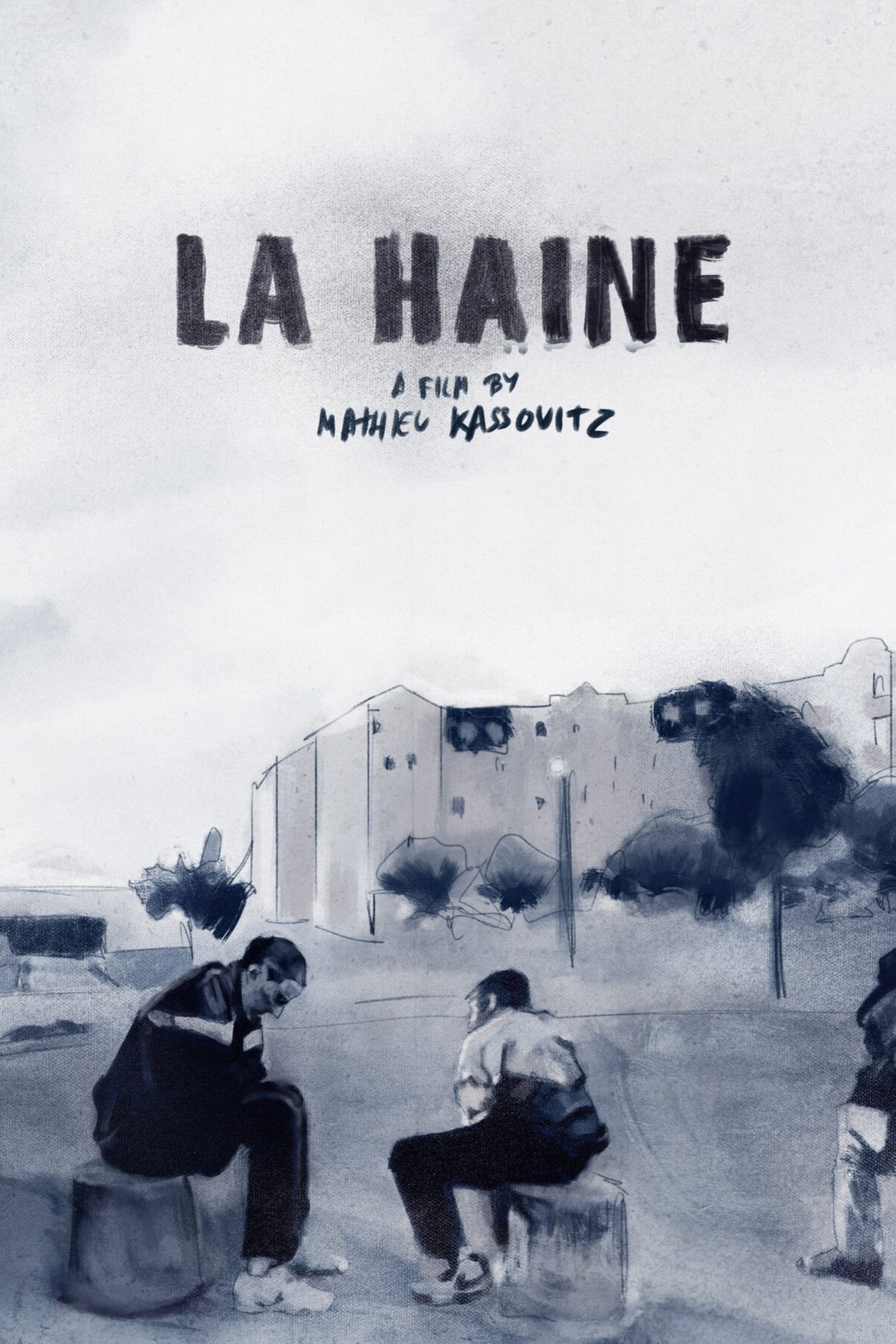
Watching La Haine for the first time, I remember how the relentless rhythm of Paris’s banlieues pressed into me—not just as a cinematic experience, but as a visceral memory. I’d seen films about the margins before, but none left me feeling the gravity of disaffection and urgency quite as sharply. For days afterward, the black-and-white palette seemed to seep into the corners of my own city, amplifying every undercurrent of tension and every fleeting moment of connection among strangers. What makes this film so fascinating for me is not just its rawness, but how it peels back the surface of urban alienation and refuses to give easy answers; it’s a film that echoes every time society seems on the verge of boiling over, then—like its ticking clock—lingers in the pauses in between.
Delving Into the Emotional Terrain of La Haine
To me, La Haine is less about the plot’s mechanics than it is about the intensity of being hopelessly suspended between anger and aimlessness. Following Vinz, Saïd, and Hubert through a single day after a riot, I felt not just the external pressures of a society teetering, but the burden of their internal contradictions. The film stages its narrative like an existential waiting room—a limbo where pride, despair, and fleeting solidarity keep colliding.
What strikes me most is how the emotional core comes from the characters’ inability to escape the systems that confine them. Vinz festers with bravado and rage; Saïd masks his vulnerability with jokes; Hubert aches for change, but is tethered by the inertia of his environment. Their journey across the city feels to me like a struggle for dignity—a search for some scrap of control over a fate that’s been shaped for them by forces both visible and invisible. Throughout, there is a sense of breathless anticipation, as if violence and festivity are twin edges of the same knife.
From my perspective, La Haine is telling us that the fragmentation at the heart of modern cities isn’t just physical or economic—it’s spiritual. Its central conflict is about how to be seen, heard, and respected in a world that already seems to have decided your worth. In refusing melodrama, the film lets us feel the weight of every hesitation, every outburst, every fatal error. That, for me, is its true narrative power.
Threading Together the Film’s Underlying Ideas
Alienation and powerlessness are the most urgent, recurring themes that continue to resonate with me, especially watching this in any decade. The fact that the film was released in 1995, amid rising urban unrest and a public reckoning with police violence in France, lends every frame a prophecy-like relevance. It’s a portrait of what happens when communities are left on the social and political periphery—with justice feeling perpetually out of reach.
I find myself caught most by the film’s reckoning with identity and masculinity. Each character performs—sometimes violently, sometimes tenderly—a role invented by the world around them. I see their bravado as a trembling reaction to humiliation, their camaraderie as a way to guard against oblivion. In their search for belonging, their suffering becomes communal, not just individual.
Even now, years later, these themes have barely dimmed. Looking at today’s headlines, the cyclical tension between authority and youth, between center and margin—those patterns repeat. The point La Haine makes—at least to me—is how crucial it is to name systems of exclusion, because silent wounds left to fester inevitably rupture.
Recurring Imagery and Its Layered Impact
What stands out on repeated viewings is how the film’s visual motifs breathe meaning into every moment. The persistent use of clocks, echoed by the script’s literal reminders (“so far, so good…”), caught me with their oppressive inevitability. Time drips like water torture—the day counts down, and each second seems borrowed against an explosion that feels statistically inevitable.
The pistol that Vinz carries through the city is more than just an object; for me, it’s the embodiment of masculine pride and existential threat—a talisman promising power but always whispering tragedy. The film’s monochrome aesthetic, meanwhile, articulates a world stripped of illusions—everything is heightened, every line between police and youth, hope and despair, drawn in urgent black and white.
Another lasting symbol, for me, is the rooftop—the place where Saïd tags his name, seeking visibility in a world that constantly erases him. These spaces above, below, and in between the city map the characters’ psychological territory, hinting that what’s at stake is more than survival: it’s a struggle for meaning, to leave a trace before the world moves on.
Moments That Resonate: Three Indelible Scenes
Jewish Graveyard Confrontation: Truth Unexpected at the Margin
In the graveyard, when an old man recounts the haunting story of his friend who froze in the camp latrines, I am always pulled up short. The story doesn’t explicitly clarify their predicament, but in its elliptical wisdom, it radiates a sense of generational trauma and overlooked suffering. Here, the cycle of violence and its senselessness gain historical dimension; the boys, for a moment, are not just isolated cases but links in a much longer chain of exclusion and pain.
The Rooftop Scene: Highs and Lows of Marginality
Up on the rooftops, the trio surveys the city they love and loathe. Saïd’s whimsical graffiti is a claim to territory, a fleeting assertion of self against anonymity. The humor in this scene—tinged with desperation—illuminates how their identity is always being negotiated, straddling belonging and rejection. For me, this moment clarifies the emotional fuel that powers their bravura: a fragile, communal assertion that their lives matter, even (or especially) when the world seems indifferent.
The Final Confrontation: The Point of No Return
The ending—searing, abrupt, and unresolved—still leaves my heart pounding. In that alley, the casual cruelty of state power collides with the randomness of fate. The camera lingers on Hubert and the officer, weapons at the ready, and everything teeters. To me, the final shot is not just shocking; it is the entire film distilled: no answers, only the reverberating echo of consequences, amplified by the narrator’s refrain, “so far, so good.” It makes it impossible to look away or pretend that anything has been tidily resolved.
Tangling with Consensus: Critical Commentary Versus Lived Resonance
Most critics concur that La Haine is a scalding indictment of police brutality, urban neglect, and the failure of institutions. They often highlight its technical innovations—the restless camera, kinetic editing—as vehicles for social critique. I agree with this to a degree: Mathieu Kassovitz’s direction channels anger into a kind of punk poetry. But my own reading focuses more on the film’s deeply rooted empathy than its indictment. Where critics see protest, I also see mourning—the sorrow of squandered potential, the longing for recognition that simmers below the bursts of violence.
Others have described the film as nihilistic, but I bristle at that characterization. What I take from La Haine is less despair and more an urgent appeal for solidarity. Its power—at least for me—lies in its refusal to explain away suffering; it trusts viewers to sit with discomfort rather than offer catharsis. The ambiguity doesn’t signal cynicism, but a challenge: bear witness, and perhaps, imagine something different.
Kindred Films: Cinematic Echoes in the Margins
- Do the Right Thing (1989): Like La Haine, Spike Lee’s film explores racial tensions, urban heat, and the eruption of violence as the climax to long-simmering social pressure in a marginalized neighborhood.
- City of God (2002): Both films confront the cycle of violence among youth, set against the neglect and brutality of state forces in urban slums, reflecting on how environments shape destinies.
- American History X (1998): This film examines the seduction of violence, disenfranchisement, and the struggle for identity and change within a fractured community much like La Haine’s exploration of masculinity and anger.
- Gomorrah (2008): Like La Haine, it depicts the consequences of socio-economic neglect, following individuals trapped in systems of violence and resignation in the peripheries of urban life.
Reflecting Forward: The Value in Revisiting La Haine
I believe that contemporary audiences should approach La Haine with an open willingness to be unsettled. Its themes of alienation, cyclical violence, and longing for dignity remain as raw now as they were in 1995—or perhaps more so. In a world where divisions harden and stories from the margins still go unheard, to understand this film is to reckon with the costs of neglect and the necessity of empathy.
For me, the film matters not simply as a time capsule but as a living, breathing document. Its willingness to stare down uncomfortable realities makes it an essential watch for anyone interested in the intersections of art, society, and personal responsibility. To learn what La Haine has to teach is to be changed—if only by the force of its questions.
Related Reviews
If you found value in my perspective, you might also enjoy exploring my thoughts on other cinematic landmarks such as Do the Right Thing and City of God.
To broaden this interpretation, you may also explore how critics and audiences responded over time.
🎬 Check out today's best-selling movies on Amazon!
View Deals on Amazon