
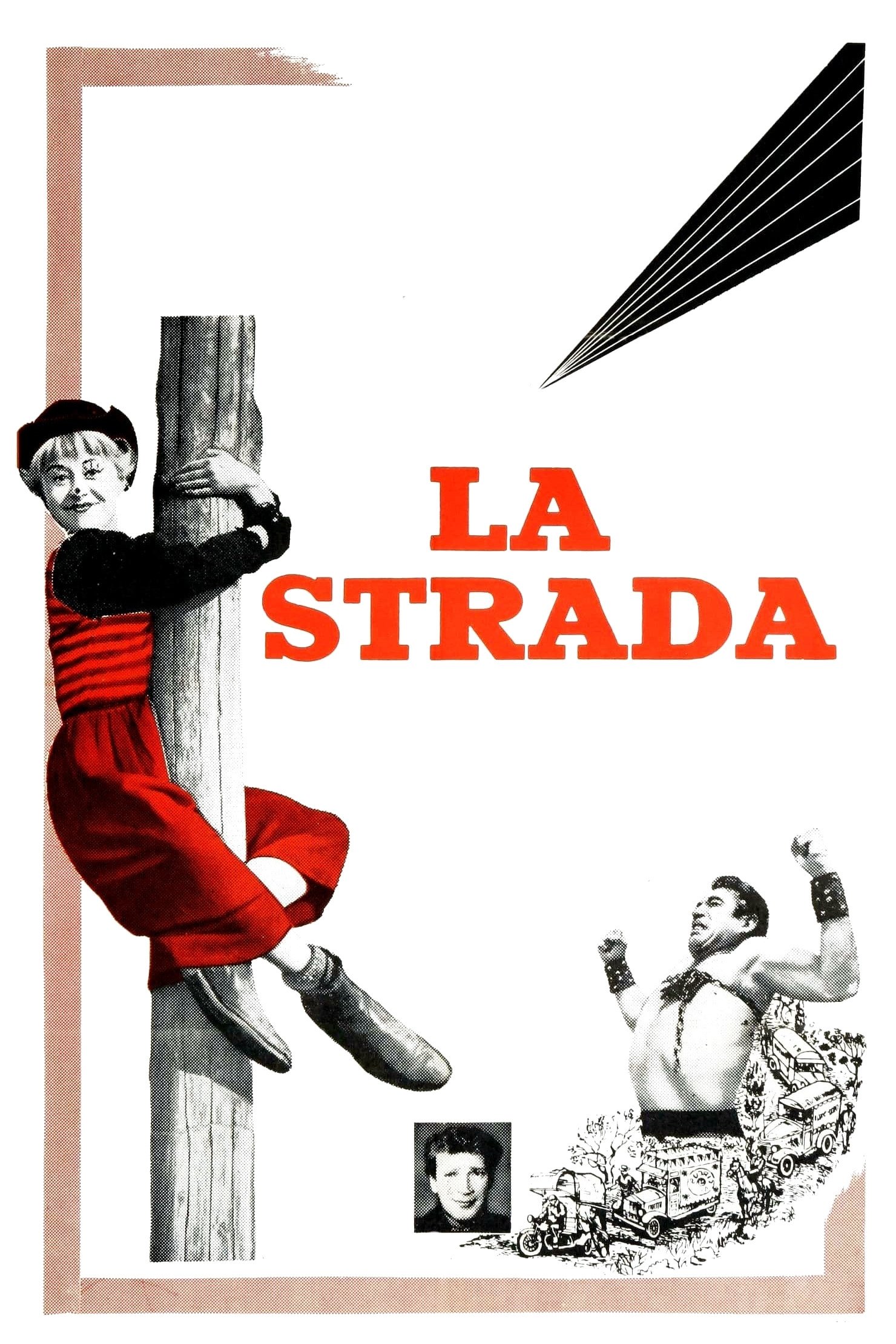
Sitting in a dimly-lit theater during a retrospective screening, I remember watching “La Strada” for the first time as if I were peering through a window into both my own soul and the battered postwar Italy it conjures. It wasn’t the period costumes or Fellini’s name that struck me most; it was the silent, childlike ache painted on Giulietta Masina’s face, the way her innocent bewilderment made even the most cynical viewers sit forward in their seats. There are films that impress with technical mastery, and then there are those—like this one—that invade my dreams, gnawing at unanswered questions of cruelty and kindness, love and resignation.
The Winding Path of Emotion and Humanity
For me, the heart of “La Strada” is less about plot mechanics than the way it dissects the weight of emotional dependency—how two wounded people can be yoked together by fate and need rather than desire. Gelsomina, naive and pure, is sold by her mother to the callous strongman Zampanò, whose blunt physicality barely conceals his emotional impotence. Their journey along remote byways becomes a moving meditation on suffering and the consequences of human connection. The road (“la strada”) is not just their means of living but a state of being: one of perpetual search, of an itinerant soul never quite at peace.
What I find most resonant is the film’s refusal to neatly resolve their jagged relationship. The central conflict—between Zampanò’s brutish survivalism and Gelsomina’s irrepressible need for meaning—is not just a clash of personalities, but an existential dilemma. Does cruelty obliterate innocence, or does innocence redeem cruelty? For me, Fellini uses their agonizing bond to probe the notion that every soul, no matter how small, yearns to be understood and cherished—even without the vocabulary to admit it. The tragedy of miscommunication and the longing for acceptance immerses the viewer in a landscape both personal and universal.
Themes That Echo Through Generations
The major themes that have gripped me most are those of alienation, the need for belonging, and the corrosive nature of power. In 1954, these questions must have pressed desperately at Italians recovering from war and rebuilding their lives in uncertainty; today, they retain their urgency in a world that still so often treats vulnerability as a weakness. Watching Gelsomina try to assert her individuality, despite Zampanò’s crude domination, hits hard in a time when so many still struggle to define their worth outside of the roles prescribed to them.
What gives these themes particular bite is Fellini’s ability to immerse us in characters who could so easily become archetypes—“the brute,” “the innocent.” Instead, he makes them both heartbreakingly complex. I am reminded, watching the film as a 21st-century viewer, how the tension between dependence and dignity, between spiritual longing and material survival, is unfailingly contemporary. These themes mattered in 1954 because they gave voice to those who felt invisible in the churn of modernity; they matter now because that invisibility persists in new guises.
Recurring Images and Their Unspoken Power
Like all great films, “La Strada” communicates as much through symbol as through speech. For me, the most powerful recurring image is Gelsomina’s trumpet—the battered instrument she uses to communicate her inner world when words fail. In her hands, it becomes more than a prop: it is a symbol of fleeting joy, fragile hope, and a soulful longing for beauty amid hardship. Every time Gelsomina plays that simple tune, I am reminded of the small, stubborn fires that people carry to light the darkness of everyday existence.
Another motif that stands out is the recurring sight of the road itself, dusty and endless, winding through barren fields and deserted towns. The road becomes a visual metaphor for both life’s relentless forward motion and the impossibility of going back. Even the sea, glimpsed only rarely, serves as a boundary—representing the dreams and freedoms that remain always just beyond reach.
Finally, the recurring presence of the Fool (Il Matto) presents a third crucial motif: the idea that laughter and absurdity are not just coping mechanisms, but philosophical stances. His performances and gentle wisdom, as ephemeral as they seem, force both Gelsomina and Zampanò—and myself as the viewer—to contemplate how playfulness can be both shield and sword.
Three Defining Moments on the Road
The Fool’s Ropewalk and the Birth of Doubt
The moment when the Fool performs his tightrope act, needling Zampanò and gently teasing Gelsomina, is for me not just comic relief but a turning point—the introduction of ambiguity, of the possibility of alternatives to brute strength. The Fool tells Gelsomina that everyone is useful, even a small pebble, whispering hope into her battered heart. This scene suspends the story between laughter and despair, compassion and contempt, in a way that reverberates throughout the film.
The Quiet Breakdown at the Bonfire
For me, one of the most wrenching scenes is when Gelsomina sits by a campfire, shivering and lost, clutching her trumpet. Here, Masina’s performance anchors the whole film: she is heartbreakingly vulnerable, illuminated by the flames that seem to flicker in response to her confusion. Surrounded by the impassive landscape and unable to articulate her pain, Gelsomina becomes not only a symbol but a fully human presence—her suffering unmistakably specific and deeply universal.
The Abandoned Trumpet and The Shores of Regret
Near the end, a devastating scene unfolds on a wintry beach. Zampanò, realizing he has cast aside the only person who saw his humanity, breaks down in solitude. The abandoned trumpet, partly buried in sand, marks the film’s emotional nadir: a symbol of promise unfulfilled and the cost of emotional blindness. It is in this silence—with no one left to hear or play that simple melody—that the consequences of neglect and cruelty become truly inescapable.
How Critics See It—and My Response
Critics have long interpreted “La Strada” as both neorealist and allegorical—a fairy tale about the lost seeking redemption in a harsh world. Most point to Gelsomina as a Christlike figure, sacrificing herself in the faint hope of awakening Zampanò’s humanity. Some read the film as an elegy for innocence destroyed by modernity, and Zampanò as emblematic of the destructive forces in a newly industrialized society.
Although I recognize these readings, I resist reducing Gelsomina to mere martyrdom. My own experience with the film is more tangled: I see her not as a religious symbol but as a vessel for the irreducible complexity of need—the sometimes humiliating, sometimes heroic urge to find significance in even the most desperate linkages. While critics often emphasize the universal, what haunts me most is the deeply personal: the muffled sobs, the awkward halting gestures, the fleeting moments of transcendence that refuse to fit any one allegory.
Echoes in Other Cinematic Journeys
- “The Bicycle Thief” (1948): Both films are steeped in Italian neorealism, but for me the emotional devastation arises not just from material deprivation, but the way dignity clings to hope in the face of defeat.
- “Umberto D.” (1952): The story of a marginalized protagonist navigating a pitiless world resonates in its treatment of loneliness, vulnerability, and the search for meaning.
- “Pixote” (1981): A Brazilian echo of neorealist pain, following street children battered by circumstance—a raw meditation on innocence crushed by systemic brutality.
- “Au Hasard Balthazar” (1966): Robert Bresson’s film tracks an innocent donkey through a series of indifferent owners, paralleling Gelsomina’s journey as a study of suffering, purity, and the search for grace.
Finding Meaning on Today’s Open Roads
It can be daunting for newcomers—accustomed to more bombastic forms of storytelling—to dive into the muted pain of “La Strada”. Yet, I would urge any viewer to approach Fellini’s film with patience and openness, reading not just its surface plot but the currents of longing and heartbreak that flow beneath. The film’s value, for me, lies in how it teaches us to listen to silences and see dignity even in humiliation. To watch “La Strada” is to confront the boundaries of empathy—where cruelty is possible, but redemption is not impossible. Its lessons are not confined to 1954 or to Italy, but echo wherever the fragile coexist with the strong.
Related Reviews
If you found value in my perspective, you might also enjoy exploring my thoughts on other cinematic landmarks such as “Au Hasard Balthazar” and “The Bicycle Thief”.
To broaden this interpretation, you may also explore how critics and audiences responded over time.
🎬 Check out today's best-selling movies on Amazon!
View Deals on Amazon