
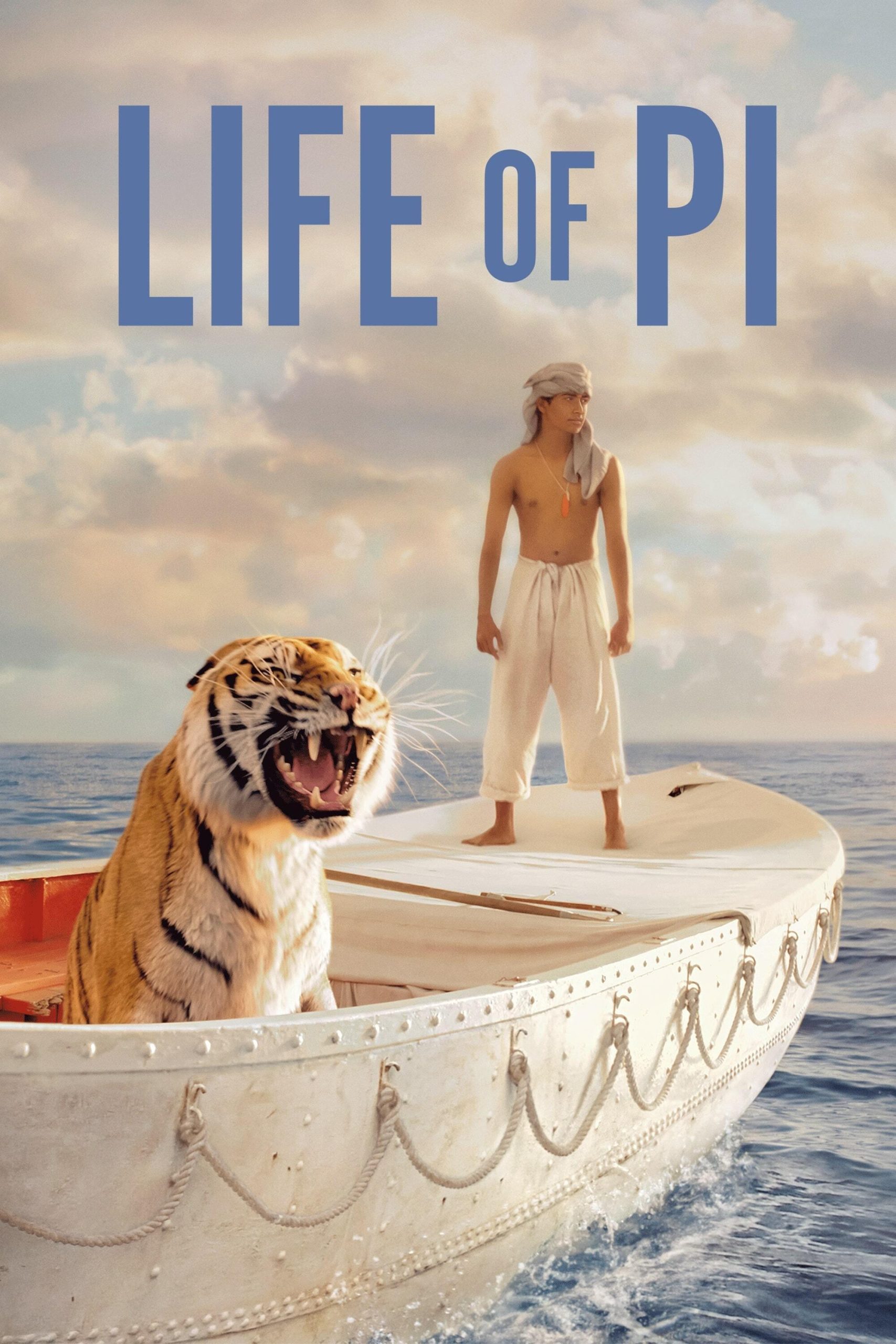
Cast Away in the Mind: My Journey with “Life of Pi”
There are films that show you the world, and there are films that point you inward, asking questions you didn’t know you had. “Life of Pi” did that to me right from the first frame, and by the time the credits rolled, I was quietly unsettled. This wasn’t a film I could simply watch and forget; it demanded that I participate, not as a spectator, but as a fellow castaway. The true challenge the film presents is wrestling with the question of what we believe and why we believe it. I found myself adrift alongside Pi, not only on the sea, but in the shifting tides of faith, reality, and survival.
The Fluid Nature of Truth
Ang Lee’s “Life of Pi” is, on its radiant surface, a story of survival against impossible odds. But what hooked me was its sly, persistent interrogation of truth itself. The film is less interested in which version of Pi’s ordeal is factual than in how we choose our own stories. The renowned ambiguity at the end, with its dual narratives—one magical, one brutal—doesn’t lazily invite the audience to pick their favorite. Instead, it corners us: Are you comforted by myth, or do you insist on the raw edge of reality? I wrestled with my own biases. I wanted to believe in the Bengal tiger, the carnivorous island, in the miraculous. Yet, I also recoiled from the implication that these wonders might be a child’s shield against horror. The film’s mastery lies in this tension. Lee transforms the screen into a mirror, and the face looking back at me wasn’t Pi’s—it was my own, caught between longing and skepticism.
Faith as Survival, Not Salvation
I entered “Life of Pi” expecting a parable about faith, perhaps even a celebration of religious conviction. What I discovered, though, is more jagged and persistent: the film positions faith not as a destination, but as a raft—something provisional, born out of desperation. Pi’s early flirtations with multiple religions might seem naive, even comic, but once he is alone at sea, faith is stripped of its theological trappings. Ritual becomes necessity. Prayer becomes bargaining. Faith is what Pi constructs day by day, not a set of answers but a way to survive uncertainty and terror. This is a challenging and almost subversive vision—one that values the mechanics of belief far more than its final form. Watching Pi improvise a relationship with Richard Parker, the tiger, and with the vast, indifferent ocean, I realized that faith in this film is a process, not a reward. It’s a means of holding oneself together when the world offers no comfort.
Tigers, Teeth, and the Shadow Self
I can’t shake the feeling that “Life of Pi” is, at its core, a film about the divided self. Richard Parker is not simply a tiger. He’s a projection, a companion, an adversary—but most of all, he is Pi’s own shadow. The animal’s presence aboard the lifeboat externalizes Pi’s primal instincts—his fear, his aggression, and his will to live at any cost. What’s remarkable is how the film never lets us forget this doubleness. The boundaries between Pi and Richard Parker are porous; moments of tenderness give way to sudden violence, and vice versa. When Pi trains the tiger, he isn’t taming nature, he’s negotiating with the wildness within himself. The most haunting image, for me, is not the savage ocean or the fantastical island, but that fleeting look Pi shares with Richard Parker at the end—recognition and separation at once. The tiger leaves, utterly indifferent. It’s a painful reminder that the parts of ourselves we need to survive may not stick around when we reach safety. I left the film wondering about my own shadow selves, and what I might be forced to nurture or abandon if thrown overboard.
Beauty as Consolation and Trap
The visual splendor of “Life of Pi” is deceptive, seducing the eye while unsettling the mind. Ang Lee renders the ocean as a place of almost unbearable beauty—luminous jellyfish, storm-tossed waves shimmering with moonlight. But this loveliness is always double-edged. The film uses beauty not to reassure, but to complicate. Is the dazzling floating island a gift or a hallucination? Does the grace of the flying fish make the ordeal bearable, or does it hint that Pi’s mind is fracturing? I found myself questioning not just what I was seeing, but how much the allure of the unreal might lull me into forgetting what is at stake. Beauty in “Life of Pi” is both a comfort and a trap, offering the possibility of escape from pain, but also the risk of losing touch with reality. The film’s digital artistry is so seductive that it draws us into Pi’s coping mechanism—and, by extension, our own.
Storytelling as an Act of Mercy
What stayed with me longest was the idea that storytelling itself is an act of compassion—both for others and for oneself. Pi’s tales are not lies; they are gestures of survival, ways to contain and transform trauma. When Pi offers the Japanese investigators two versions of his ordeal, he is not simply hiding the truth—he is giving them a choice about what kind of story the world should hold. I realized that we all do this, in large and small ways: we shape our memories, soften the worst, heighten the miraculous. The film doesn’t condemn this impulse; it honors it. In a world where the truth is often unspeakable, the ability to craft meaning from suffering is the most profound mercy one can offer oneself. This, I think, is the film’s deepest faith—not in God or in tigers, but in the raw human need to find shape in chaos.
The Unanswered Questions that Linger
What “Life of Pi” left me with, in the end, was not certainty but a clutch of persistent questions. Which story do I prefer, and why? What would I do to survive, and what stories would I tell afterward? Above all, the film forces me to confront how much I depend on narrative to make sense of the random violence and beauty of living. I can’t say that I have answers. I’m not even sure the film wants me to. Its genius is in the way it draws me into complicity—forcing me to choose, and to see the cost of that choice.
If These Waters Move You: Two Films to Consider
Few films have left me as adrift and contemplative as “Life of Pi.” If its ambiguous take on survival, reality, and faith spoke to you, I’d urge you to seek out these cinematic journeys:
- Aguirre, the Wrath of God (1972) – Werner Herzog’s hypnotic odyssey into madness and conquest, where the river is both a literal and existential trial.
- The Red Turtle (2016) – An animated parable about isolation, resilience, and the blurred line between myth and reality, told entirely without dialogue.
If you’re curious about how this film was originally perceived or how it compares to similar works of its era, these resources may be helpful.
🎬 Check out today's best-selling movies on Amazon!
View Deals on Amazon