
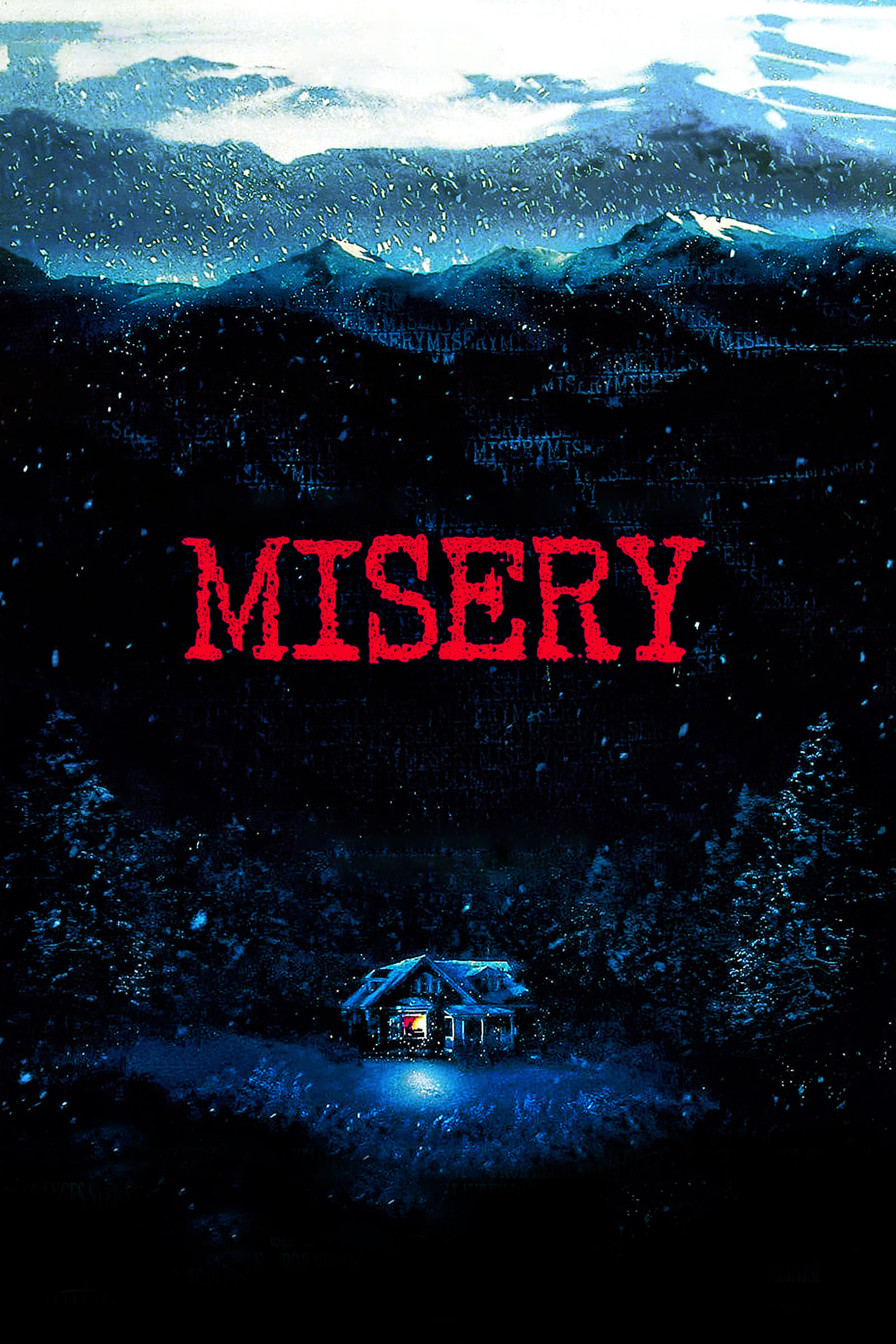
I still remember the first time I watched “Misery”—not just the harrowing spectacle of violence or the sweat-slick tension that left me physically uneasy, but something more intimate: a creeping recognition of the way obsession can imprison both parties involved, abuser and victim. It was on a cold, rain-hushed afternoon, the kind you wish could hold you in permanent pause from reality. Instead, “Misery” flung me directly into a claustrophobic nightmare, making me question who, between Annie Wilkes and Paul Sheldon, was the true captive. I return to this film often—not for comfort, but to probe my own fascination with fear, need, and the darkest corridors of human attachment.
What the Film Is About
“Misery” lures me in with the stark simplicity of its setting and scenario, but what unfolds is far from a straightforward narrative about imprisonment. At its heart, this film is a psychological battle: a celebrated author, Paul Sheldon, finds himself at the mercy of Annie Wilkes, his “number one fan,” after a car crash strands him in her snowbound home. Instantly, I’m drawn into a distressing dance of dependence, where the line between gratitude and terror evaporates and each act of kindness is laced with unspoken threat.
Watching the film, I’m struck by how expertly it morphs Sheldon’s physical ordeal into an existential struggle. He isn’t just fighting for survival, but for his creative autonomy, his voice, and ultimately his sense of self. For Annie, rescuing Paul was never an act of selflessness—it’s an assertion of control, a demand to shape another’s narrative for her comfort. The film, to me, is about the suffocating consequences when admiration twists into possession, and how fragile the borders of personal identity become in the face of obsessive love. The central conflict is raw, primal: What would you do to reclaim your freedom from someone who loves you too much?
Core Themes
No matter how many times I revisit “Misery,” its major themes—power, creative ownership, and fanaticism—feel all the more urgent. It’s a perverse reversal of the artist-muse dynamic, where the creator is brutalized by the expectations of his creation’s audience. Annie sees Paul’s novels not as products, but as sustenance, blurring the difference between love and consumption. That tension between consumer entitlement and creator autonomy feels especially relevant today, when artists of all kinds are both idolized and harangued by their own followers.
Back in 1990, this was an entirely different conversation—Stephen King’s cultural influence loomed massively, and “Misery” landed at a time when horror was often used as a lens for social anxiety. I’m fascinated by how the film explores the weaponization of fandom and the way desire for narrative resolution can become a brutal force. Annie doesn’t just want her favorite character revived; she wants Paul Sheldon himself shaped and shattered until her will is satisfied. The film’s treatment of these themes forces me to recognize that obsession is not just a feeling, but a potent instrument of domination.
Symbolism & Motifs
The intimate claustrophobia of the setting—the rural, snow-entombed house—has always felt to me like a physical embodiment of captivity and isolation, not just for Paul, but for Annie as well. Every window is swaddled in snow, every door a barrier, each room echoing with tension. For me, the home is more than just a stage for violence: it is a symbol of the way comfort and familiarity can become a prison when dominated by the wrong person.
Recurring objects, like the antique typewriter (a literal tool of creation and self-defense) and the bedridden manuscript pages, are loaded with meaning. When Paul is forced to burn his new novel, I see it as an act of self-immolation—a symbolic death of his agency, his voice reduced to ashes at the altar of Annie’s mania. The motif of broken bodies—in particular, the infamous sledgehammer scene—has become infamous not just for shock value, but for the way it visually externalizes Annie’s power over Paul. She doesn’t just want to keep him close; she seeks to irreparably mark him, ensuring he can never leave or create independently again.
Key Scenes
The Arrival of “Misery’s Return”
This sequence carves itself into me not with violence but with psychological dread. When Paul pens the forced resurrection of his most famous character, I watch him surrender part of his soul. The moment is crucial because it exposes the brutality beneath Annie’s “care”—her savior complex is revealed as self-serving, her need for Paul’s creative output a form of bondage. It’s one of the rare scenes in which their roles invert: Annie as puppet-master, Paul as marionette, both locked in mutual codependence.
The Sledgehammer’s Arc
No discussion of “Misery” is complete without referencing that gasp-inducing “hobbling” scene. For me, it stands as one of cinema’s greats—not because of gore, but because of the unflinching look it gives the consequences of unchecked power dynamics. It’s the horrific payoff to hours of tension: every ounce of hope Paul entertained is literally crushed. This isn’t just about pain; it’s about the deliberate, intimate remodeling of another person’s capacities, all under the smiling justification of love.
Final Confrontation: The Revolt and Its Aftermath
The climactic struggle between Paul and Annie is as much a battle of will as of bodies. Paul’s desperate ploys—using the burnt manuscript to bait Annie, wielding the typewriter as a weapon—show the only recourse left to reclaim agency is to turn the tools of his oppression into instruments of survival. Their final skirmish, with its messy, human violence, sticks with me; it’s not triumphal but deeply ambiguous. Even in his escape, Paul seems haunted—a reminder that survivors do not always get clean endings.
Common Interpretations
Most critics interpret “Misery” as a clever allegory for the toxic relationship between creator and audience. Certainly, I don’t disagree: it is an incisive critique of fandom’s dark side, and Kathy Bates’ performance has been widely recognized for elevating Annie Wilkes from caricature to complex, terrifying reality. Yet, for me, the film’s message cuts deeper than simple commentary about celebrity.
In my reading, “Misery” is as much about the dangers of lonely people searching for connection in all the wrong places. Annie is monstrous, yes, but she is also heartbreakingly alone—a reflection of the way isolation and rejection can ferment into something grotesque. Where other critics see a satire of “fan entitlement,” I see a meditation on the corrosive power of unmet needs and the lengths to which we’ll go to make someone stay. The binary of victim and villain blurs as the film progresses; I feel both horror and terrible pity for Annie, a testament to the story’s lingering complexity.
Films with Similar Themes
- Repulsion (1965) – Like “Misery,” this Polanski thriller probes the horror of psychological isolation and obsessive fixation, but shifts the locus of fear inward, examining how solitude warps reality.
- Black Swan (2010) – Darren Aronofsky’s nightmarish ballet opus explores creativity and identity consumed by obsessive demands—echoing “Misery” in its unblinking study of personal and professional subjugation.
- Room (2015) – Lenny Abrahamson’s drama approaches captivity from another angle, exploring both physical confinement and psychological aftermath, resonating with Paul’s journey in “Misery.”
- One Hour Photo (2002) – Robin Williams’ quietly chilling portrayal of an obsessive fan haunts in much the same way as Annie Wilkes, interrogating boundaries between admiration and possession.
The Lasting Resonance of “Misery”
When I revisit “Misery” today, I find it less a relic of Stephen King adaptation and more an ever-relevant cautionary tale. For anyone willing to engage with the treacherous dialogue between artist and audience, between love and domination, this film retains its brutal urgency. Understanding its themes—creative autonomy, the volatility of affection, the violence of unmet need—enriches the viewing experience and offers insight into the dangers of obsessive attachment across eras. To me, every return trip to that snowbound house feels like a descent not just into cinematic suspense, but into the darkest parts of human longing.
Related Reviews
If you found value in my perspective, you might also enjoy exploring my thoughts on other cinematic landmarks such as Rear Window and Repulsion.
To broaden this interpretation, you may also explore how critics and audiences responded over time.
🎬 Check out today's best-selling movies on Amazon!
View Deals on Amazon