
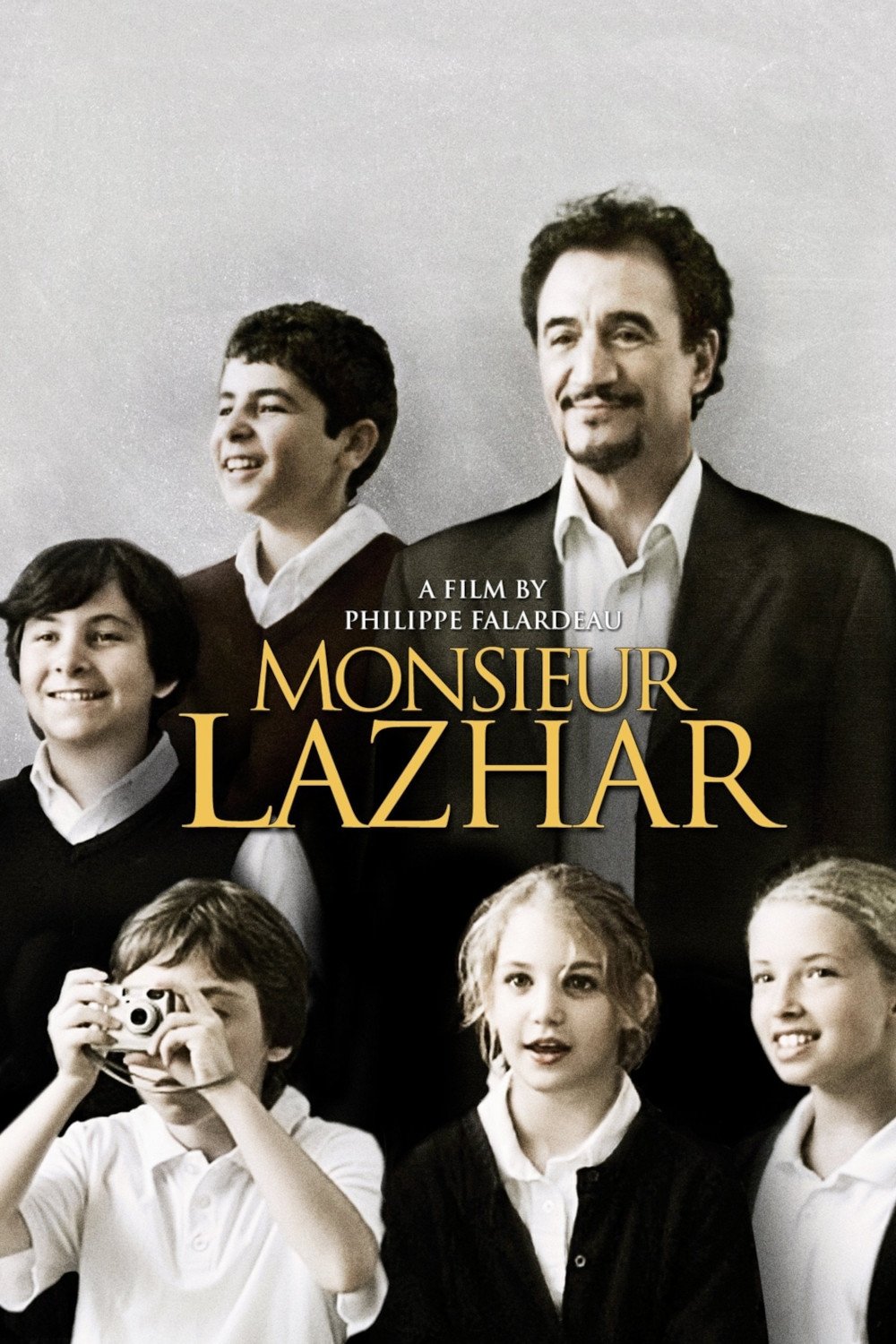
Stepping Into Monsieur Lazhar’s Quiet Grief
The first time I watched Monsieur Lazhar, I remember feeling unsettled by the silence that lingers between its characters, a silence more eloquent than words. This isn’t a film that shouts its ideas; it lets them drift slowly, like dust in a sunlit classroom. Right from its opening moments, the film invites me into a world where wounds—both visible and invisible—ache beneath the surface. I find myself drawn to the way it carries its sorrow, never wallowing or theatrical, but letting pain breathe in small spaces. That ache, I realize, isn’t just the students’ or Bachir Lazhar’s; it’s mine, too, as I watch. The film’s genius lies in its understated refusal to resolve trauma or exile grief. This is a story about carrying loss, and how—sometimes—we help each other bear it, even as we fumble our way through our own confusion.
Classrooms as Fragile Sanctuaries
The classroom in Monsieur Lazhar feels nothing like my own memories of school. It’s not a stage for coming-of-age antics or heartwarming platitudes. Instead, it’s a fragile sanctuary where wounds are simultaneously exposed and dressed. The children try to make sense of their teacher’s suicide, while the adults—equally bewildered—are paralyzed by policies, expectations, and their own discomfort. Here, the classroom becomes a microcosm for the inadequacies of institutional empathy. The rules, well-meaning as they may be, can’t fill the void left by tragedy. I find myself struck by how the school’s bureaucratic response—counseling sessions, pamphlets, a protocol for grief—clashes with the messiness of genuine human pain. The classroom is both a shelter and a reminder of our limits; it’s as if the film wants me to see that healing is not something that can be scheduled or administrated.
The Immigrant’s Invisible Weight
Watching Bachir maneuver the everyday rituals of teaching, I’m struck by how much he’s performing—both as an educator and as an immigrant. His foreignness is a source of both suspicion and empathy, serving as a subtle metaphor for grief itself: something set apart, never quite able to assimilate. The film resists easy narratives of redemption or cultural assimilation. Bachir’s Algerian identity is not a badge of wisdom or a convenient plot device. Instead, it’s intricately tied to the isolation he feels, the guilt he carries, and the hope he tries to offer his students. I recognize in Bachir’s reserved demeanor a tension I’ve seen in real life—how those who have lost the most often have the least room to reveal it. When Bachir finally opens up, it’s less a breakthrough and more a quiet surrender. The immigrant experience here isn’t a tale of overcoming, but of living beside ghosts, in a new home that never quite fits.
Children Navigating the Unknown
I find myself deeply moved by the film’s depiction of childhood—not as innocence, but as a period of profound bewilderment. The children in Bachir’s class are forced to confront the adult reality of death far too soon. Their reactions are messy: some are angry, some withdrawn, some quick to blame themselves or each other. The film never reduces these children to ciphers or sentimentalizes their confusion; instead, it gives space to their raw, inchoate questions. Watching Simon and Alice, I’m reminded how children often carry the shame and fear that adults are too polite to say aloud. The film’s honesty is bracing: it tells me that children aren’t shielded from darkness by their age, nor are they magically resilient. Their pain is real, their questions are deep, and the answers adults provide are often woefully insufficient.
Language That Hides and Heals
Language is everywhere in Monsieur Lazhar—spoken, written, withheld. Bachir’s French is tinged with Algerian formality, and his students’ colloquial speech sometimes slips out with the impatience of youth. But it’s the chasms between words that strike me most; the things not said, the stories left untold, the questions met with silence or bureaucratic platitude. Language becomes a tool for both connection and evasion. Bachir uses stories and metaphors—sometimes clumsily, always sincerely—to reach his students, but he can’t always make himself understood or trusted. The students, in turn, struggle to find the vocabulary for their grief. I find myself thinking that the film’s greatest tension is not between characters, but between what they dare to say and what they fear to express. It’s in the unsaid—shared glances, aborted confessions, the wavering voice—that the film’s emotional honesty resides.
The Unresolvable Nature of Grief
Every time I revisit Monsieur Lazhar, I’m reminded how rare it is for a film to acknowledge that some wounds never close, and some stories never gain tidy endings. The film doesn’t offer catharsis, just the honest ache of loss and the tentative gestures of care that follow. Bachir’s own trauma runs parallel to that of his students: he’s lost his family to violence in Algeria, and now mourns in exile, far from the rituals and memories that could bring comfort. The school’s tragedy and Bachir’s personal loss intertwine, making grief feel shared but never identical—the pain is communal, but the experience remains stubbornly solitary. Watching the final moments, as Bachir embraces Alice, I feel a bittersweet relief—never closure, never triumph, but the smallest possibility of mutual consolation. The film seems to whisper that healing is rarely linear, and often incomplete. We tend less to our wounds than to each other.
Justice, Blame, and the Limits of Understanding
I keep returning to the way Monsieur Lazhar interrogates the need to locate blame—on oneself, on others, on circumstance—when faced with tragedy. The children especially want to find a cause, a reason, someone to hold responsible for their teacher’s death. Simon, held up as both culprit and scapegoat, embodies this desperate search for answers. The film resists assigning guilt or providing facile absolution; it understands that humans crave explanation, even when none can ever truly satisfy. The teachers, administrators, and parents—each want to do right, but find themselves limited by rules and misunderstandings. It’s this deeply human drive to impose meaning on the meaningless, to tidy up the chaos of real life, that the film quietly questions. Sometimes, the most honest response is to admit our inability to fully understand, and to sit with the discomfort that brings.
The Humility of Compassion
What lingers most after the credits roll is the humility that underpins every act of care in Monsieur Lazhar. No one here claims to have all the answers—not Bachir, not the school’s counselors, not the grieving children. Their attempts at comfort are awkward, their kindnesses incomplete, but there is a grace in that vulnerability. Compassion, the film suggests, is less about fixing and more about showing up—about witnessing each other’s suffering, even when we feel powerless to change it. I’m struck by how the film avoids melodrama, leaving space for the small, imperfect gestures: a hand on a shoulder, a story told at the right moment, a tearful confession finally spoken aloud. This is a film about the courage to reach across silence, and the humility to know that sometimes that’s all we can do.
If Monsieur Lazhar Moves You
For those who, like me, find themselves haunted by the quiet dignity of Monsieur Lazhar, there are classic films that strike a similar chord. To Sir, with Love offers another vision of a teacher navigating a wounded classroom, while The 400 Blows captures the bewilderment and resilience of childhood in an unforgiving world. These films, like Monsieur Lazhar, remind me that the deepest truths often hide in plain sight, and that sometimes the gentlest stories leave the most lasting marks.
If you’re curious about how this film was originally perceived or how it compares to similar works of its era, these resources may be helpful.
🎬 Check out today's best-selling movies on Amazon!
View Deals on Amazon