
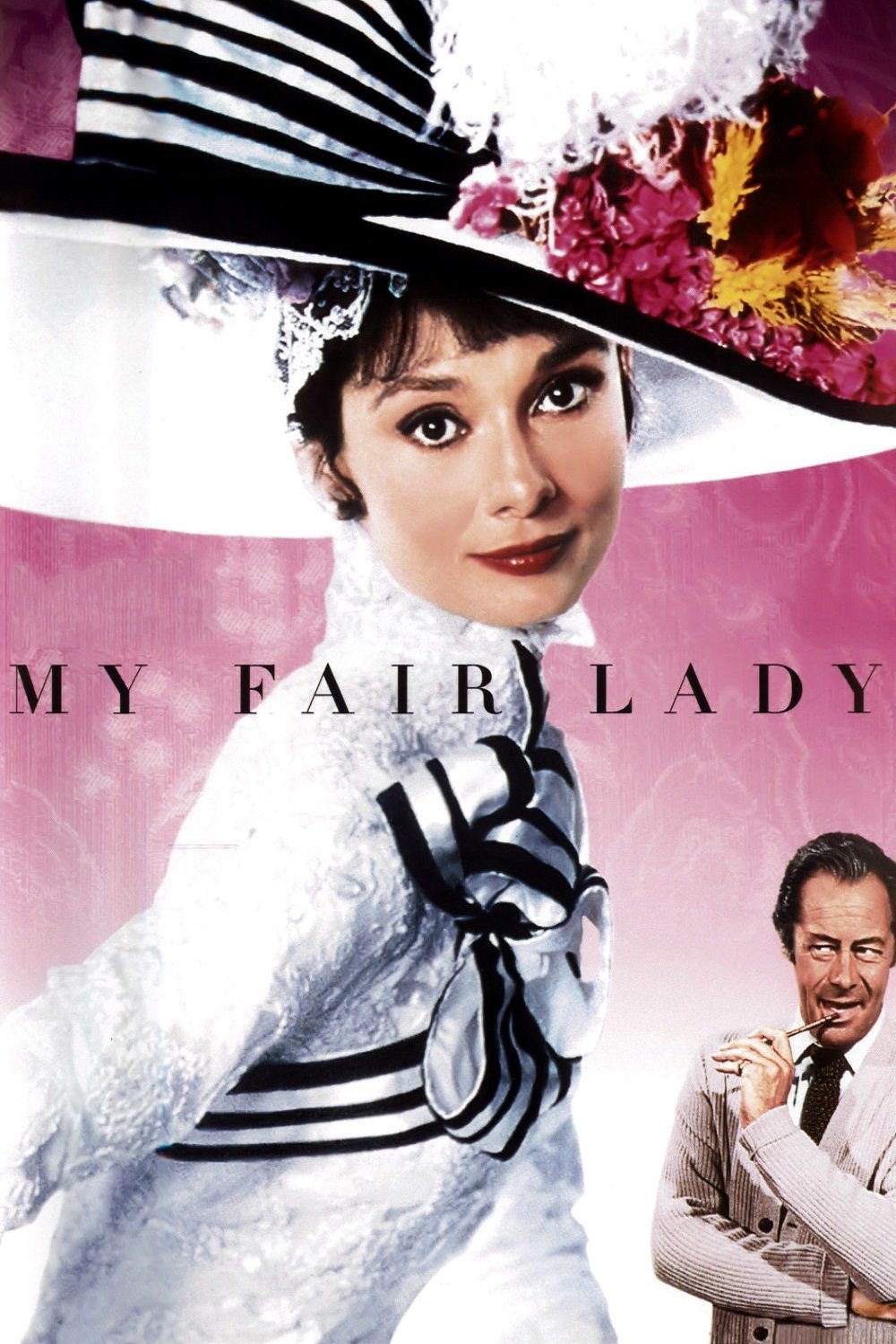
A few springs ago, I found myself pausing, remote in hand, on a rainy afternoon with a mug of tea and a vague hunger for nostalgia—that’s how I stumbled, once again, into the sumptuously artificial London of My Fair Lady. I was struck by how, beneath the artifice, the film always finds a way to make me uneasy, delighted, and unsettled all at once. What draws me toward this movie every time is less the spectacle—a spectacle it undoubtedly is—than the ambiguous, uneasy dance around transformation, class, and gender. Each revisit deepens that old suspicion: that not even the hero really knows what winning here means.
What the Film Is About
My Fair Lady tends to wear its story like a perfectly cut suit, suggesting a simple “makeover narrative,” but I see something sneakier: it’s a film about the cost and consequence of refashioning identity itself. At the core is the collision between the flamboyantly egotistical linguist Henry Higgins and the scrappy flower girl, Eliza Doolittle, whom he vows to transform from “a guttersnipe” into something almost unrecognizably genteel. What this film is truly saying, to me, is that transformation is intoxicating, but it always extracts a price.
Through its languid, almost theatrical pacing, the movie draws us into Eliza’s emotional quagmire. As she struggles between gratitude, resentment, hope, and self-assertion, I find the central conflict never really belongs to the mechanics of language or manners, but rather to ownership of self. The emotional journey, for me, is not just about aspiration but about agency: who gets to define Eliza’s worth, and what’s left of her when others have finished remaking her? By the end, I’m left pondering if victory here is actually possible—or even desirable.
Core Themes
If I had to distill the soul of My Fair Lady, it would be about power, transformation, and the performance of identity. The film ruthlessly interrogates the assumptions of its society: the idea that language is destiny, that manners are a mask, that class can be adopted like a fashion. In 1964, these questions felt daring—for me, they still do. This was the era of second-wave feminism, civil rights upheaval, cultural reinvention. The notion that a woman’s future could be “fixed” by a man—whether through teaching or Pygmalion-like sculpting—feels both revealing and damning.
I see enormous relevance for today’s viewer in how the film dramatizes the friction between authenticity and social expectation. Higgins’s obsession with the purity of vowels and phrase betrays a deeper discomfort: that class, gender, and worth are all slippery, and perhaps always have been. And yet, as much as the movie basks in its period detail, it slyly anticipates later debates about self-fashioning, code-switching, and social performance. I feel the pain within Eliza’s transformation—the exhilaration of new horizons, but also the hollowness that comes with being “taught out” of one’s origin.
Symbolism & Motifs
What fascinates me are the recurring images and symbols that nest in every lavish frame. Take the motif of flowers: Eliza sells them, at first, in Covent Garden’s chilly dawn. Flowers, to me, become a symbol not just of beauty but of fragility and impermanence—Eliza is both the offering and the uprooted. In every scene where flowers appear, I’m reminded that her value, to others, is transactional and fleeting.
Then there is the mirror: throughout the film, Eliza is trained to watch herself, to adjust her accent, to see (and be seen) in the eyes of her betters. The mirror’s cold reflection is the instrument of her social transformation but also the reminder of her alienation—how much of herself must she surrender to truly “belong”? I’m haunted, too, by the omnipresent Higgins study: academic, eccentric, and almost prison-like, it’s both a sanctuary and a cage, a place where identities are dissected rather than nurtured.
Key Scenes
The Rain in Spain: Language as Power—and Breakthrough
The giddy, infectious burst of “The Rain in Spain” is arguably the film’s most optimistic moment. I see it as an eruption of catharsis—Eliza achieves a breakthrough with her pronunciation, leading to a delirious celebration with Higgins and Pickering. On the surface, it’s triumph; underneath lies a troubling question: whose victory is it? Eliza’s joy is real, but so is Higgins’s self-congratulation. The scene hints at the emotional toll of transformation—what do we lose when we finally “succeed” on someone else’s terms?
Ascot Gavotte: The Mask of Respectability
Visually, the Ascot scene is gothic and absurd, all monochrome costumes and immaculate restraint, a masquerade of class and control. Here, Eliza—coached to act as the very model of poise—suddenly lets forth an exuberant shout during the horse race. I love this moment for its cutting satire; the collision between rigid formality and irrepressible humanity is as funny as it is telling. The veneer of upper-class composure cracks, reminding me that the idea of “improvement” is both fragile and ultimately absurd.
“Without You”: The Price of Independence
Eliza’s solo in the late act, “Without You,” is understated but quietly radical. In this scene, after enduring Higgins’s patronizing disregard, she finally asserts her own will: she no longer needs him, nor anyone who would treat her as a scientific experiment. The song and its staging represent a pivot from transformation to independence—from object to subject. Watching this, I feel a surge of bittersweet admiration; Eliza’s journey becomes not a fairy tale, but a hard-won, still incomplete emancipation.
Common Interpretations
Most traditional readings of My Fair Lady frame it as a grand romantic comedy, a musical celebration of individual improvement and eventual romance. Critics have been divided about its politics: some read the ending as a heartwarming union, others as a subversive rebuke to patriarchal power. Personally, I find these readings both helpful and limiting. The romance feels unresolved; instead, what lingers for me is the ambiguity—Eliza’s act of returning to Higgins is left purposefully fraught, imbued with tension and ambivalence.
Many critics treat the transformation as triumphant, but my own reaction is one of discomfort—does the film really endorse the “civilizing project,” or does it slyly undercut it by exposing its arrogance? I suspect the allure of the movie resides in its refusal to close the debate, to let us believe in fairy tales while never quite letting us forget the cost.
Films with Similar Themes
- Pygmalion (1938): This earlier adaptation of Shaw’s play is the skeleton beneath My Fair Lady, offering a sharper, more overtly cynical view on class mobility and the dangers of playing god with another’s life.
- Gigi (1958): Another Lerner and Loewe musical about a young woman negotiating her identity and future in a society that treats her as an object to be shaped.
- Educating Rita (1983): A modern story of class aspiration and self-transformation, with equally thorny questions about agency and what’s gained—and lost—in self-improvement.
- Pretty Woman (1990): On the surface a frothy romance, but at its heart, a meditation on transformation, class performance, and whether true autonomy is possible in a transactional relationship.
Conclusion
I believe My Fair Lady remains potent for today’s viewer because its uncertainties have grown, not faded, with time. Keep an eye not just on what changes but on what lingers—those moments where Eliza’s voice shakes, where Higgins betrays insecurity, where transformation feels both cruel and exhilarating. By grappling with the film’s themes of power, class, and identity, we’re able to see ourselves in its mirror—awkward, striving, forever incomplete. There is a peculiar freedom in admitting that no one quite finishes the journey unchanged.
Related Reviews
If you found value in my perspective, you might also enjoy exploring my thoughts on other cinematic landmarks such as Gigi and All About Eve.
To broaden this interpretation, you may also explore how critics and audiences responded over time.
🎬 Check out today's best-selling movies on Amazon!
View Deals on Amazon