
When the World Feels Like a Locked Room
I remember the first time I watched “My Left Foot,” I nearly recoiled—not at Christy Brown’s contorted body, but at the audacity of the film to thrust us so uncomfortably deep inside his struggle. No glossy filter, no softening of harsh reality. The camera doesn’t pity Christy, nor does it ask me to. Instead, it demands that I see a human being ferociously carving out his own space in a world that would happily leave him in silence. That initial discomfort is precisely the film’s point: it’s not a story about overcoming disability, but about smashing through every wall erected by both society and family, and forcing a voice to be heard.
Defiance as a Form of Existence
There’s a kind of fury in Daniel Day-Lewis’s portrayal—this is not a gentle tale of heroic endurance. Christy Brown doesn’t endure; he resists, lashes out, makes himself difficult, and by doing so, he claims the right to define himself beyond his physical condition. Whenever I witness Christy’s frustrated yells, his sometimes abrasive wit, I’m struck by how rare it is to see a disabled protagonist allowed such textured defiance. The film seems to whisper, “Polite suffering is not a prerequisite for dignity.” The fierce independence runs through every scene, from the chaotic Brown household to Christy’s first tentative forays into the world of art and romance. This is not a sanitized lesson in perseverance—it’s a raw celebration of messiness, of being fully, unapologetically alive even when the world only expects silence.
The Family as Arena and Refuge
Watching the film, I can’t help but feel the suffocating closeness of the Brown home. The living room is perpetually crowded, voices overlap, and the air is thick with both love and frustration. I find myself asking: Does the family liberate Christy, or does it confine him? The answer, of course, is both. His mother’s unwavering belief in his potential is more than maternal devotion—it’s an act of rebellion in itself. But that same environment also mirrors the broader societal impulse to define Christy’s limits for him, to keep him safe but small. The Brown household becomes a microcosm for the struggle between nurture and suffocation, between the comfort of care and the danger of lowered expectations. Each sibling’s glance, each unspoken word, carries a universe of tension: pride, embarrassment, fatigue, fierce protection. The film never lets me forget that Christy’s battle is waged on every front, not just against his own body but against the world’s—and his family’s—ideas about what he can be.
Art as a Weapon, Not an Escape
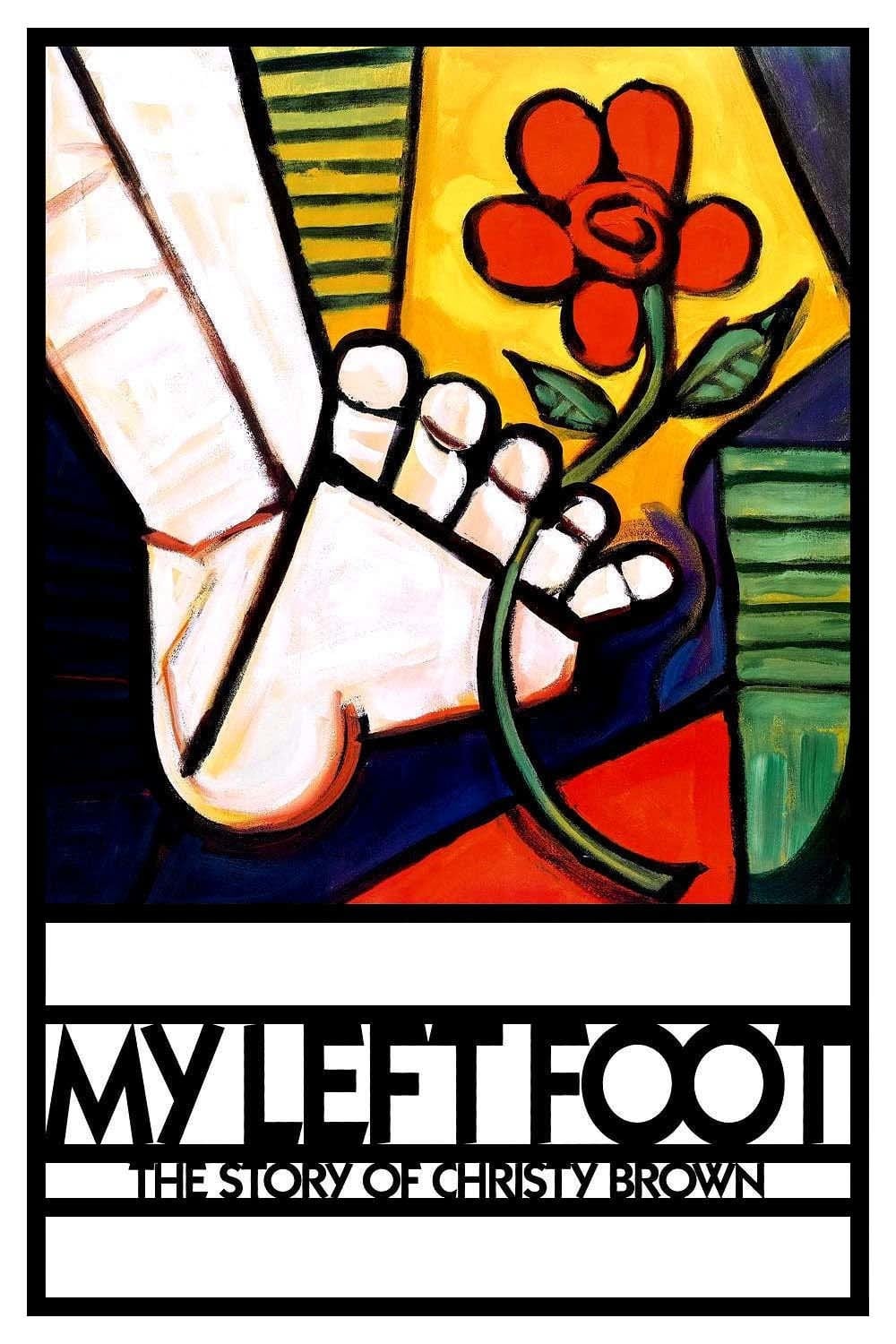
One of the film’s most radical ideas, I think, is the way it frames Christy’s artistry. I never once feel like art is a refuge here. When Christy wields his left foot to write or to paint, the camera lingers not on the product, but on the raw, painstaking process. For Christy, art is a weapon—his entry point into the broader conversation of life and identity. The brush clamped between his toes is his sword against invisibility. The act of creation is never romanticized; it’s laborious, almost violent, but always defiant. The film refuses to reduce his talents to a “miracle” or to an easy inspiration—it insists that we see the sweat, the failure, the dogged insistence on being seen and heard. I’m reminded, again and again, that the real subject is not art, but the assertion of selfhood through any means necessary.
The Gaze of Others: Pity as a Prison
There’s a particular discomfort I feel every time someone’s gaze lingers on Christy too long—the neighbor, the doctors, even supporters like Dr. Eileen Cole. The film is unsparing in exposing how society’s need to pity or “understand” Christy becomes its own form of imprisonment. Every patronizing look, every well-meant gesture is another invisible barrier—one he must tear down if he’s to be truly seen. My Left Foot doesn’t let me off easy as a viewer, either. It challenges me to confront my own reactions, to ask whether I’m complicit in the culture of pity or whether I’m capable of seeing the full, complicated human being in front of me. The film’s true provocation is not Christy’s struggle, but the world’s inability to respond to it without either condescension or awe.
Romantic Longings and the Ache for Normalcy
Perhaps the most piercing undercurrent for me is the way the film handles Christy’s sexuality and yearning for intimacy. Society likes to desexualize the disabled; the film refuses that erasure. Christy’s crush on Eileen isn’t merely a subplot—it’s a declaration of his right to desire and to be loved. The pain of unrequited love is universal, but here it sharpens with the knowledge that the world is uncomfortable with his longing, that it’s so much easier to see him as an object of inspiration than romantic desire. When I watch Christy’s heartbreak unfold, I’m struck by how the film doesn’t pity him but lets him own that pain, steep in it, then move through it. His emotional vulnerability is not a weakness, but a testament to his insistence on living a full human life, complexities and all.
The Body as Battlefield
What lingers long after the credits is how the film navigates the relationship between the mind and the body. Christy’s left foot becomes more than a physical appendage—it’s the axis upon which his will pivots. Every spasm, every involuntary movement is a reminder that the body is not a neutral vessel but a battlefield, a site of both limitation and possibility. Watching Day-Lewis’s performance, I’m always aware that the camera operates with almost ruthless intimacy, forcing me to reckon not only with Christy’s struggle but with my own discomfort as a witness. The body in this film is never abstract or metaphoric—it’s concrete, unruly, and ultimately liberating only because Christy refuses to let it dictate his spirit.
Echoes of Resilience: Films That Resonate
Whenever I try to recommend films that evoke a similar ache and authenticity, two titles leap to mind. “The Miracle Worker” (1962) pulses with the same tension between rage and affection, especially as Helen Keller and Annie Sullivan battle each other—and the world’s expectations—to forge an authentic connection. Then there’s “Johnny Got His Gun” (1971), a film that plumbs the existential horror of being trapped inside one’s own body, yet also insists on the dignity and consciousness that persists against all odds. Both films, like “My Left Foot,” force me not to look away, to witness resilience not as a spectacle, but as a stubborn, beautiful necessity of being alive.
If you’re curious about how this film was originally perceived or how it compares to similar works of its era, these resources may be helpful.
🎬 Check out today's best-selling movies on Amazon!
View Deals on Amazon