
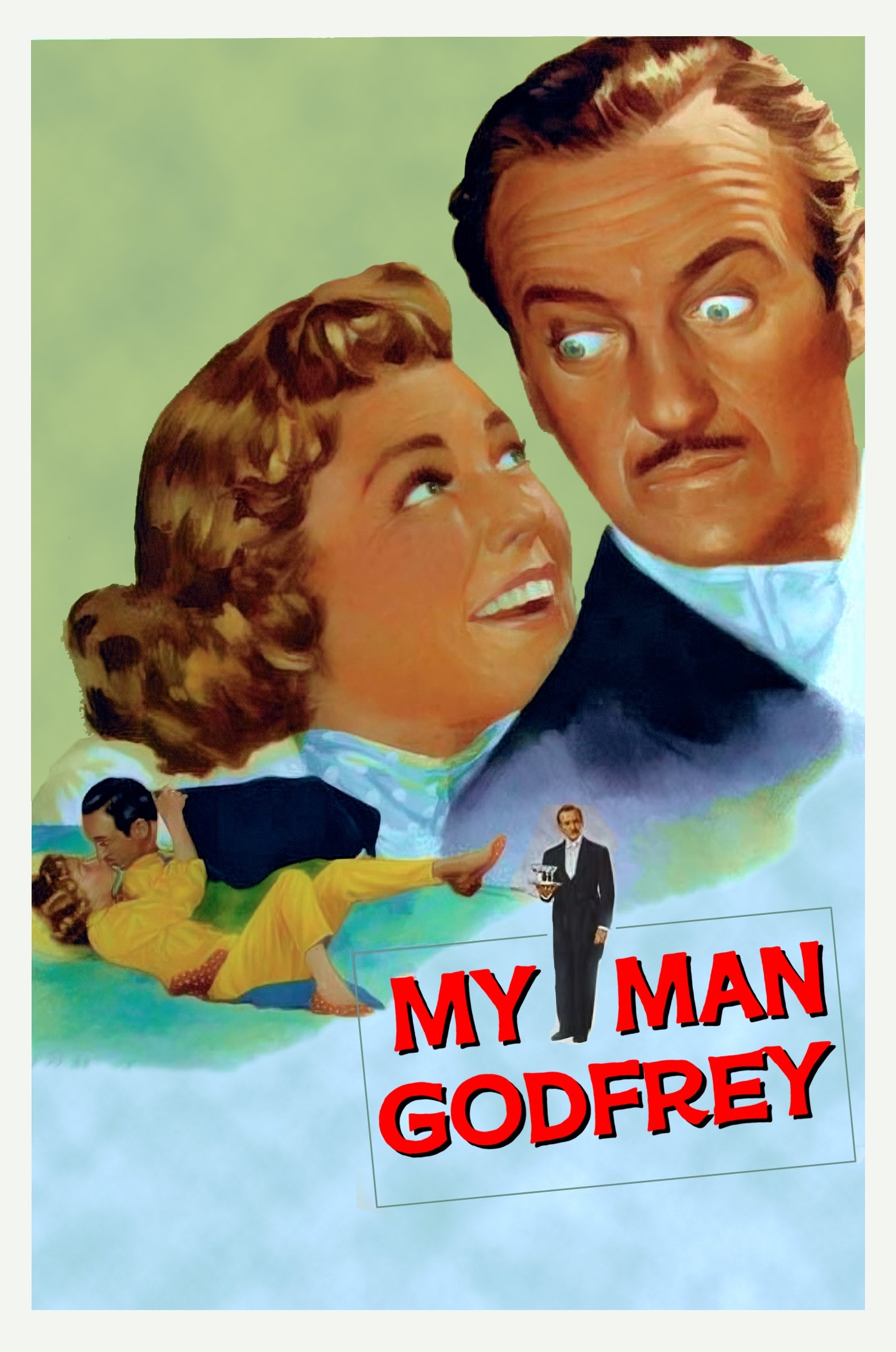
Whenever I revisit “My Man Godfrey,” what strikes me most is not merely its reputation as a screwball classic or its effervescent performances, but how, even at a first viewing, it seduced me into caring for characters I’d cynically expected to dismiss. The world portrayed—a dazzling, frivolous Manhattan filled with parlor games and cocktails—initially felt entirely foreign until I caught the undertow of genuine melancholy beneath the laughter. Watching Godfrey, played with haunted elegance by William Powell, navigate the manic eccentricities of the Bullock family, I realized this film is both a biting critique and a gentle embrace of humanity’s foibles. There’s a faint ache beneath its sparkling wit—a poignant sense of social inequality and longing for belonging—that unexpectedly lingered with me for days.
What the Film Is About
On the surface, “My Man Godfrey” spins a deliriously witty tale about a ‘forgotten man’—Godfrey, discovered living at the city dump, then swept into the orbit of the wealthy but vapid Bullock family as their new butler. The emotional journey, however, is far more nuanced. Godfrey’s transformation from discarded outcast to indispensable figure charts a complex meditation on dignity and redemption. Through him, I saw the film challenging the notion that social status has any inherent value, and instead focusing on the human need to be seen, respected, and needed. The gleaming veneer of high comedy is a front for the deeper story of spiritual rescue—for both Godfrey and the scattered souls of the Bullock household.
The central conflict is not so much about money or romance, though both are present in abundance. It’s about belonging: the chaos of privilege, the fallout of the Depression, and the quiet yearning of every character—especially Godfrey and Irene—for purpose and acceptance. While Godfrey finds himself at the mercy of the Bullocks’ whims, I always sense that he holds the true power, dispensing grace and exposing the absurdities of wealth with the lightest touch. “My Man Godfrey” is, to me, an excavation of social masks and a celebration of the marginalized, cleverly disguised in comedy’s trappings. In all the farce, I became keenly aware of the real sorrow and resolve beating beneath the giggles.
Core Themes
Class and identity are the beating heart of “My Man Godfrey.” The film’s Depression-era setting isn’t mere backdrop; it’s integral to the resonance of every interaction. In 1936, audiences would have recognized the stark contrast between the aimless rich and the ‘forgotten’ poor as an urgent reflection of their own society. Today, those lines remain visible: the anxiety of dispossession, the absurdity of inherited privilege, and the desperation to be seen as someone, not something.
I’m always struck by how the script refuses to demonize either side of the social divide. It’s less a polemic than a plea for empathy. Godfrey’s patience, humor, and humility offer a model for grace under pressure, while even the most ridiculous Bullocks are never rendered entirely unsympathetic. The film insists that redemption is possible—sometimes it’s the supposedly ‘better off’ who most need saving. I find that incredibly relevant now, as conversations about inequality persist; “My Man Godfrey” reminds us that dignity and decency transcend circumstance, and that genuine kindness has subversive power in an indifferent society.
Symbolism & Motifs
Few films of the 1930s so deftly use the iconography of wealth against itself. The Bullock mansion, with its cavernous, sterile rooms and endless parties, becomes a kind of gilded prison, with Godfrey navigating its labyrinth as an outsider who instinctively understands its emptiness. The visual motif of mirrors recurs throughout: characters glance at their reflections (or each other’s), underscoring the theme that identity is often a performance. The chaos of the scavenger hunt that opens the film—a madcap mockery of meaning—sets in motion a consistent pattern where things of value are mistaken for junk, and vice versa.
The contrast between the bustling city dump and the opulent Bullock household is another powerful—and personal—symbol. To me, the dump is less a sign of despair than possibility: it’s a liminal space where Godfrey’s potential first becomes visible, and where superficial hierarchies are suspended. The movement from squalor to luxury and back again mirrors the film’s ultimate message: our circumstances may shift, but our integrity is self-forged.
Key Scenes
A Surreal Game: The Scavenger Hunt
This opening set piece can easily be dismissed as madcap filler, but I always come back to how it frames everything that follows. The well-heeled socialites treat the city’s desperate as objects in a game—a biting indictment of the era’s insensitivity. The moment Godfrey confronts the group’s callousness with quiet dignity is pivotal; it establishes his moral authority and reveals the hollow amusement of the leisure class, instantly disrupting the smugness of the status quo.
Unmasking in the Kitchen: Godfrey and Cornelia’s Confrontation
In one of the film’s most quietly tense moments, Godfrey faces down the acid-tongued Cornelia in the kitchen. There’s no audience, just two people stripped of pretense. Here, the masks drop, and the battle between pride and vulnerability becomes almost Shakespearean. It’s the closest the film comes to open conflict, and it turns on subtlety rather than fireworks; it’s the kind of scene that makes me grateful for the screwball genre’s ability to smuggle deep feeling into whip-smart banter.
Restoration and Recognition: The Final Reveal
Godfrey’s eventual revelation of his true identity is often read as a classic restoration of order, but I find it more bittersweet than triumphant. The recognition is hard-won; it’s not about reclaiming wealth, but about reasserting a sense of self-worth before a world eager to label and discard. The emotional climax is less about romance or reconciliation and more about survival—with grace intact. For me, this moment encapsulates the entire journey: to be seen as a human being, despite and because of our scars.
Common Interpretations
Many critics view “My Man Godfrey” as the quintessential Depression-era screwball, praising its frothy tone and subversive class commentary. Contemporary readings often focus on William Powell and Carole Lombard’s chemistry, or the way the film mocks the obliviousness of inherited wealth. Some see the narrative arc as a simple Cinderella story in reverse, with Godfrey rewarded for his innate virtue by a return to gentility.
I have always felt these interpretations catch only half the truth. To me, the film’s most radical gesture isn’t just in skewering the rich or championing the dignity of the poor—it’s in refusing easy answers or pat resolutions. Godfrey never entirely belongs to either world; his otherness is what lends the film its tension and its pathos. The comedy softens the social critique, but it never erases it. I find “My Man Godfrey” less comforting than many critics suggest—its acknowledgment of loneliness and displacement is what gives its optimism genuine weight.
Films with Similar Themes
- It Happened One Night (1934): Both films interrogate class differences through romantic entanglements and the journey of characters learning to shed their societal masks.
- Sullivan’s Travels (1941): Preoccupied with questions of wealth and the value of the ‘common man’, this film, like “My Man Godfrey,” uses satire to challenge Hollywood’s conventions and societal complacency.
- Holiday (1938): Also starring Cary Grant, it dissects the shallowness of affluence, as well as the search for authentic meaning within the confines of privilege.
- The Philadelphia Story (1940): Explores the illusions of status and the redemptive power of honesty within the upper crust, paralleling “My Man Godfrey”’s themes of reinvention and class friction.
Conclusion
If you approach “My Man Godfrey” as a mere relic of screwball charm, you’re missing its lingering bite. The film’s reflections on class, dignity, and the search for connection remain as sharply observed now as they were in 1936. For modern viewers, understanding its themes doesn’t just add sophistication to the humor—it amplifies the bittersweet feeling that laughter can coexist with sorrow, and that genuine kindness is never out of fashion. This is not just an escapist comedy, but a quietly subversive meditation on what it means to belong.
Related Reviews
If you found value in my perspective, you might also enjoy exploring my thoughts on other cinematic landmarks such as It Happened One Night and Holiday.
To broaden this interpretation, you may also explore how critics and audiences responded over time.
🎬 Check out today's best-selling movies on Amazon!
View Deals on Amazon