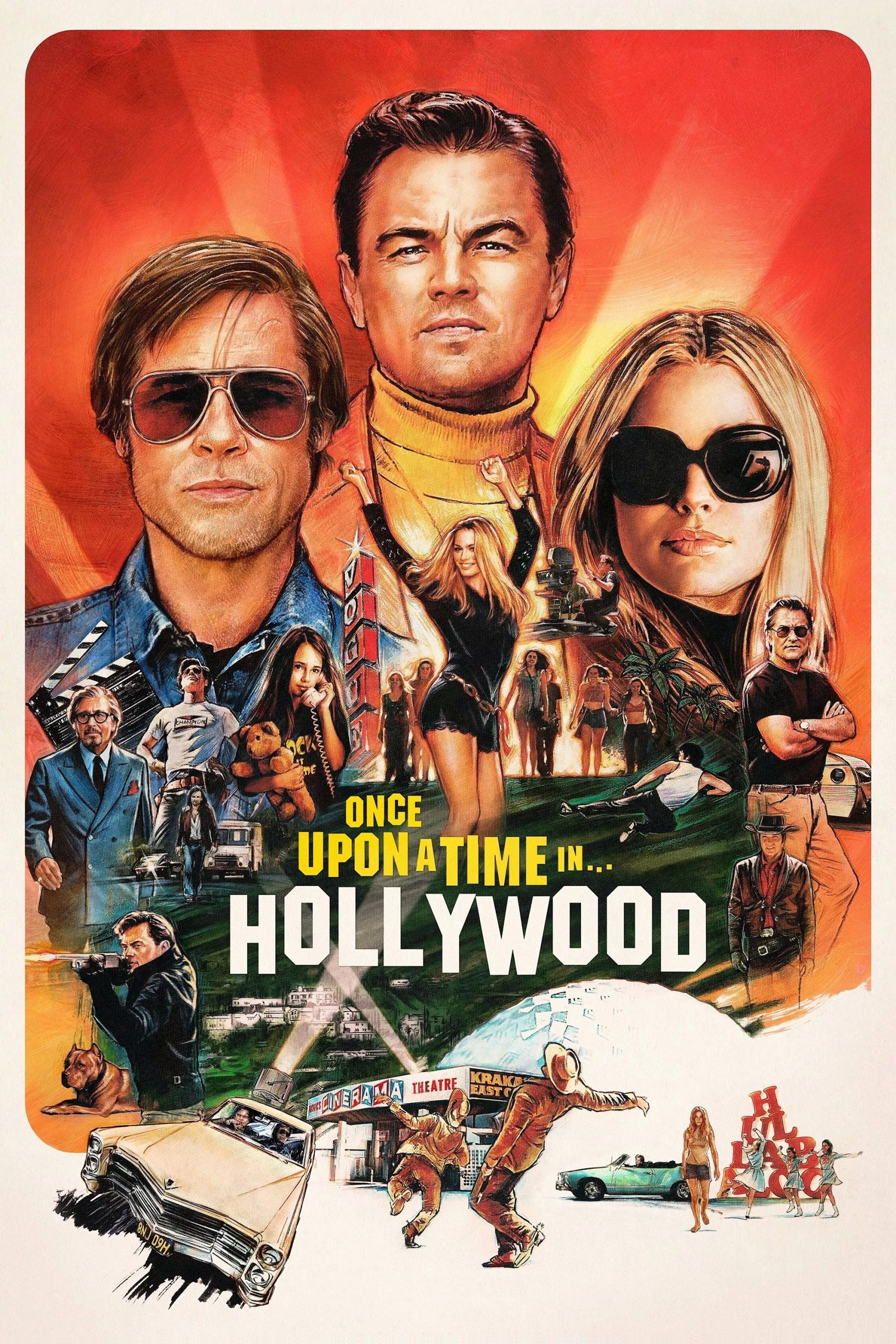
When I try to trace what keeps pulling me back to “Once Upon a Time in Hollywood,” it isn’t just its studded cast or Tarantino’s signature bravado. It’s something stranger and more melancholic—a fog of memory I can’t quite shake, despite the blaze of neon, the flamethrowers, and the California sun. Growing up with my own heroes of the silver screen, I remember the acute ache when the world seemed to have moved on, leaving them behind. For me, Tarantino’s ninth film is a love letter to those half-forgotten corners of Hollywood, where careers dwindle and legends fade, but also where wild, impossible dreams still flare up, even if just for a fleeting evening.
The Emotional Pulse of an Industry at Twilight
It’s easy enough to describe “Once Upon a Time in Hollywood” as Tarantino’s paean to the tail end of the 1960s. But what captivates me is the film’s constant tension between nostalgia and anxiety. Rick Dalton, the past-his-prime leading man played with trembling bravura by Leonardo DiCaprio, lives each day knowing he is an echo—a relic. His stunt double and loyal sidekick, Cliff Booth (Brad Pitt), floats beside him, coolly detached yet palpably aware that his world, too, is quietly eroding. Through their eyes, I sense the deep ache of those who realize they’re living through history’s closing credits.
The film’s emotional journey is not, for me, a straight line from decline to redemption. Instead, it’s a looping, uneasy meditation on what happens when the curtain falls—on a career, on an era, on an entire way of being. The clash between Rick’s desperation to remain relevant and Cliff’s resigned acceptance forms the axis on which the film tilts. The true central conflict is not violent, but existential: how do you cope when you suspect the world’s no longer interested in your story?
And yet, there’s never pure despair. Joy lurks unexpectedly in the rhythm of routine—drives down Hollywood Boulevard, the buzz of neon, the simple act of being recognized at a restaurant. Tarantino offers us—not a requiem—but a prolonged, bittersweet swan song, refusing to let the past collapse entirely.
Threads of Memory and Change
I see in this film an obsession with identity and metamorphosis. For Rick, the question is whether he can turn himself into something the culture still wants. Sharon Tate’s innocent optimism, embodied radiantly by Margot Robbie, is a fragile symbol—a young starlet forever on the cusp, unaware of the looming darkness. Alongside them, Cliff represents a driftlessness familiar to anyone who has watched their purpose become obsolete.
Themes of fading glory, shifting cultural power, and the violence that simmers just under a sun-bleached American dream are what pulse through “Once Upon a Time in Hollywood”. In 2019, as the film debuted, waves of social change were cresting in Hollywood. Old power structures were toppling; new voices demanded to be heard. For me, the movie is a feverish attempt to bottle up an era already decomposing, even as it’s celebrated—a meditation on the pain and necessity of letting go.
The enduring question—how do we memorialize the past without cursing the present?—resonates with me. Tarantino’s Hollywood is both stage set and graveyard; a place where the stories we cherish brush against the stories we fear.
Signs, Echoes, and Fantasies: Reading the Visual Language
What continues to fascinate me about Tarantino’s approach is his attention to symbolism and recurring motifs. The many shots of neon-lit marquees and drive-ins act as sentinels of a disappearing landscape. Cars are central—always in motion, always passing by landmarks that are both real and ghostly. Every ride Cliff takes in Rick’s Cadillac is a slow journey through memory and myth, a moving postcard from a Los Angeles at the brink of profound change.
The television sets, Western iconography, and magazine covers scattered throughout the film are not just set dressing; they are reminders of the performative, cyclical nature of Hollywood legend. When Rick anxiously watches his own performances, I see more than vanity—I see the desperate search for self-relevance, the hope that someone, somewhere, is still watching the show.
Above all, the film’s motif of “performance” echoes—in Rick’s TV Westerns, in Sharon Tate’s joy watching herself onscreen, in Cliff’s easygoing adaptation to any situation. The line between real violence and staged spectacle is deliberately, tantalizingly blurred.
Pivotal Moments That Shaped My View
Rick’s Meltdown in the Trailer
This scene undoes me every time. DiCaprio’s raw, almost humiliating vulnerability, as Rick berates himself post-blunder, is a jarring reminder of what fame extracts from the soul. I interpret this as more than a tantrum—it’s the trauma of being forgotten, distilled into a Hollywood dressing room. Anguish, self-loathing, and the gnawing urge to redeem oneself are all blisteringly present.
Cliff’s Encounter at Spahn Ranch
When Cliff visits the Manson-occupied Spahn Ranch, I feel every ounce of unease—the sequence is a masterclass in mounting dread and subtle menace, offering a collision between Hollywood nostalgia and the violence lurking at its fringes. Here, Tarantino turns the sunlit outskirts into a playground for predators, folding the darkness of history into the brightness of old TV Westerns. It’s in this contrast that I find the film’s most chilling social commentary.
That Flamethrower Finale
What stays with me from the film’s wild, altered climax isn’t the spectacle alone, but the idea that fantasy can sometimes heal, if only in fiction. Tarantino’s revisionist rewrite of the Manson tragedy grants his aged heroes one final, impossible victory—an act of wish fulfillment that lets us, for a moment, pretend that evil can be outmaneuvered by sheer show-business pluck. I don’t see this as trivializing history, but as an acknowledgment of the desperate, human urge to reclaim lost innocence, even if only through myth.
Reflecting on the Critics: Agreement and Divergence
Many critics, at release, described “Once Upon a Time in Hollywood” as an elegy for a lost era—Tarantino’s most personal statement. The consensus was that the film grappled lovingly with old Hollywood’s legacy while slyly skewering its darker undercurrents. Others argued it was nostalgic to the point of indulgence, offering a fantasy escape from the very real brutality underlying the 60s’ end.
As for me, I see truth in both camps, but my experience was much more unsettled. Where critics saw wistful remembrance, I glimpsed an existential horror: the recognition that for every golden age, there is a violent undertow, a reckoning waiting. Yes, Tarantino celebrates the myth-makers, but he never quite resolves whether the myth was worth all it cost. I revel in the film’s ability to hold contradictory energies—tender and brutal, affectionate and caustic—in one fevered, sun-dappled frame.
Cinematic Kindred Spirits
- Sunset Boulevard (1950) – Like Tarantino’s film, Billy Wilder’s classic probes the cost of faded fame and Hollywood disillusionment. Both works are haunted by ghosts of what Hollywood once was.
- Boogie Nights (1997) – Paul Thomas Anderson’s ode to the adult film industry also charts the rise and fall of marginalized dreamers navigating the currents of a transforming Los Angeles.
- The Player (1992) – Robert Altman’s sharp satire skewers Hollywood’s slippery moral core and obsessions with celebrity and power, echoing Tarantino’s subversive vision.
- La La Land (2016) – While more unapologetically romantic, Damien Chazelle’s musical similarly explores the tensions between personal ambition, nostalgia, and the cost of pursuing stardom in the modern era.
Looking Back, Looking Forward: Why This Film Matters
For those returning to “Once Upon a Time in Hollywood” now, Tarantino’s vision cuts deeper than ever. Understanding the film’s themes of decline, reinvention, and the blurred edge between legend and reality adds a richness that rewards slow, attentive viewing. There’s something vital in recognizing how our personal histories—no matter how grand or trivial—are rewritten in the culture’s imagination.
I believe this film asks us to make peace with the past, to mourn honestly and dream a little recklessly, all at once. Hollywood has always thrived on fantasy, but it’s the ache beneath the fantasy that lingers longest.
Related Reviews
If you found value in my perspective, you might also enjoy exploring my thoughts on other cinematic landmarks such as Sunset Boulevard and Boogie Nights.
To broaden this interpretation, you may also explore how critics and audiences responded over time.
🎬 Check out today's best-selling movies on Amazon!
View Deals on Amazon