
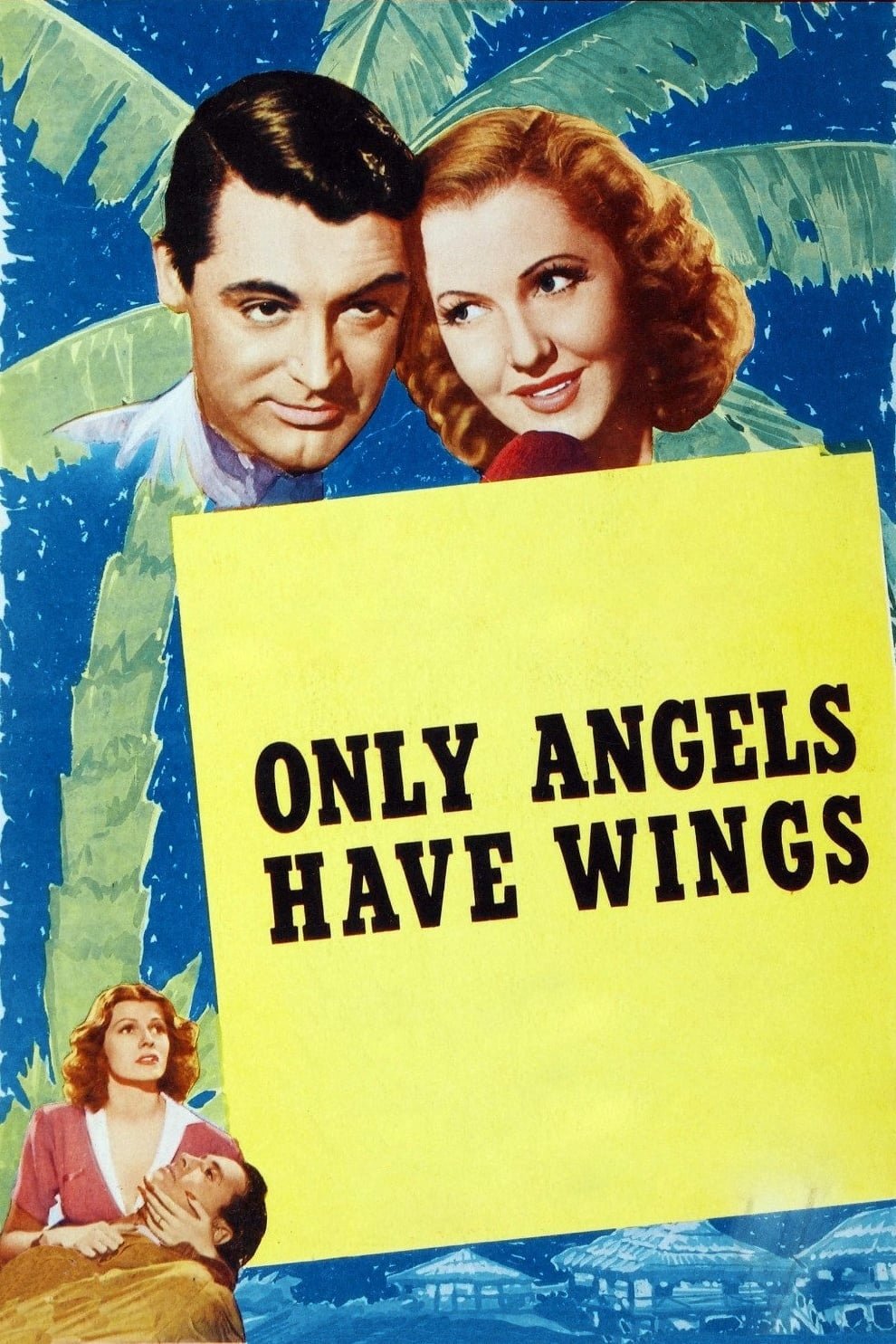
The Whisper of Wings in the Night: My First Encounter with Hawks’ High-Flying Drama
Nothing in my earliest explorations of classic cinema prepared me for the way Only Angels Have Wings made me feel as if I’d stumbled into a fog-draped frontier, equal parts enchantment and peril. The first time I watched those pilots stride—almost mythically—into the humid shadows of Barranca’s rickety airstrip, I was struck by a sensation of being pulled into a world where the stakes were existential and yet profoundly personal. The film doesn’t just tell a story about mail flights south of the equator; it simmers with an unspoken contract between life, death, and the code of those drawn to the edge of both.
Honor, Survival, and the Unwritten Codes
What makes Hawks’ tapestry so compelling isn’t simply the daring aviation sequences or the tropical mists. For me, it’s the way the film breathes with a sense of lawlessness that has evolved its own form of law. These men fly not with the bravado of action stars but with a haunted sense of duty to one another, to the job, and—almost superstitiously—to the realm of the living. Geoff Carter, as embodied by Cary Grant, is never just a hard-edged boss or a romantic antihero. He is the linchpin of a system in which trust is measured moment by moment, and the smallest breach can be fatal. I’ve always been drawn to the way Hawks presents their camaraderie as brittle, even cruel at times, because it is born not from sentimentality, but from the certainty that tomorrow may never come.
What struck me most as I watched, and rewatched, is how the film uses the mechanics of flight as both literal and symbolic vehicles for male vulnerability—masked, repressed, and occasionally exposed in moments of raw confession. When one of the pilots fails or falls, the repercussions ripple through the group, challenging not only their courage, but their ability to continue loving, living, and risking together.
The Weather Is All There Is: Fate and Nature’s Indifference
It’s easy to focus on the romance and the sharp dialogue, but every time I return to Only Angels Have Wings, I’m reminded that the real antagonist is never a villain in the traditional sense. Hawks’ universe is one where the elements—fog, rain, wind—are the true arbiters of fate, and this indifference shapes the emotional landscape of Barranca as much as the physical one. Human aspiration crashes headlong into the arbitrary cruelty of nature, and the best these characters can do is carve out slender victories before the night closes in again.
There’s a sequence early on where a pilot is forced back by weather, and the entire outpost responds with a practiced choreography of hope and resignation. It’s the antithesis of Hollywood heroics; here, survival is a kind of grace, meted out unpredictably. In my eyes, this single-minded focus on weather becomes a metaphor for the limits of human control: no matter one’s expertise or courage, the fog will sometimes win. In the silence after disaster, the film asks us to consider what remains—bravery, loyalty, and the knowledge that tomorrow demands the same risks anew.
The Outsider’s Gaze: Bonnie Lee and the Fragility of Belonging
When Jean Arthur’s Bonnie Lee arrives, wide-eyed and out of step with the grim efficiency of the outpost, she becomes my surrogate—an outsider trying to decipher the cryptic tongue these men speak. Her confusion, her horror at their seemingly callous response to death, is not a narrative device, but a challenge. Through Bonnie, I confront the paradox at the heart of the film: that deep caring must be masked by ritual detachment if these men are to survive emotionally as well as physically.
What moves me is the gradual transformation Bonnie undergoes, and the way her presence exposes the cracks in this masculine veneer. She doesn’t simply adapt to their world; she asks, again and again, what it means to love someone who might vanish at any moment. The film never resolves this tension neatly. Instead, it leaves Bonnie—and me—wrestling with the reality that love, in this context, is as much about waiting and fearing as it is about connection. Her arc is a meditation on the price of inclusion, and the courage it takes to accept the terms of such a dangerous belonging.
Redemption, Sacrifice, and the Ghosts of the Past
The shadow of past betrayals hovers, embodied most visibly in the figure of Bat MacPherson, the disgraced pilot desperate for another chance. I find Bat’s storyline haunting not because he is a simple outcast, but because his journey is so tightly entwined with the group’s code of honor. Bat’s fight for redemption is less about clearing his name than about regaining the right to risk his life for others—a privilege, and a burden, in this world.
Watching the other pilots respond to Bat—with suspicion, contempt, and ultimately acceptance—always feels to me like an allegory for the broader questions of forgiveness and trust. Hawks isn’t offering a simplistic narrative of second chances; instead, he’s interrogating the conditions under which one may rejoin a community defined by the willingness to die for each other. The film refuses to sentimentalize these choices. Sacrifice is never glorious, and the ghosts of past failures linger in every gesture, every half-spoken panic in the radio room. Redemption here is not transcendent; it’s provisional, earned one perilous flight at a time.
Flight as Metaphor: The Unbearable Lightness of Impermanence
Repeated aerial sequences, with their rickety biplanes and near-misses, move beyond the thrill of spectacle. For me, every takeoff is a metaphor for the act of faith these characters practice daily—a faith not in immortality, but in meaning snatched from chaos. The film’s most lyrical moments lie in its acceptance of impermanence; the very impossibility of safety becomes the impetus for intimacy and honesty, however fleeting.
I am continually struck by how Hawks crafts a world where the rules of earthbound society are suspended mid-air, and the clarity of purpose attained in flight cannot be replicated on the ground. The sky—at once liberating and lethal—is the space where these men confront the very essence of their existence. With every return to the landing strip, the film reasserts that what matters is not how long one lives, but the dignity and truth with which one faces the void.
Dialogue, Music, and the Language of Restraint
One of my enduring fascinations with Only Angels Have Wings lies in the interplay between what is spoken and what is left hanging in the humid air. Hawks’ dialogue crackles with wit, but even more with a kind of purposeful evasiveness—a refusal to succumb to melodrama, even when the circumstances would justify it. This restraint is not emotional stunting; rather, it’s the tough skin necessary for survival in a world where loss is routine. The film’s understated musical cues, the abrupt pivots from banter to silence, become the grammar of lives lived on the brink.
As I listen to these exchanges, I sense that every tossed-off joke and every abrupt shift of topic is an act of self-preservation. The soundtrack, too—by turns cheerful and somber—reminds me that the boundary between hope and despair is razor-thin. The avoidance of sentimentality does not diminish the film’s emotional heft; instead, it heightens it, inviting me to listen more closely for what is not said.
What Remains After the Engines Go Quiet
Long after the credits fade, I find myself returning to the images of cigarettes shared in the darkness, of hands resting on battered wings, of voices calling out through static. Only Angels Have Wings lingers for me as a meditation on mortality, resilience, and the fragile rituals that bind us together in the face of uncertainty. Its ultimate message is not about conquering the elements or cheating death, but about the bravery of forging connections in a world that offers no guarantees.
If I had to distill what this film is truly saying, it’s that meaning is fashioned moment by moment, forged in the shared trials and brief joys of people who accept the fleeting nature of everything they hold dear. The act of caring, of risking, of believing in one another, is neither naive nor futile—it is simply all there is.
Flights into Uncertainty: My Picks for Further Discovery
If you’re as moved as I am by stories of peril, camaraderie, and the existential search for honor, I’d urge you to seek out these two films:
- To Have and Have Not (1944)
- The Wages of Fear (1953)
If you’re curious about how this film was originally perceived or how it compares to similar works of its era, these resources may be helpful.
🎬 Check out today's best-selling movies on Amazon!
View Deals on Amazon