
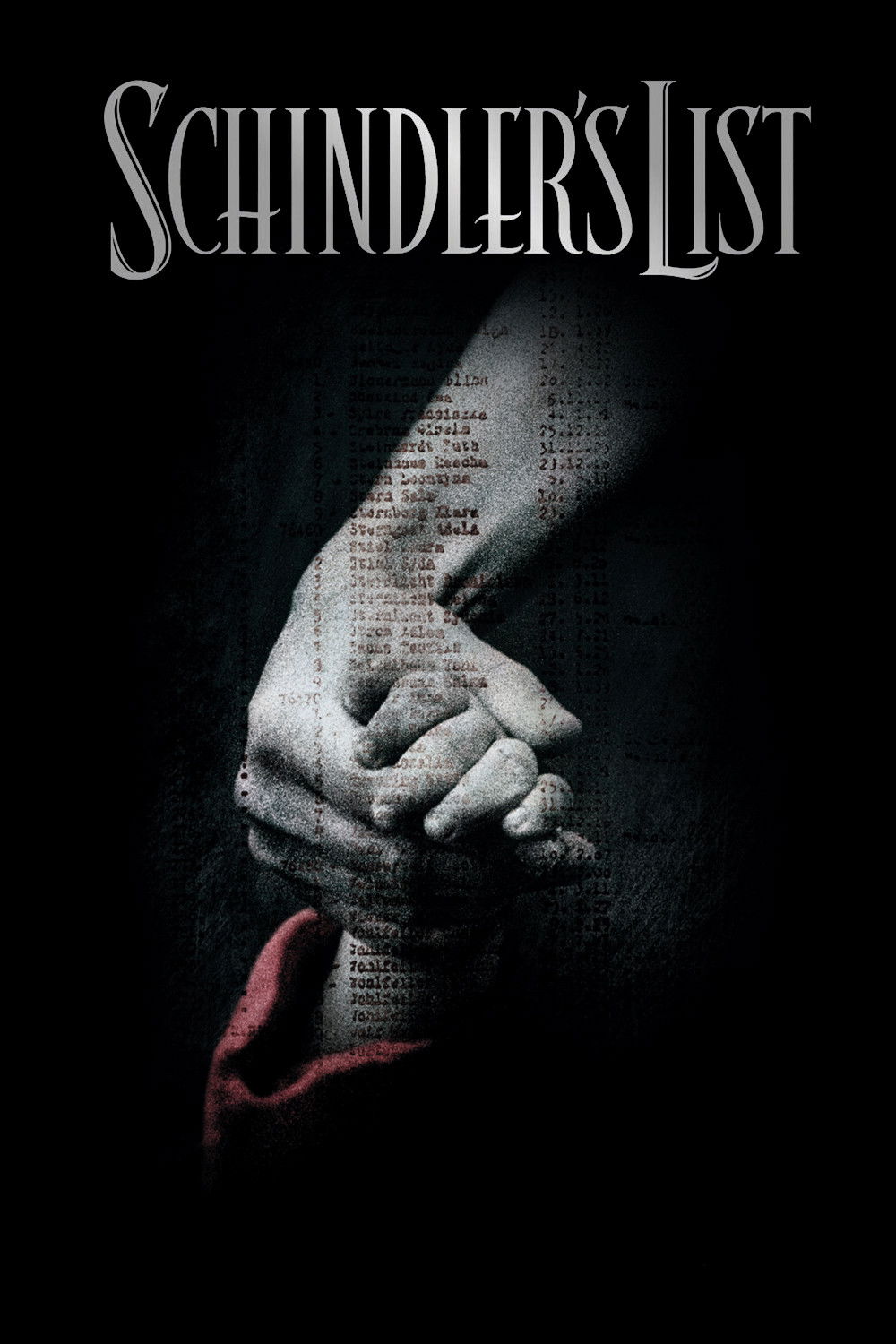
Some films leave a mark on you, but Schindler’s List is one of those rare works that etches itself into the contours of my consciousness. It isn’t just a viewing experience; it is an ordeal, an unflinching confrontation with the depths of tragedy and the small flickers of human kindness that persist even in the blackest hours of history. I remember the first time I sat through its nearly three-hour running time, somewhere in the haze of early adolescence—it rendered me speechless and restless, staring at the closing credits with a newfound weight in my chest. Watching it again as an adult, the effect is no less severe, but it is layered now with a greater understanding of what it means to bear witness. Spielberg’s film compels me to revisit atrocity not as a voyeur, but as a participant forced to acknowledge, reflect, and question.
Tracing Humanity in the Shadows: A Personal Journey Through Horror
No matter how often I revisit Schindler’s List, I am immediately drawn into its emotional undertow. The film documents the real-life transformation of Oskar Schindler—from opportunistic Nazi industrialist to unlikely humanitarian—and, along with him, sweeps us into the chaos of Kraków under occupation. But for me, the story’s stakes reside not in Schindler, but in the collective soul of the Jewish community he touches, disrupts, and ultimately saves. Spielberg’s lens never lets me, or any of us, seek comfortable detachment. Instead, by submerging me fully into the world of the Kraków Ghetto, the Plaszów labor camp, and the vast uncertainty of the Holocaust’s mechanics, he gives pain a name and a face at every turn.
More acutely than almost any other historical drama, this film bludgeons me with its daily horrors. It is not one event—but a relentless accumulation of humiliations, contingencies, and dehumanizations. The randomness of violence wracks my nerves. Little by little, I become entrapped in the moral calculus that haunts every frame: what would I have done? What should Schindler do? At its most powerful, this is the emotional journey—that slow-burning agony that, paradoxically, paves the way for moments of unexpected, almost absurd grace. The heart of the film lies in this constant whiplash between dread and hope, and for me, it is what keeps the tragedy from collapsing into nihilism.
The Fault Lines of Compassion and Complicity
When I consider the core themes of Schindler’s List, the most encompassing is the idea of moral ambiguity under oppressive systems. Spielberg exposes, with exquisite pain, the ease with which ordinary people can become complicit, whether through fear, ambition, or indifference. Particularly striking—then and now—is the way the film troubled my understanding of what constitutes heroism. Oskar Schindler is no saint; he is venal, canny, and self-interested, yet he changes. His compassion is ambivalent, transactional at first, then sincere. It is a discomforting truth: goodness sprouts unevenly, not in grand gestures, but through flawed choices made under corrosive conditions.
The film also wrestles with the tension between individual agency and historical forces. In 1993, this felt especially germane; the world was still reckoning with ethnic violence in Bosnia, with genocide not as a distant wound but as a recurring atrocity in living memory. And today, when the news is saturated anew with the marginalization and persecution of vulnerable populations, the relevance is almost unbearable. Schindler’s transformation from war profiteer to savior isn’t presented as singular but as radical evidence of what is possible, even when undoing the mechanisms of evil seems impossible.
Most personal to me is this: the film positions remembrance as a form of resistance. It offers no comfort, no revisionism, only the chilling clarity that to remember is to act, to engage in the work of empathy. Art, Spielberg reminds me, is not consolation, but confrontation—an imperative to feel what history demands we hold inside us, even if only for a few hours.
Shadows, Red Coats, and Lists: A Gallery of Memory
Much of what stays with me after each viewing isn’t dialogue, but indelible images: the stark contrast of black and white, the gleam of a cigarette lighter, the tremble of hands signing a list. Spielberg and Janusz Kamiński’s cinematography turn every frame into a visual motif. There is a certain documentary chill to the black-and-white palette, as if time itself is drained of colour, not just to evoke the 1940s, but to drive home the collapse of ordinary joy and safety. Yet that very aesthetic alienation casts moments of colour into unbearable relief.
Nowhere is this clearer than with the girl in the red coat. This recurring image acts as both symbol and catalyst. The anonymity of the Holocaust is suddenly fractured—one child, picked out of the faceless crowd, rendered impossible to forget by the single flare of red. For me, it translates into a scream filmed in silence, a reminder that statistics are stories denied their full telling. The red coat becomes, in my reading, an indictment: a question posed to the viewer—will you look away?
The eponymous list is another potent motif. On the surface, it is a bureaucratic device, a ledger not of profits but of lives. But to me, it is more: the rattled sound of the typewriter keys is a counterpoint to the omnipresent threat of death, a furious effort to assert that names—identity—matter. The list is both salvation and accusation. It is the fragile hinge upon which fate turns, evoking the randomness that governs who lives and who perishes in such times.
Finally, I must mention the motif of hands: hands polishing enamelware, hands exchanging valuables, hands trembling before a signature is inked. These insert shots are deceptively simple, but to me, they signal both complicity and redemption. They become shorthand for choices—mundane or momentous—that add up to destinies. Hands dirtying themselves, or striving to cleanse.
Moments Etched Into My Mind: Three Lacerating Turning Points
The Inhuman Economy of Plaszów
If I had to pinpoint a first scene that summarizes the horror, it is the arrival of Amon Göth at Plaszów. The camera sweeps the landscape as the SS begin their methodical assignment of prisoners. The casual, almost administrative violence Göth enacts—shooting at random from his balcony—is, to me, one of the film’s most chilling exhibitions of evil. It is not grand, operatic villainy, but the predatory banality with which he reduces people to targets. Spielberg’s direction traps me in the same nightmare logic faced by the characters: survival is a coin toss, one arbitrary mood swing away from death. At the same time, that scene is a technical statement about how violence is routinized—the shots, the music, the matter-of-fact editing—making the horrifying seem almost mundane.
The Girl in Red: The Weight of Recognition
The liquidation of the Kraków Ghetto is a sequence I find almost impossible to watch, yet essential to confront. In the chaos and carnage, the camera catches sight of the girl in the red coat. Schindler, once aloof, is transfixed; so am I. I remember feeling, for a horrifying moment, as if that flash of colour was a lifeline, a promise that one story among millions might endure. But the subsequent rediscovery of her lifeless body among the corpses exposes the brutality—no innocence is shielded by visibility, no narrative immunity exists. The colour red ruptures the film’s grey monotones, a persistent visual scream against erasure. This moment is, for me, the film’s heart—an embodiment of lost possibility, a call to sorrow for what cannot be restored. It is as much about the burden placed on the viewer as the guilt shouldered by Schindler.
The Accounting of Souls: The Final Reckoning
Toward the end, we see Schindler breaking down in tears, confronted by what he has and has not done. The enamel factory’s workers surround him with gratitude, yet he collapses, sobbing over the few more lives his gold pin could have saved. For years, I was skeptical of the emotional manipulation of this scene; I wondered if Spielberg had romanticized guilt. But subsequent viewings upended my cynicism. The moment is not “redemption” in any easy sense. Instead, it strips bare the limitations of intervention. The agony of Schindler’s regret is a vital coda—the good we do will always pale beside the suffering that remains unaddressed. Yet that does not render action futile; it renders it sacred, undertaken with necessary humility. That emotional conclusion, performed so nakedly by Liam Neeson, encapsulates the incommensurable cost of every human life saved and lost.
When Judgment Fails: Challenging the Canonical Readings
Over time, Schindler’s List has attracted both devotion and controversial criticism. Critics often frame it as a film about hope rising from unfathomable darkness, a valorization of individual goodness in a time of evil. Others, less convinced, argue it is sentimental, riskily aestheticizing atrocity. I admit both readings inform my own complicated response.
What troubles me, and what many commentators praise, is Spielberg’s insistence on finding moments of relief. The film could have been relentless, yet he dares to seek light. Some view this as an American optimism imposed on European catastrophe—a way to make pain bearable for mass audiences. Yet, in my own viewing, I don’t witness false hope. I see fragile defiance, the flickering of decency amid carnage. The famous scene of Schindler overwhelmed by not having saved more isn’t a victory lap; it’s a confession, a postscript of insufficiency that complicates morality itself.
Another contentious issue is the decision to shoot in black and white with selective colour. Detractors claim it is an affectation, distancing the audience or prettifying trauma. For me, it’s the only way to translate trauma into image. The palette reminds me I’m not watching a naturalistic drama, but a curated act of memory and mourning. It’s artifice in service of emotional truth, not cosmetic prettification.
So much of the conversation around this film is about Schindler as a ‘righteous gentile’—a singular hero. I resist this reading. For me, the film’s real subject is the community, not the saviour. Schindler is catalyst and cipher, but Spielberg’s greater achievement is giving screen time to the innumerable others—the children, women, and men who hold on to dignity even as it is systematically denied. The power of the film, for me, is that it refuses to soften that violence or grant full closure. The best art, I believe, leaves us with questions, not certainties. Schindler’s List embodies that painful ambiguity.
Further Along the Wound: Cinematic Kindred Spirits
- The Pianist (2002, dir. Roman Polanski) – Another searing examination of one man’s survival amid the Holocaust, sharing with Schindler’s List a preoccupation with moral compromise and endurance in destruction.
- Come and See (1985, dir. Elem Klimov) – A devastating vision of World War II through the eyes of a child, paralleling Spielberg’s interest in the obliteration of innocence and the fragmentary nature of memory.
- Life Is Beautiful (1997, dir. Roberto Benigni) – Approaches genocide through tragicomedy, rooting hope and resilience in familial love rather than heroic action.
- Shoah (1985, dir. Claude Lanzmann) – An epic documentary relying solely on interviews and testimony, demanding active witnessing from its audience and echoing Spielberg’s commitment to remembrance as defiance.
Looking Into the Mirror: Schindler’s Lessons for Now
I keep returning to Schindler’s List, not for solace, but so I do not forget. In an era when history repeats not as farce but as renewed atrocity, the film’s warning is more urgent than ever: Empathy must be relentlessly pursued, even when action feels inadequate. Remembrance, Spielberg insists, is a labor that belongs to every generation—not to bow our heads, but to recognize when complicity begins to creep in.
For viewers today, and for myself as both critic and person, Schindler’s List is not just a film to be admired or deconstructed. It is a call to witness, to reckon with our own responsibility as inheritors of both the horror and the hope. It demands attention, humility, and, ideally, a promise never to look away again.
If This Spoke to You, Try These Next
- If you found value in my perspective on Schindler’s List, I highly recommend exploring Come and See and Shoah for further, unflinching cinematic journeys into historical memory and complicity.
To broaden this interpretation, you may also explore how critics and audiences responded over time.
🎬 Check out today's best-selling movies on Amazon!
View Deals on Amazon