
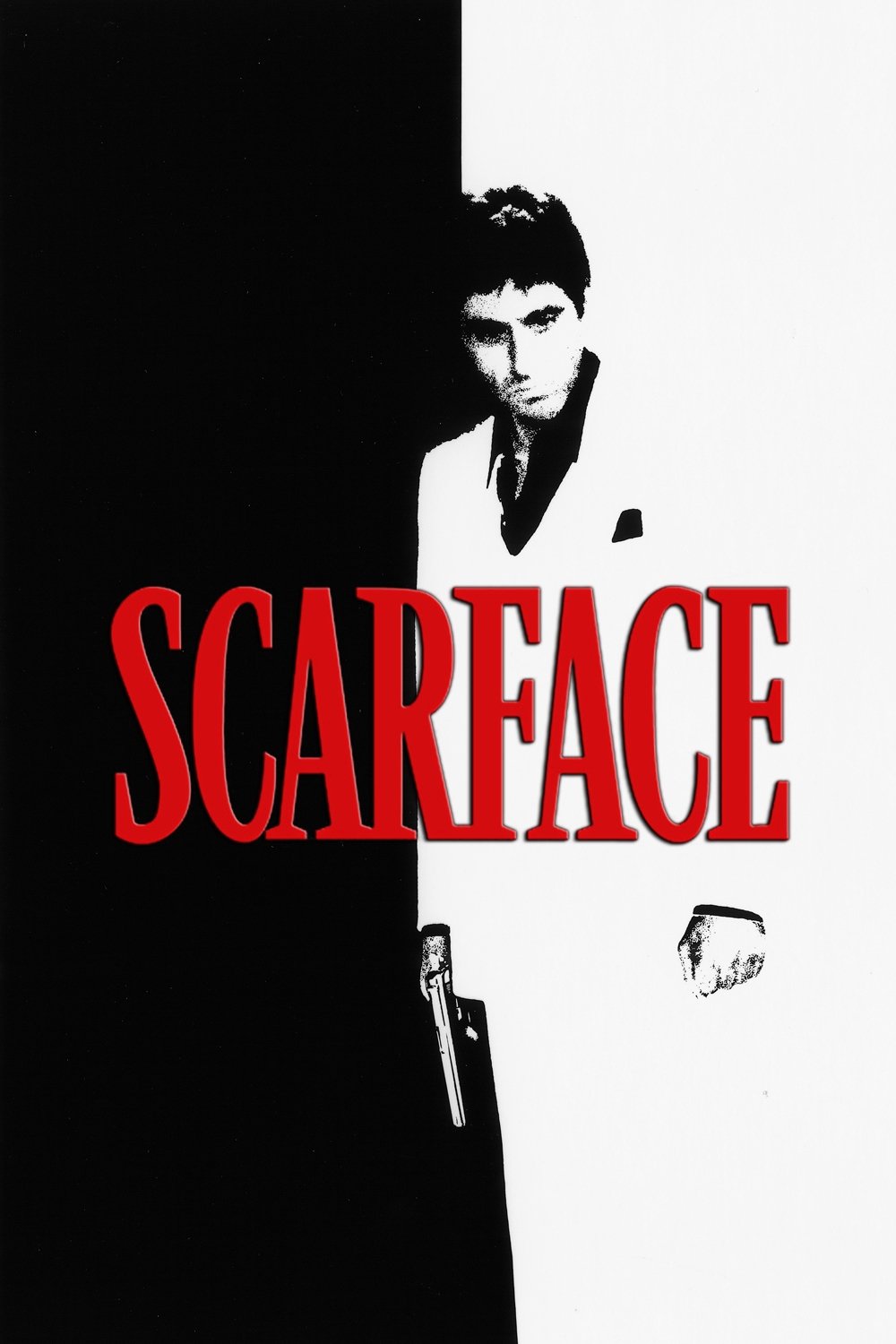
The first time I watched Scarface, I was overwhelmed, not just by its explosive violence or Al Pacino’s volcanic performance, but by how the film lured me into empathy with a man whose entire existence is built on brutality and delusion. This movie isn’t simply the story of a criminal’s rise and fall: it’s a fever dream about ambition, the corrosive power of unchecked desire, and the way America itself cultivates monsters.
Miami’s Neon Wasteland: The Visual Language of Greed
When I think of Scarface, my strongest memory isn’t a gunfight or a cocaine-fueled tirade, but the garish, unnatural palette of Miami itself. Director Brian De Palma drenches every frame in candy-colored excess, and I can’t help but read this aesthetic as more than just period flavor. Every palm tree and pastel suit becomes a visual representation of the dreams Tony Montana chases: counterfeit, hollow, impossibly bright. This lurid style is both seductive and repulsive, embodying the rot at the core of Tony’s world.
Miami in Scarface is a liminal space, a gateway for immigrants fleeing repression, but also a site of reinvention. De Palma uses wide-airport hangars, blaring nightclubs, and glassy, sterile mansions to communicate both opportunity and alienation. The city is a character in itself, a beautiful mirage promising freedom but ultimately delivering loneliness and violence. The American Dream is rendered in neon, but beneath its glow, there is only emptiness.
Montana’s Hunger: The Myth of Self-Made Success
What fascinates me about Tony Montana is not his criminality, but how thoroughly he believes in the idea that he can carve out a piece of the world through sheer will. Tony is not motivated by revenge or even survival; he is driven by hunger—a refusal to be denied what he thinks is owed to him. Scarface ruthlessly interrogates the American myth of upward mobility, exposing how the very culture that celebrates ambition also feeds self-destruction.
From the moment Tony stares at the “The World is Yours” blimp, I see in his eyes both awe and entitlement. The film doesn’t simply criticize greed; it implicates every viewer in the fantasy that anyone, given enough guts, can win the game. Pacino’s performance is a masterclass in showing how aspiration becomes addiction, and how the pursuit of power warps every relationship. Tony’s disintegration is not just personal—it’s cultural.
Violence as Language: Power, Fear, and Performance
Few films use violence with the balletic excess of Scarface. Yet for all its iconic gunfights, the violence here is neither triumphant nor cathartic—it’s transactional, almost ritualistic. Tony wields brutality as both shield and currency, broadcasting his willingness to go further than anyone else. To survive in this world, he must constantly escalate, always outbidding his rivals in ruthlessness.
The infamous chainsaw motel scene isn’t just a set piece—it’s a statement about the cost of entry into Tony’s new world. The film’s violence is ugly, never cool; De Palma’s camera often lingers, forcing me to witness the consequences rather than glorifying them. Every death, every outburst, is another rung on Tony’s climb, but it’s also an act of self-sabotage. The ultimate irony: the violence that wins him power also ensures his destruction.
The Scarred Self: Identity, Alienation, and the Immigrant Gaze
I’m struck by how Tony’s status as a Cuban immigrant is both his origin story and the source of his lifelong alienation. The film’s early moments—set among the Mariel boatlift refugees—signal a kind of rootlessness that Tony never overcomes. He is forever an outsider, not just among Americans, but even among fellow Cubans. His accent, his ostentation, his very posture all mark him as a man out of place, desperate to belong even as he pushes everyone away.
The shape of Tony’s American Dream is uniquely tragic: he doesn’t want to assimilate, but to dominate. He adopts all the symbols of American success—money, property, women—without ever understanding the emptiness behind them. What Tony seeks isn’t simply wealth, but a total annihilation of his old self, yet every success only makes his sense of alienation worse. In a film full of violence, it’s this existential homelessness that haunts me most.
Elvira, Gina, and the Women Trapped in the Dream
Even as the film centers on Tony, the women around him—Elvira and Gina—embody the collateral damage of his ambition. What moves me is how De Palma frames these women not as mere trophies or plot devices, but as tragic mirrors reflecting Tony’s failures and obsessions. Elvira is the ultimate status symbol, yet she’s as hollow and lost as Tony himself. She drifts through scenes with a narcotized ennui, always in the periphery, never truly seen or loved.
Gina, Tony’s sister, is even more crucial. Her fate is entwined with Tony’s need to possess and protect, an impulse that ultimately destroys them both. The film’s treatment of women is certainly problematic, but it’s also a deliberate commentary on how men like Tony consume everything—including those closest to them—in their quest for dominance. Every act of supposed love is revealed as an extension of his ego, and every attempt at connection collapses under the weight of his paranoia.
Lines of Coke, Walls of Mirrors: Addiction and Self-Annihilation
If there’s a singular image that captures the essence of Scarface, it’s Tony Montana, buried in a mountain of cocaine, surrounded by reflective surfaces. De Palma fills the film’s interiors with mirrors and glass, making every success a confrontation with the self. Tony is caught in an endless feedback loop of self-regard, unable to escape his own gaze.
Cocaine is more than a vice; it’s an extension of Tony’s hunger, a physical manifestation of his need to feel invincible. The spiraling excess becomes grotesque, and I’m left wondering if Tony’s real addiction is to violence, power, or simply to the myth of his own invulnerability. The irony of Scarface is that Tony, who will do anything to be recognized, ends up utterly alone, unable to connect with anyone or anything. His empire is built on mirrors—infinitely receding, always reflecting but never touching.
The World is Yours: Irony, Fate, and the Delusion of Control
For me, the most devastating motif in Scarface is that damned neon slogan: “The World is Yours.” It’s not just a catchphrase; it’s a taunt. What Tony fails to see is that the world he claims is fundamentally uncontrollable, and every act of will only deepens his isolation. The film is structured like a classical tragedy, with Tony as both hero and villain, architect and victim of his own demise.
The American Dream, as depicted in Scarface, is not a path to happiness but a machine for manufacturing suffering. By the end, the violence, money, and power Tony chased have become meaningless, and the world he tried to conquer is revealed as indifferent to his fate. The blimp’s message lingers long after the credits roll: the promise is empty, the game is rigged, and the cost of playing is your soul.
Echoes of the Past: Scarface and the Legacy of Gangster Cinema
Watching Scarface, I feel the weight of cinema history pressing in on every frame. De Palma’s film is, of course, a remake—its DNA bound to Howard Hawks’ 1932 original. But rather than simply updating the story, De Palma and screenwriter Oliver Stone explode the gangster genre, infusing it with operatic excess and postmodern self-awareness.
The film both reveres and subverts its predecessors. Tony Montana is not a cool gangster hero, but a grotesque exaggeration of the type—his rise and fall rendered in such lurid detail that the fantasy becomes unrecognizable. In this sense, Scarface is a meditation on the dangers of cinematic myth-making itself. By taking the genre to its logical, destructive conclusion, the film asks whether our stories about success and power are themselves a kind of poison.
Two Classic Films to Watch Next
- The Godfather (1972)
- Mean Streets (1973)
If you’re curious about how this film was originally perceived or how it compares to similar works of its era, these resources may be helpful.
🎬 Check out today's best-selling movies on Amazon!
View Deals on Amazon