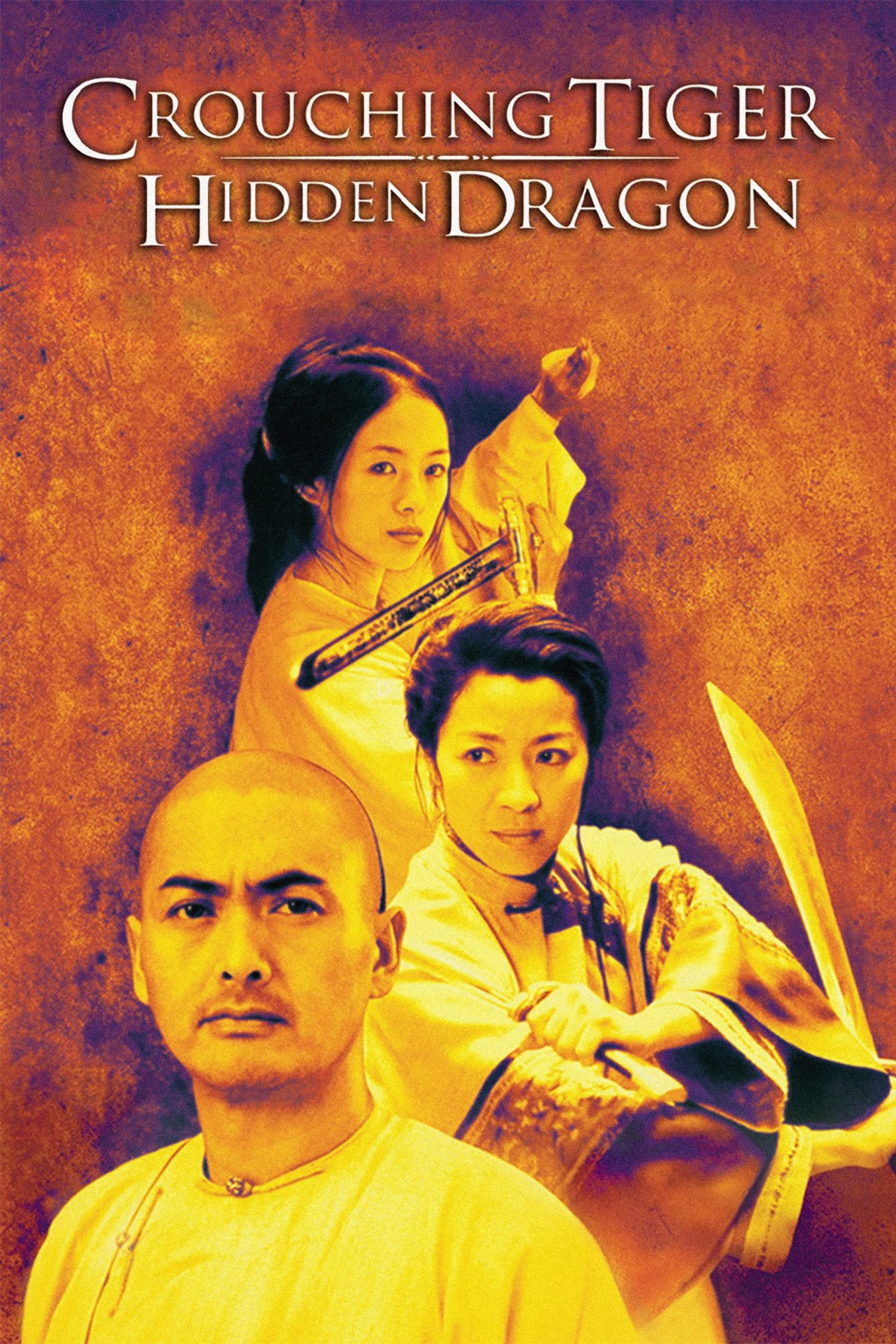
When I first watched “Crouching Tiger, Hidden Dragon,” I was sitting near the flickering blue light of a neighborhood theater that usually played safe crowd-pleasers. That night, it felt like I slipped through a secret portal into another world—a universe where gravity was nothing more than a polite suggestion and unspoken longing crackled between every whispered apology. This film did more than astonish my eyes; it lingered somewhere under my skin, haunting me for weeks. The memories it triggered—of unfulfilled dreams, of choices I wish I’d made—felt personal. Even after knowing every frame, I never quite shake off its spell.
What the Film Is About
To call “Crouching Tiger, Hidden Dragon” a martial arts film feels almost disingenuous. For me, it is a sweeping meditation on desire and restraint, where every airborne leap is weighted by the gravity of suppressed emotion. Ang Lee crafts a narrative where the visible conflict—warriors chasing bandits, passionate duels across rooftops—is always secondary to the inner turmoil churning beneath composed exteriors. At its core, the story gives us Li Mu Bai and Yu Shu Lien, who move through life tethered by duty, regret, and a longing that feels just beyond reach. Their personal journeys, much like their fighting styles, are elegant but tinged with loss.
What lingers most is the central conflict faced by Jen Yu, the governor’s daughter. Her rebellion pulses through every decision, every stolen glance at freedom. Through her, I experience the vibrant tension between tradition and autonomy: the aching impulse to escape the rigid world mapped out for her. This is a film as much about the battles we fight with others as the quieter, often more brutal struggles we wage against ourselves. I see “Crouching Tiger, Hidden Dragon” as an exploration of how past choices form invisible cages, even as we dream of flight.
Core Themes
What continues to resonate for me is how the film interrogates the boundaries between freedom and fate. Jen, with her supernatural skill and burning ambition, personifies the allure and peril of self-invention. This draws out the question: how much agency do we truly have in shaping our lives? The generational gulf between Jen and her mentors, Li Mu Bai and Shu Lien, makes this reflection sharply relevant. Even as an adult in the early 2000s, I felt the itch of tradition and modernity grinding against one another, both in the film’s Qing dynasty setting and in its contemporary echoes.
Beyond freedom, what captivates me is the film’s depiction of repressed emotion and the cost of silence. There’s an unmistakable ache in watching characters navigate duty, loyalty, and unspoken love. Their bonds become a metaphor for the choices that define us, and the words left unsaid are as consequential as any sword thrust. I have always found this theme timeless—after all, even in a digitized, noisy world, so much about identity and connection remains hidden just beneath the surface.
Back in 2000, Asian cinema rarely commanded such rapt international attention, yet this film’s universal core—the yearning for authenticity in a world obsessed with appearances—felt immediate and necessary. Today, its exploration of identity and power feels no less vital, as we continually renegotiate who we are in relation to the worlds we inherit and the ones we hope to build.
Symbolism & Motifs
What strikes me most are the film’s recurring symbols, forever etched into my memory. The legendary sword, the Green Destiny, is more than a weapon; it is a totem of yearning and legacy. Every eye that gazes upon it sees something different—status, liberation, or the crushing weight of expectation. Its theft sets the film’s events in motion, but the sword’s real power lies in how it refracts each character’s desires.
The motif of flight—wuxia’s poetic defiance of gravity—also stands out. Characters glide across bamboo forests and dance on the thinnest rooftops, and these sequences never read as mere spectacle. I see each leap as an act of rebellious desire and fleeting freedom. When Li Mu Bai and Jen cross swords high above the ground, their movements speak a language more honest than words.
Finally, water carries symbolic weight. From the tranquil stillness of moonlit ponds to the violent torrents that close the film, water mirrors inner unrest and serves as a visual metaphor for transformation. The final scene at Wudan Mountain, with its swirling mists and ambiguous spaces, remains a charged visual riddle. It whispers of both hope and loss, and I cannot watch it without sensing something unresolved within myself.
Key Scenes
The Tea House Theft: A World in Microcosm
The pivotal tea house sequence, where Jen reveals her martial prowess by battling a horde of would-be captors, crystallizes so much of the film’s ambition for me. Here, restraint shatters into chaos: Jen abandons pretense, and her astonishing skills dismantle social hierarchy in an instant. The choreography is mesmerizing, but what I cherish is the whiplash between serenity and mayhem. The tension stretching across that crowded room is as palpable as the broken chairs.
Bamboo Forest Duel: Dancing Above the Earth
Often imitated, never surpassed, the bamboo forest duel between Li Mu Bai and Jen is the film’s soul. I remember holding my breath during their airborne ballet, feeling as if I too hovered between sky and ground. The delicate choreography—a pas de deux of challenge, instruction, and forgiveness—captures the contradictions at the story’s heart: the drive to master oneself even as desire pulls one off course. That silent, swaying world of bamboo feels outside time—a space where rules bend and truth emerges.
The Final Leap: The Edge of Longing
The film’s haunting climax—Jen standing atop Wudan Mountain, poised on the lip of possibility—has never left me. Whether one reads her leap as an act of freedom, atonement, or surrender, it is a moment saturated with ambiguity. For me, it encapsulates the longings that can never quite resolve, the choices that feel impossible. It is both an ending and an invitation: what we make of Jen’s fate says as much about us as it does about her.
Common Interpretations
Much has been made of “Crouching Tiger, Hidden Dragon” as a meditation on Western misunderstandings of the East—a lushly romanticized fantasy. Critics frequently praise its blending of martial arts spectacle with high-toned art-house narrative, and there’s no denying that these surface pleasures are profound. For many, it stands as a cross-cultural text, a bridge between Hollywood and Hong Kong, between myth and modernity.
Yet, for me, the most compelling thread is not its East-West hybridity but its investigation of the emotional costs of self-restraint. I find the frequent readings that focus only on Jen’s youthful rebellion or the choreography’s beauty to be incomplete. The film is a story of mentoring gone awry, and of lives bent out of shape by the invisible fences of tradition, pride, and regret. Its real power is in suggesting that mastery—whether of sword or spirit—comes at the price of real vulnerability. That’s the layer I return to, every time.
Films with Similar Themes
- Hero (2002) – Like “Crouching Tiger, Hidden Dragon,” this Zhang Yimou epic interrogates the blurry lines between duty and personal desire, using martial arts as a metaphor for larger moral quandaries.
- House of Flying Daggers (2004) – Another wuxia triumph from Zhang Yimou, this film echoes the tragic romance and the cost of allegiance versus the promise of freedom.
- The Assassin (2015) – Hou Hsiao-hsien’s masterpiece reframes martial arts spectacle as an exercise in restraint and solitude, exploring the loneliness of exceptional individuals caught between worlds.
- The Piano (1993) – Though set in a different time and culture, Jane Campion’s film is a profound meditation on repression, unspoken love, and the quest for self-expression, making it a surprisingly apt companion to Ang Lee’s work.
Conclusion
Approaching “Crouching Tiger, Hidden Dragon” today, I encourage viewers to look beneath its luminous surfaces and astonishing action. It rewards patience and empathy, and its whispered sorrows feel more urgent than ever in a world obsessed with noise and spectacle. By embracing its themes of self-restraint and longing, we can see ourselves reflected in its shimmering pools and mist-shrouded mountains. Seeing the film in this light transforms what could be a simple adventure into a quietly radical meditation on the shape of our hearts.
Related Reviews
If you found value in my perspective, you might also enjoy exploring my thoughts on other cinematic landmarks such as In the Mood for Love and Ran.
To broaden this interpretation, you may also explore how critics and audiences responded over time.
🎬 Check out today's best-selling movies on Amazon!
View Deals on Amazon