
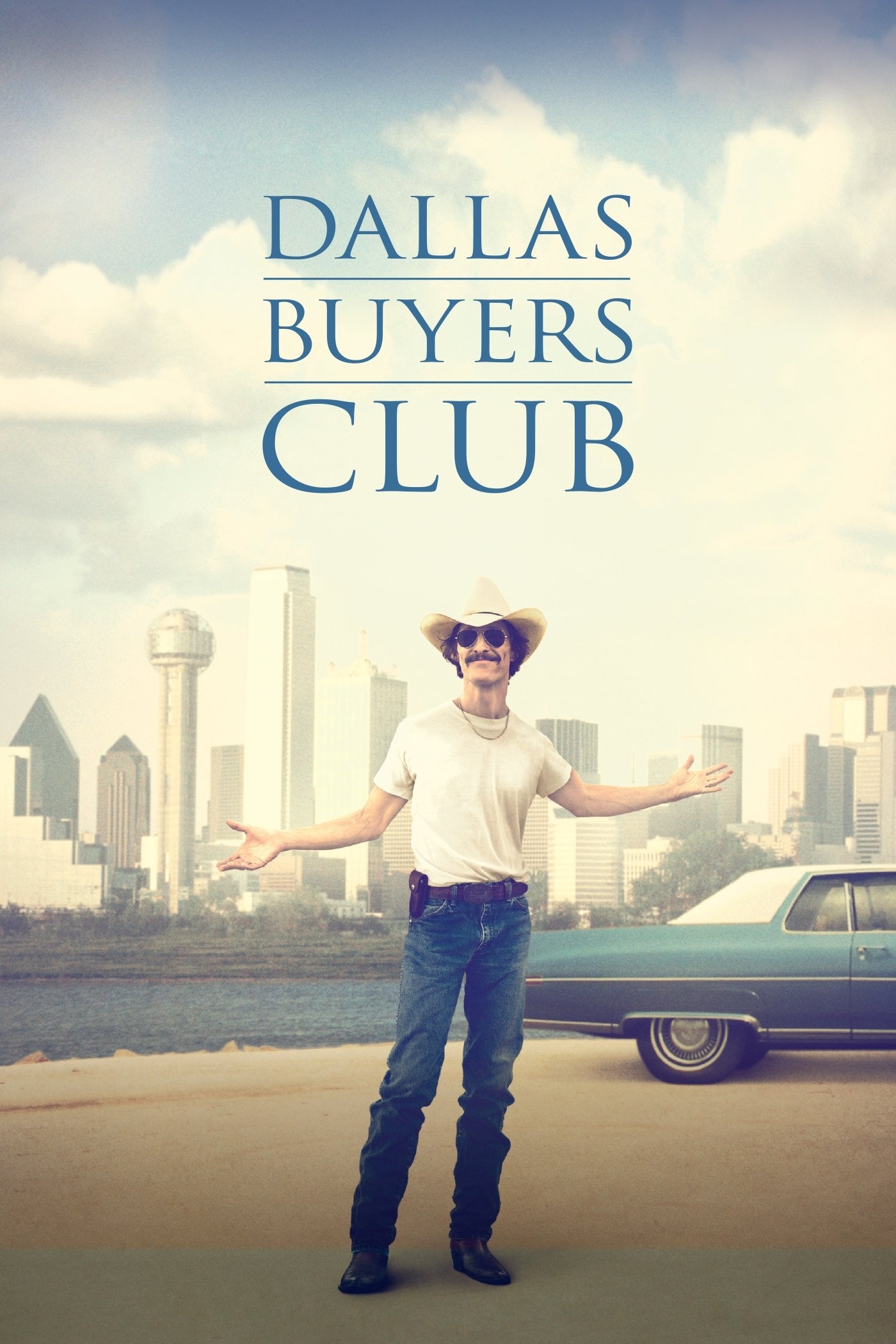
The first time I watched “Dallas Buyers Club,” I found myself questioning every easy assumption I’d made about human resilience, defiance, and the boundaries of empathy. It wasn’t the remarkable transformation of Matthew McConaughey that initially hooked me—impressive as it is—but the sheer unpredictable volatility of Ron Woodroof as a figure who upends the easy contours of heroism. As someone who grew up seeing the AIDS crisis only in the footnotes of history and headlines, I never imagined how one film could crystallize such a vivid moment in time, collapsing the distance between then and now. The desperation, the anger, the dark humor—these all felt uncomfortably alive, reminders that the borders between outcast and advocate are always porous.
What the Film Is About
At its most basic, “Dallas Buyers Club” chronicles the true story of Ron Woodroof, a rough-edged Texas electrician whose world shatters with an HIV diagnosis in the mid-1980s. But what truly drew me in was the emotional atlas this film sketches—tracing Woodroof’s evolution from self-serving denial to frantic self-preservation, and ultimately to a begrudging, deeply human solidarity with others shunned by society. The conflict with the medical establishment is not just bureaucratic. It’s existential—a daily fight for access, legitimacy, and, above all, agency when every authority figure seems intent on writing your ending for you.
Through Woodroof’s journey, I felt the film asking older and harder questions: What does it mean to survive when the institutions meant to protect you actively fail? Its condemnation is pointed, yet never preachy. It’s as if every desperate hustle and makeshift deal is a small, defiant prayer for dignity. Even as Woodroof fights for his own life, the relationships he forges—especially with Rayon, a transgender woman facing her own storms—become the true narrative heart. This isn’t just a film about AIDS. It’s about the systems we construct to save ourselves when society leaves us to die alone.
Core Themes
What lingers with me the most is the film’s exploration of resistance against institutionalized indifference and deep-seated prejudice. In 2013, the film’s blunt depiction of medical bureaucracy and pharmaceutical greed (exposed through the FDA’s dogged opposition to “unapproved” treatments) resonated in a world rife with conversations about healthcare access and the LGBTQ+ rights movement gaining new momentum. Today, those same issues persist globally, making the film’s portrayal of marginalized voices battling for acknowledgment and care feel newly urgent every time I revisit it.
Woodroof’s journey is also, quite crucially, about transformation—not just personal, but communal. Identity in “Dallas Buyers Club” is fluid, contested, and hard-won. I’m consistently struck by the way the film frames Ron’s evolving empathy not as a sudden epiphany but as an ongoing, often painful negotiation with his own values. It’s this fluidity that ultimately forges alliances across lines of gender, sexuality, and belief. In a society obsessed with drawing boundaries, this film focuses on how those lines can shift, curl, and, occasionally, dissolve under pressure.
Symbolism & Motifs
What fascinates me about “Dallas Buyers Club” is the precise, almost subconscious way its visual language communicates meaning. The recurring motif of doors—slamming, opening, locked, and forced—recurs throughout, as if to underline the persistent negotiation of entry and exclusion. Whether it’s the hospital wings that Ron breaks into or the seedy motel rooms where deals are struck, every threshold crossed speaks to a fundamental human longing for access—to medicine, to companionship, to dignity itself.
Equally potent is the use of mirrors and reflections. The shattered self-image, especially in early scenes where Ron’s physical decline becomes undeniable, carries a visual punch: the literal and metaphorical fracturing of identity. The camera lingers uncomfortably at times on withered bodies, unflinching in its honesty, but always fighting easy pity. The motif of money changing hands—crumpled bills, pill packets, handshake deals—serves as a persistent reminder that in America, even survival must be bargained for. Each transaction exposes the arena in which power, hope, and life itself are in play.
Key Scenes
Shattering News: The Diagnosis
Of all the seismic moments, Ron’s diagnosis scene stands as a visceral gut-punch. The sterile cruelty of the hospital, the brusque doctors, and Ron’s disbelief veer dangerously close to despair. His initial denial, larded with ugly bravado, is a stark visualization of how masculinity can be both shield and cage. For me, this is when McConaughey’s performance snaps into place—the tight, frightened frame of a man facing annihilation without a script for how to grieve or cope.
The First Deal: Starting the Buyers Club
When Ron realizes that official channels offer nothing but fatalism, he leaps into action—this transition from helplessness to entrepreneurial cunning is the film’s first assertion of autonomy. The gritty, haphazard birth of the buyers club is staged not as triumph, but as a calculated act of desperation. Here, the film’s true emotional velocity kicks in. Every handshake and back-room exchange is a challenge to the structures designed to discipline and exclude him—and us.
The Final Testimony: Ron in the Courtroom
Late in the film, Ron faces the court in a climactic challenge to the FDA’s authority. This is the moment the storytelling outstrips its own boundaries: Ron speaks not merely for himself, but for an entire network of invisible, forgotten people. His testimony is raw, halting, cut through with an anger made credible by loss—in this instant, survival is framed as an act of public defiance, not just personal necessity. I left this scene convinced that, whatever its biographical liberties, the film understands activism as rooted in the most intimate collisions between public power and private pain.
Common Interpretations
Critics are often quick to attribute the film’s accolades to McConaughey’s physical metamorphosis and its traditional underdog structure. Many see “Dallas Buyers Club” as a redemptive arc story, lauding it for transforming a flawed, bigoted protagonist into an unlikely champion for the marginalized. Some reviewers also emphasize its veneer of gritty, hard-won realism and a deeply American spirit of hustling against the odds.
Yet I find much of that assessment too neat. From my viewpoint, the film is far more ambivalent about redemption: the transformation is incomplete, the alliances always uneasy, and the victories pyrrhic rather than absolute. Ron remains, to the end, a complicated figure—his empathy is real, but his rough edges persist. The film’s refusal to tidy up his roughness is, for me, its true mark of respect towards its subject matter. This uneasiness ensures the story remains grounded in the messy, unresolved realities of its historical moment.
Films with Similar Themes
- Philadelphia (1993): Both films center on HIV/AIDS and the intersecting prejudices of the American healthcare and legal systems. “Philadelphia” brings a legal drama perspective matched by “Dallas Buyers Club’s” renegade resistance.
- The Constant Gardener (2005): Exposes pharmaceutical corruption and injustice with the same fierce energy, focusing on an individual’s battle against systemic indifference.
- Milk (2008): Explores LGBTQ+ activism and the struggle for dignity and recognition in a hostile political climate, echoing many of Ron’s hard-won lessons.
- The Wrestler (2008): While not about AIDS, its unflinching portrait of a marginalized, self-destructive protagonist fighting for his last scraps of dignity mirrors Woodroof’s battle for survival.
Conclusion
Approaching “Dallas Buyers Club” today, I think viewers should resist the temptation to flatten the film into an easy fable of progress or heroism. What gives the film its lasting power is its open-ended, nervy insistence on the value of every life, even (especially) those relegated to the margins. For those willing to sit with its discomforts, “Dallas Buyers Club” remains a bracing reminder that activism and empathy are born not from sainthood, but from imperfection and need. Absorbing its lessons today isn’t just an act of looking back—it’s an invitation to recognize how those struggles persist in different forms, demanding our continued attention and care.
Related Reviews
If you found value in my perspective, you might also enjoy exploring my thoughts on other cinematic landmarks such as Philadelphia and Milk.
To broaden this interpretation, you may also explore how critics and audiences responded over time.
🎬 Check out today's best-selling movies on Amazon!
View Deals on Amazon