
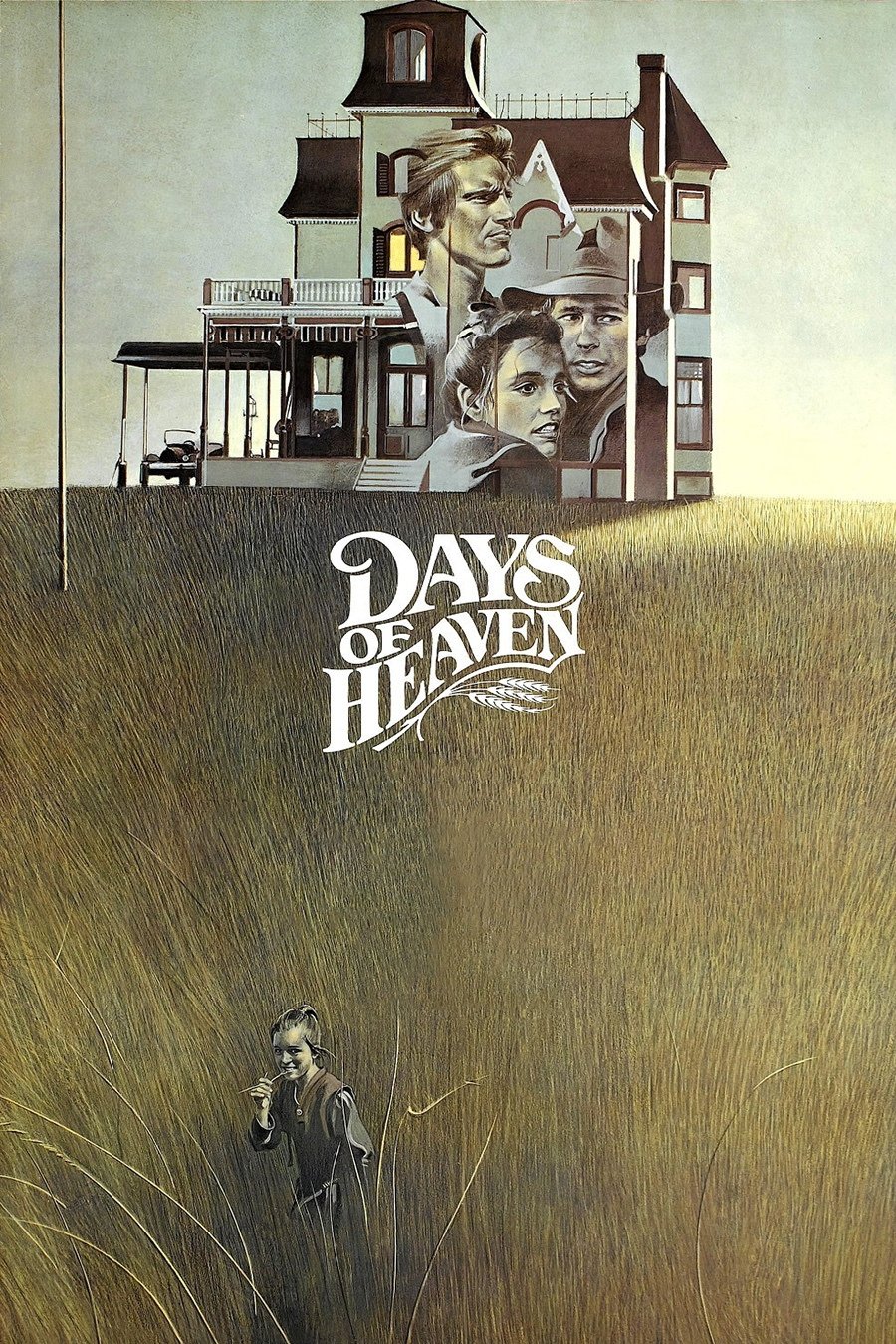
The Whisper of Wheat: My Emotional Entrance to Malick’s World
The first time I watched Days of Heaven, it felt less like a film and more like a living memory. I remember that flicker of sun over a field, the way the light turned gold against the endless prairie, and how every image felt as if it were pressing gently on something inside me I wasn’t prepared to name. Malick’s film doesn’t introduce itself with plot, but with feeling—a hush, a longing, and a sense of awe that lingers like dust in the air. I sensed immediately that this wasn’t a story told so much as it was breathed, and I had to surrender to its atmosphere before I could understand a single thing about its characters or motives. That surrender became my entry point into what Malick was truly after: a meditation on human frailty, nature’s indifference, and the beauty that blooms in the silence between spoken words.
Harsh Grace: Beauty and Brutality Intertwined
There’s a particular honesty in the way Days of Heaven frames its violence and its romance within the same golden hour. As I watched Linda Manz’s voice glide over the images, her narration struck me as innocently blunt—almost childlike, yet never naive. Malick’s perspective is unflinching: beauty and pain are not opposites here, but twin forces that shape every life under the Texas sky. Every slow-motion shot of swaying wheat carries not just the promise of abundance, but also the threat of fire or devastation. The machinery that tills the earth is both a marvel and a looming harbinger of loss. I understood, as I grew into the film’s rhythm, that what Malick offers isn’t just visual poetry—it’s a constant reminder that grace can be as sharp as a blade.
Voices from the Margins: Linda’s Innocence and Wisdom
Linda’s narrative voice—awkward, sometimes fragmented—haunted me long after the credits. I couldn’t help but feel that the story belongs to her far more than it does to Bill or Abby. Through Linda, we witness the world with a gaze that is both removed and intimate; she is the audience’s surrogate, touching the upheaval of adult lives while remaining curiously detached from their heartbreak. Her observations slice through sentimentality, grounding the pastoral splendor in the realities of poverty and displacement. Linda’s words don’t explain; they evoke. I found myself trusting her impressions more than the dialogue, as if she could see the threads connecting harsh labor, fleeting happiness, and the inevitability of tragedy better than anyone else on screen.
A Paradise on the Edge of Ruin
I’ve rarely encountered a film that makes its setting feel so alive. The Texas Panhandle, under Néstor Almendros and Haskell Wexler’s lush cinematography, is not a mere backdrop but a vital character. The landscape is a paradox: it’s depicted as paradise, yet every frame hints at its precariousness. The fields of wheat are impossibly beautiful, but they bristle with the threat of storms, locusts, and fire. I felt a constant tension between abundance and fragility. Malick invites me to see Eden not as a lost place, but as a space we wander through in brief, uncertain moments. Every meal, every dance, every shared glance is shadowed by the knowledge that it cannot last.
The Silent Cost of Yearning
Sifting through the film’s quiet moments, I came to believe that desire is both the engine and the undoing of every character. Bill’s hunger for a better life, Abby’s longing for stability, and the farmer’s wistful hope for love—they don’t just shape the narrative, they doom it. Malick treats ambition as something almost tragic: noble in its reach, yet inevitably destructive when it brushes up against reality’s edge. Even when the characters seem to achieve a kind of happiness, the camera lingers on their faces just long enough for doubt to seep in. I found myself aching for them, but also recognizing how often our deepest desires become the very fire that consumes what we hold dear.
Earth, Fire, and the Indifference of Nature
One of the most startling revelations for me was how little heed nature pays to human suffering in this story. When the locusts descend or the fire sweeps through the fields, it isn’t punishment or deliverance—it’s simply the world moving in its own rhythms. Watching Malick’s camera dwell on the aftermath of catastrophe, I sensed a humility at work. The land will survive, the seasons will continue, even as lives are uprooted and dreams go to ash. This is not a world shaped for us, and the film’s beauty never once allows me to forget that its grandeur is entirely impersonal. That realization gave the narrative a profound, aching sense of scale—our joys and griefs are tiny, flickering things against the infinite calm of the earth.
The Sacred Mundane: Rituals of Labor and Leisure
There is a sacredness in the ordinary rhythms of work and rest that Malick captures with reverence. The daily grind of harvesting wheat, shared meals, and impromptu celebrations all become ceremonies in a world where stability is a luxury. I often found myself mesmerized by the way the film dwells on hands in motion, faces lost in thought, or the simple act of dancing in the fading light. These details aren’t just filler; they are the marrow of existence, the moments when characters are most fully alive. Malick seems to suggest that meaning is found not in grand gestures but in the accumulation of small, everyday rituals. For me, these sequences are where the film’s soul truly resides—where longing, love, and loss are woven together in the stuff of real life.
A Lullaby of Loss and Renewal
When the story finally releases its grip, what lingers is not so much the memory of plot twists or revelations, but a kind of lullaby—melancholy, but not hopeless. Loss in Days of Heaven feels cyclical, part of a broader tapestry that includes the possibility of renewal. The departure of loved ones, the collapse of plans, even the devastation of the land itself—all these are met not with despair, but with a quiet, almost stubborn persistence. Linda’s closing words, as she walks along the railroad track, struck me as a thread of continuity; life goes on, innocence is redefined, and the world grows a little stranger, but never utterly devoid of wonder or connection.
Recommendations for Fellow Wanderers
If the haunting beauty and philosophical undertones of Days of Heaven compelled you the way they did me, I would urge you to seek out Badlands (1973) and The Grapes of Wrath (1940). Both films offer their own meditations on the American landscape, innocence lost, and the search for grace amid tumult.
If you’re curious about how this film was originally perceived or how it compares to similar works of its era, these resources may be helpful.
🎬 Check out today's best-selling movies on Amazon!
View Deals on Amazon