
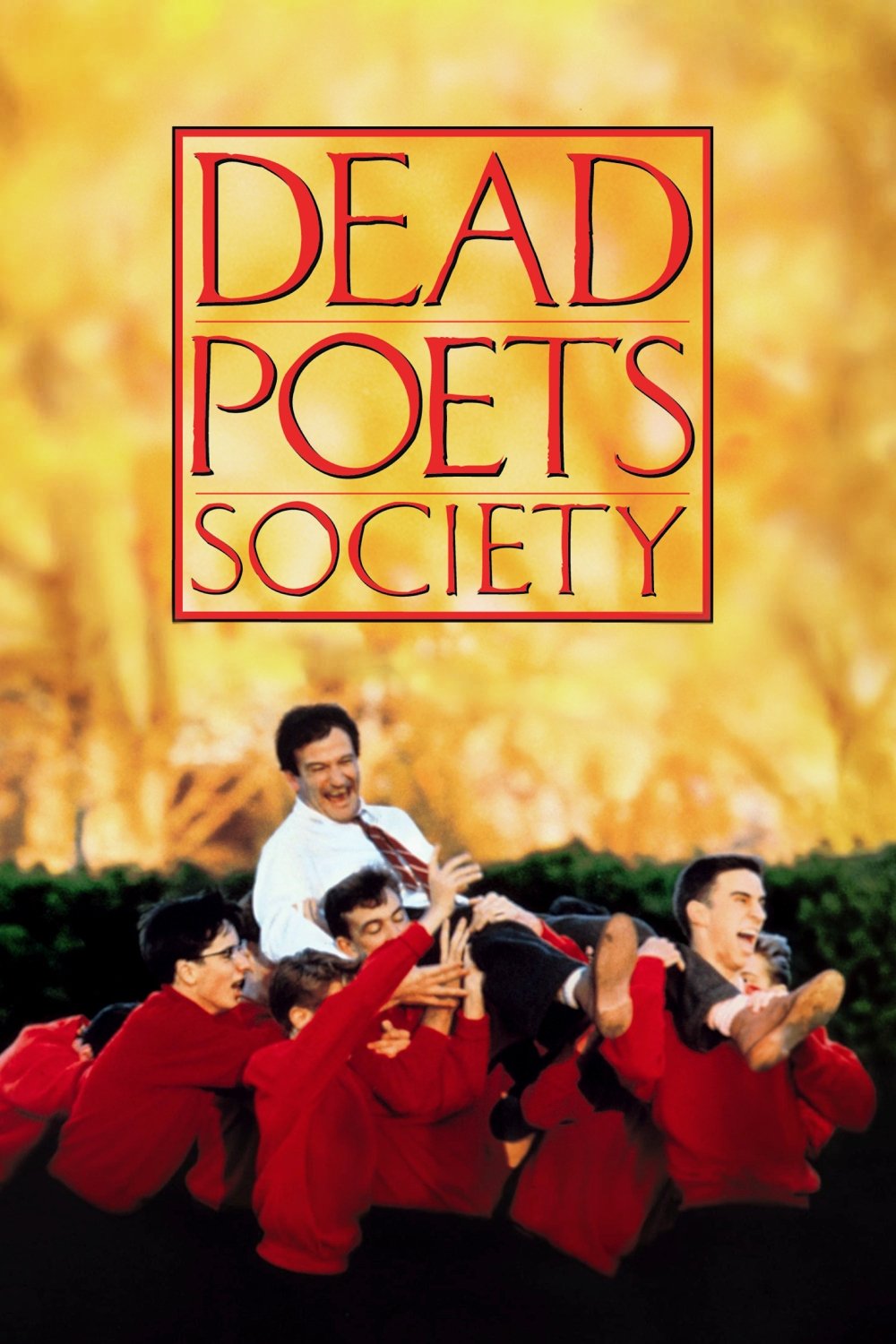
It’s the troubling echo of “O Captain! My Captain!”—an invocation I first heard in the glow of late-night television—that keeps drawing me back to “Dead Poets Society”. I remember watching Robin Williams stand on a desk and command a classroom’s attention, not with discipline, but with urgency and hope. That moment didn’t just slip into my memory; it branded me. The unrelenting yearning for authenticity and the invisible chains of institutional expectation felt deeply personal, not because I’d ever worn a Welton blazer, but because I, too, have felt the pressure to conform when the heart wants to resist. This is a film I return to when I wonder how far I have compromised myself, and every viewing draws a fresh line between who I am and who I wish to be.
What the Film Is About
“Dead Poets Society” tells the story of a group of boys at the rigid Welton Academy, whose worlds are upended by a new English teacher, John Keating (Robin Williams). But the narrative isn’t just about boys and their teacher; it’s about the violent collision between individual desire and collective conformity. There’s a surface-level coming-of-age arc, but what fascinates me is the undercurrent of anxiety—what happens to a soul forced to choose between the safety of silence and the peril of self-expression.
As I see it, the film dramatizes the emotional journey from compliance to rebellion and, sometimes, to despair. Every character is pushed to confront their truth—Todd Anderson’s terror at being heard, Neil Perry’s suffocating struggle with parental expectation, Knox Overstreet’s naive belief in romantic destiny. When the Dead Poets Society is revived in the woods, it becomes more than an escape; it’s a crucible. Passion is found, but so is the cost. The movie, for me, is a warning: to live truthfully is a risk, and yet, to not is fatal in its own way.
Core Themes
One of the major forces at work is nonconformity—the need to carve a unique path, even when surrounded by tradition’s relentless tide. Keating’s mantra, “Carpe diem,” is less motivational poster than radical manifesto. In 1989—at the tail end of Reagan’s America and the cultural retrenchment that defined that decade—the film’s central message would have felt almost subversive. Even now, the tension between breaking free and belonging is as relevant as ever, especially as students and workers alike wrestle with institutional inertia and social pressure.
Authority and its discontents permeate the story. The strict fathers, the authoritarian headmaster, the nearly monastic rituals—all function as stand-ins for any structure that claims to know what’s best. Watching these boys push back—or succumb—made me reflect not only on the external pressures I’ve faced, but also the internalized voices telling me to keep my head down. The destructive power of repression, and the paradoxical salvation that can come through honest self-expression, make the film not just nostalgic, but urgent even decades on.
Symbolism & Motifs
For me, the recurring image of standing on desks is unforgettable. What might seem like a simple act of rebellion is actually a visual manifesto; to stand above the familiar is, literally, to see the world differently. When Keating climbs onto a desk, inviting his students to follow, he is not just asking them to be bold—he’s insisting on perspective as a moral imperative.
The cave in the woods, where the Dead Poets gather, isn’t just a physical retreat; it’s a sacred space, separated from the sterile corridors of Welton. Inside, the boys read poetry, confess their fears, and make tentative (sometimes dangerous) leaps toward adulthood. The cavern’s darkness, illuminated by candlelight or clandestine laughter, struck me as a metaphor for the parts of ourselves we’re afraid to show. It’s both womb and tomb: a place where ideas are born, but where dangers—psychological and literal—loom.
Even the use of poetry itself is a recurring motif. Keating has his students tear pages from their textbooks, debunking the reduction of art to formulas. Poetry becomes a vessel for truth—not orderly, but wild, idiosyncratic, personal. That’s what I feel every time Keating prompts the boys to “contribute a verse”—the charge is not just aesthetic, but existential.
Key Scenes
The First Day: Breaking the Mold
Keating’s inaugural class, where he leads the students into the hallway to ponder the faces of the long-dead, is among the most electrifying introductions of a teacher in cinema. His low, urgent whisper of “Carpe diem” isn’t just pedagogical; it is transformative. That scene is crucial: it sets the stakes, introducing the question that will haunt the boys—what, if anything, will their lives mean?
Neil Onstage: The Price of Self-Discovery
Another moment that haunts me is Neil’s performance as Puck in “A Midsummer Night’s Dream”. Neil’s exhilaration—illuminated by footlights and the roar of applause—contrasts sharply with the suffocation he endures at home. This is the emotional summit of the film: for a brief moment, Neil is unbound, exuberant, alive. The cost of this self-assertion, as we soon see, is devastating. I can never watch it without feeling that brief, blinding flash of hope before the darkness returns.
“O Captain! My Captain!”: The Final Insurrection
No scene has been more parodied or lionized, but the climax, when the boys stand on their desks to salute Keating as he is dismissed, never fails to move me. It’s a simple gesture, but one dense with meaning—defiance, gratitude, grief. I see it as less about victory and more about survival: the boys may not have overthrown the system, but they have seized a moment of truth. It’s a fleeting but genuine assertion of solidarity and selfhood, and I find that courage both wrenching and inspiring.
Common Interpretations
Most critical readings emphasize the inspirational teacher trope, seeing Keating as a Promethean figure overthrowing authoritarian strictures to unleash individuality. There’s truth in that, but it risks flattening the story. Some argue that the film romanticizes rebellion without taking seriously the consequences, especially the tragedy at its heart. I understand that skepticism—the danger is real, and Keating isn’t infallible. Yet I’ve always read the film as more ambiguous. For me, “Dead Poets Society” is not an unalloyed endorsement of rebellion; it’s a meditation on its necessity and its cost. The pain is not just individual, but collective, and the film is most powerful when it acknowledges that reality without giving easy answers.
Sometimes, critics miss how the supposed triumph of self-expression is hemmed by grief, by the limits of what one teacher (or one poem) can achieve against deeply rooted power. That ambivalence, rather than its more rousing notes, is what keeps the film alive for me in each rewatch.
Films with Similar Themes
- The Prime of Miss Jean Brodie – Like Keating, Miss Brodie is a maverick teacher who urges her students to defy convention, and the film similarly interrogates the cost of such empowerment within a controlling educational system.
- Good Will Hunting – The teacher-student dynamic here is less about institutional rebellion and more about emotional liberation, yet both films explore what happens when authority encourages authenticity.
- Mona Lisa Smile – In another cloistered academic setting, a female teacher battles a conservative faculty to awaken young women’s minds—paralleling Dead Poets’ examination of gendered expectations and personal agency.
- The Emperor’s Club – This film also explores the limitations of mentorship and the impact of classical education, questioning whether ideals can really withstand social and personal realities.
Conclusion
I believe “Dead Poets Society” remains urgent because it demands not just admiration, but action from its viewers. To watch it now is to be reminded that the dilemmas facing the Welton boys—how to live, how to speak truthfully, how to resist the pressure to disappear into groupthink—are never outdated. To engage with its themes, for me, is to interrogate my own choices and to renew my own resistance to complacency. I urge modern viewers not to treat the film as a relic, but as a mirror—uneven, sometimes painful, but always necessary for those bent on contributing their verse.
Related Reviews
If you found value in my perspective, you might also enjoy exploring my thoughts on other cinematic landmarks such as “The Prime of Miss Jean Brodie” and “Good Will Hunting.”
To broaden this interpretation, you may also explore how critics and audiences responded over time.
🎬 Check out today's best-selling movies on Amazon!
View Deals on Amazon