
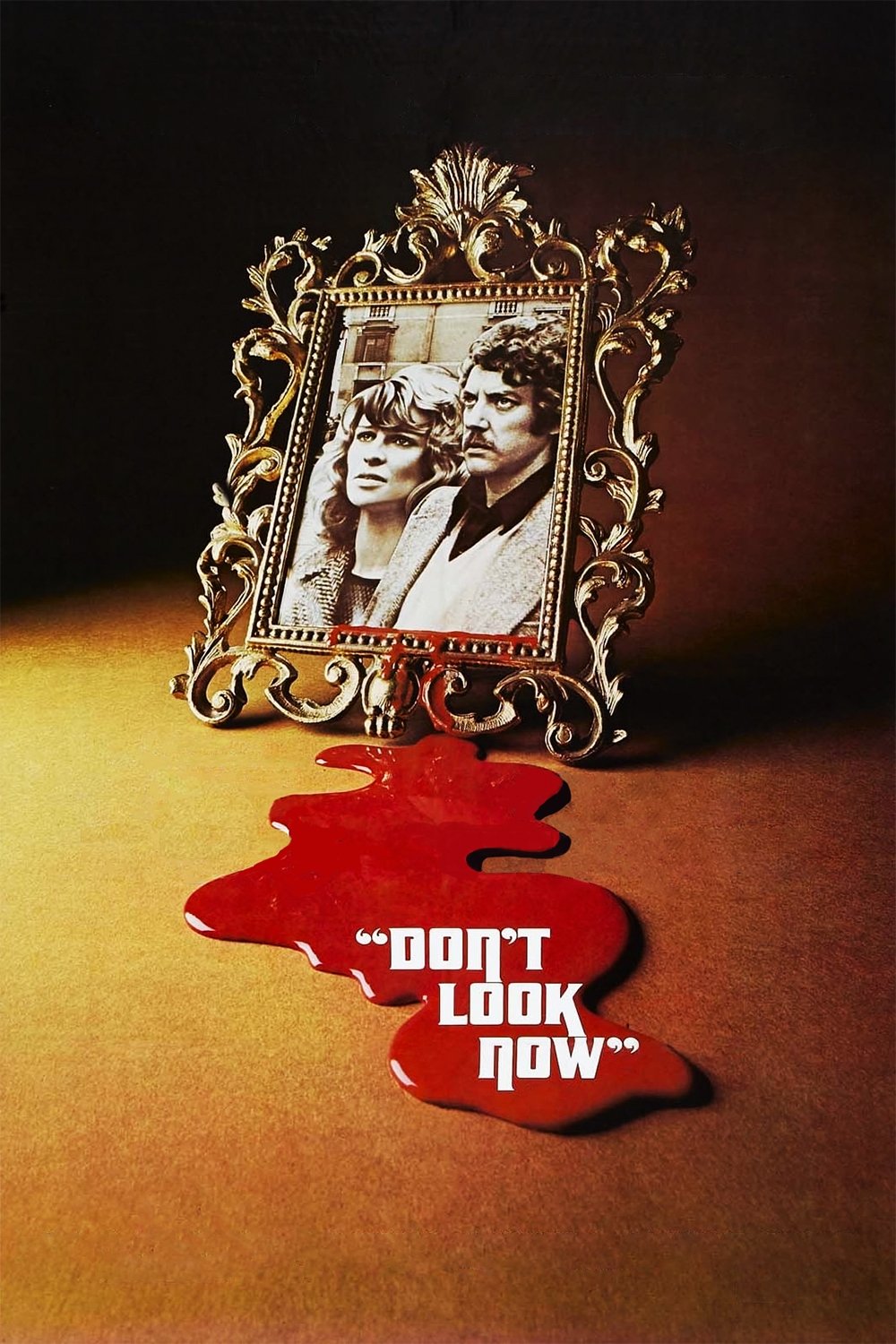
The first time I watched “Don’t Look Now,” I found myself haunted not only by certain images, but by a sensation – a kind of anxiety that lingered like the aftertaste of a nightmare half-remembered. There are movies that tell you what to feel, laying out their meanings in neat rows; Nicolas Roeg’s enigmatic 1973 film disoriented me instead. It confronted my own unease about loss, perception, and the silent spaces between loved ones. The film’s tangled editing and fractured scenes seemed to echo my own memories: unreliable, elliptical, at once vivid and incomplete. I return to “Don’t Look Now” not for comfort, but for that thrilling and disconcerting reminder of how fragile and flickering our understanding of reality can be.
Confronting Grief and the Unknowable
At its core, “Don’t Look Now” traces the psychic battleground of a married couple—John and Laura Baxter—reeling from the accidental drowning of their daughter, Christine. For me, the film’s narrative is less about the external mechanics of Venice, spiritualism, or murder than it is about the emotional paralysis that trauma inflicts. John and Laura’s exile to this labyrinthine city is less a physical journey than an inward odyssey, full of suppressed guilt and spectral premonitions. What fascinates me is the way Roeg’s film approaches sorrow not as a single event, but as a shifting, ever-present force capable of rupturing time and distorting perception.
Throughout, I find myself compelled by the movie’s uncertainty—are the uncanny warnings from the psychic sisters grounded in truth, or just psychological projections? Are John’s visions of his daughter signs of the supernatural, or symptoms of his own descent? The ambiguity is relentless, and it’s precisely this refusal to settle that gives “Don’t Look Now” its piercing power. In my view, the film is less interested in closure than in documenting the impossibility of returning to “normal” after tragedy. The central conflict is not between the living and the dead, but between those who seek meaning in chaos and those who are destroyed by it.
Unraveling the Film’s Preoccupations
The chief theme that strikes me each time I watch is the overwhelming weight of grief—and the toll that silence takes on intimacy. The Baxters’ attempts to reconnect in Venice constantly run aground on the unspoken, suggesting that grief isolates even as it binds. As a viewer, I’m moved by how Roeg depicts the splintering effect of personal loss—how it can make lovers strangers and impose rifts that no amount of logic or affection can mend.
Another urgent theme I see running through the film is the deceptiveness of perception. John’s professional life as a restorer—trying to fix something damaged—mirrors his personal denial. The theme of seeing and not seeing, of doubting one’s senses, is crucial both to the plot and to my own reading of its ideas. This resonates especially strongly in a world obsessed with certainty, proof, and visual evidence. “Don’t Look Now” is a timely reminder from another era that the boundary between reality and delusion is porous, especially in the aftermath of trauma.
When the film debuted in 1973, it offered a challenge to both the genre expectations of horror and to the conventions of marital drama. I suspect its contemporary relevance lies in its honest, unvarnished depiction of the aftermath of a family tragedy—how grief outlasts the expressions of sympathy and becomes something elemental.
Recurring Images and the Echo of Loss
Roeg’s cinematic language is replete with recurring motifs—red, water, shattered glass, and doubles—each reinforcing the web that binds the Baxters to their fate. For me, the brilliant flash of Christine’s red mac is one of the most enduring images in cinema. That color, impossible to ignore, recurs in unexpected places: the twins’ wardrobe, stained glass, the blood in Venice’s canals. It acts as a persistent, ghostly reminder of the past, always visible just at the edge of perception.
Water, too, is omnipresent—both a literal danger and a metaphor for submerged feelings. For a film concerned with emotional repression, it’s fitting that so much happens just below the surface. The visual motif of blurred reflections and refracted images—distorted by water, glass, or imperfect memories—serves as a visual shorthand for the unreliability of sight and the complexity of truth within trauma.
Even Venice itself becomes a symbol: labyrinthine, beautiful, slowly decaying. I interpret the city’s bridges and alleyways as emblems of the couple’s attempted reconnection—always lost, always misdirected. The film’s visual motifs are not arbitrary; they deepen an atmosphere of inexorable fate that, for me, is as chilling as any supernatural threat.
Pivotal Moments That Stayed With Me
The Shattering Calm of the Opening Sequence
The prologue, with its alternating shots of Christine in her red coat by the pond and John perusing photographs, is more than an introduction; it is a masterclass in building dread through editing and visual association. The sense of impending doom, heightened by Roeg’s cutting between the water and John’s spilled glass, sets a pattern of cause and effect, accident and consequence, that reverberates throughout the film. This sequence is devastating not just for its content, but for the way it establishes the film’s elliptical structure: the notion that the past will always bleed into the present.
The Silent Reconciliation
Midway through, the celebrated love scene between John and Laura is handled with unusually frank intimacy. For me, what’s remarkable is not its explicitness, but its emotional vulnerability—intercut with shots of the couple dressing afterwards, it fractures the boundary between sex and routine, love and habit. The editing here turns a moment of apparent reconnection into a meditation on distance, as if the couple are already drifting away from one another even in their most intimate act. It’s one of the few scenes in cinema that uses sex honestly to examine the stark realities of grief and attempted healing.
The Final Pursuit: Seeing Is Believing
The film’s crescendo, in which John chases a red-clad figure through nocturnal Venice, is probably its most iconic sequence. The city becomes a disorienting maze, John’s desperation mounting as he searches for meaning, redemption, or his lost daughter. The shock of the final reveal—when the figure turns, and what’s revealed is neither child nor salvation—unites the film’s central ideas about the perils of misreading signs and the catastrophic consequences of seeing only what we want to see. The cyclical nature of fate is sealed in these icy, tragic moments.
Standard Readings and My Disagreements
Most critics have interpreted “Don’t Look Now” as a sophisticated meditation on grief filtered through the lens of horror. Common readings focus on its motifs of sight, prophecy, and self-deception. Some emphasize John’s denial and rationalist skepticism, arguing that his resistance to the supernatural seals his doom. Others see the film as a cautionary tale about repressing trauma and ignoring emotional warnings.
I mostly agree with these perspectives, though I resist the classification of the film strictly as “psychological horror.” For me, what sets this movie apart is its almost unbearable intimacy and authenticity in depicting post-tragedy relationships. Many analyses pay homage to the editing and symbolism, but I think they often overlook the ache of missed connection at the story’s heart. The supernatural, in my view, is a metaphor for the noises we make to fill the silence left by grief—terrifying, compelling, but ultimately less consequential than the gulf between John and Laura themselves.
Echoes in Other Films
- “The Sixth Sense” (1999): Like “Don’t Look Now,” this film is driven by the tension between grief, perception, and the supernatural, exploring the ways personal trauma skews our understanding of the world.
- “The Others” (2001): Another film rooted in ambiguous loss, isolation, and haunting atmospheres, centering on how belief and denial shape reality after tragedy.
- “Possession” (1981): Andrzej Żuławski’s feverish marital psychodrama shares Roeg’s obsession with the breakdown of relationships under unendurable emotional strain.
- “Repulsion” (1965): Polanski’s study of psychological breakdown uses urban alienation and visual motifs to chart a descent into madness with affecting precision, much like Roeg’s approach to grief and disintegration.
Living With Questions: My Takeaway
Modern audiences may find “Don’t Look Now” disorienting; its lack of easy answers or clear resolutions is a deliberate provocation. But entering into its melancholy rhythms can be profoundly rewarding. I believe that understanding the film’s preoccupation with loss, perception, and the boundaries of intimacy enriches its haunting tale. For those willing to sit with discomfort and ambiguity, Roeg’s masterpiece offers not only a ghost story, but also a meditative look at how love and grief entwine—sometimes fatally, always honestly.
Related Reviews
If you found value in my perspective, you might also enjoy exploring my thoughts on other cinematic landmarks such as “The Innocents” and “Picnic at Hanging Rock.”
To broaden this interpretation, you may also explore how critics and audiences responded over time.
🎬 Check out today's best-selling movies on Amazon!
View Deals on Amazon