
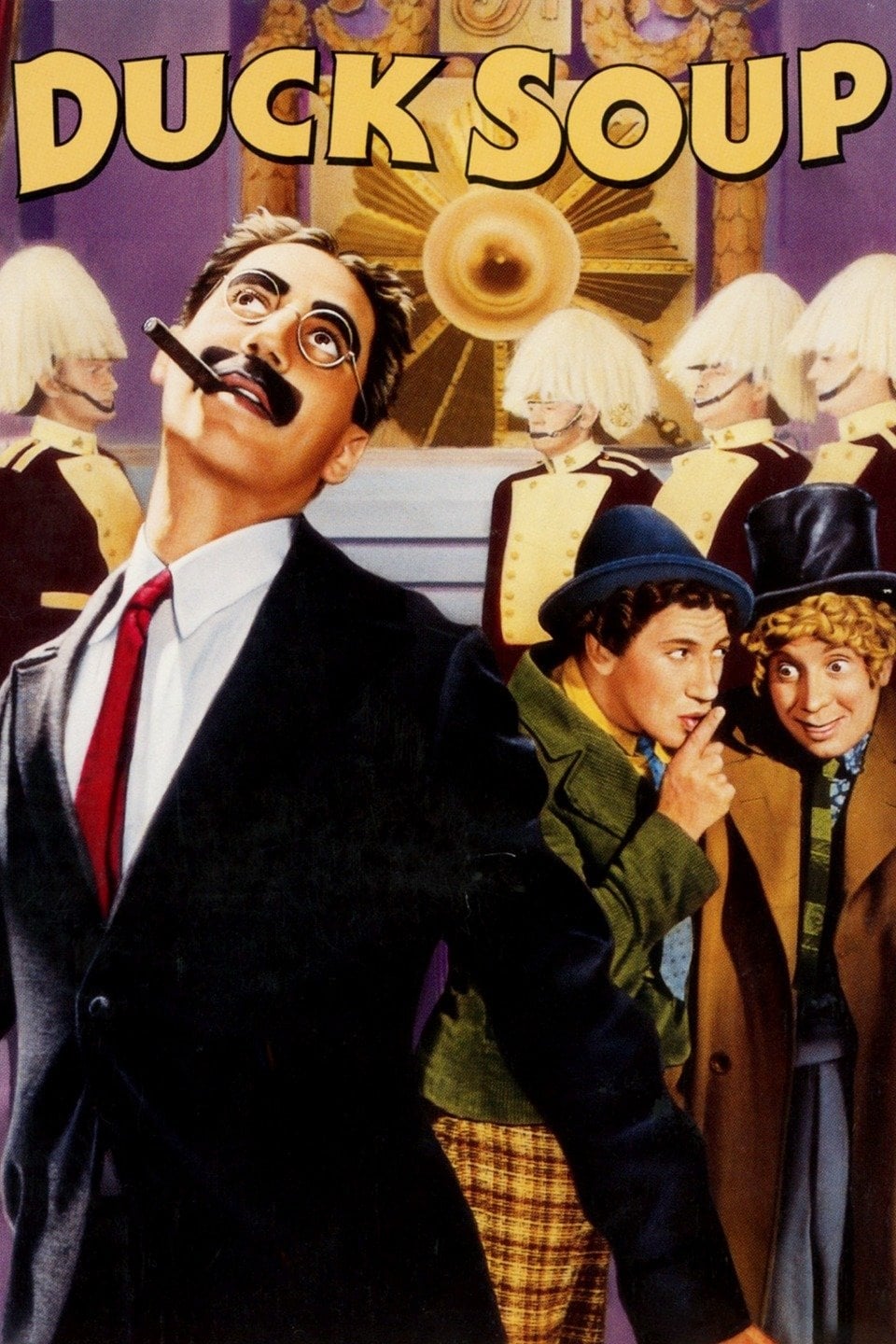
A Carnival of Nonsense and Subversion
I can’t recall another film where I felt so gleefully at odds with order and authority as I do when watching Duck Soup. The opening moments drop me not into a coherent world but rather into the eye of an absurdist hurricane, where nothing is sacred and everything—especially the trappings of power—is ripe for ridicule. The Marx Brothers aren’t simply clowning around; they’re systematically dismantling the very idea of deference, poking holes in our willingness to obey, to believe, and to follow. What hits me hardest, beneath the slapstick, is the film’s unrelenting mockery of leaders, institutions, and the stories we tell ourselves about seriousness and sovereignty.
Listening for Meaning in the Laughter
Each time I revisit this anarchic masterpiece, I find myself wondering why the laughter feels so cathartic—and, at times, a little dangerous. Embedded deep within the jokes, the pratfalls, and Groucho’s endless wisecracks is a pointed skepticism about the people who claim to lead us. Rufus T. Firefly (Groucho) isn’t just a buffoon; he’s a void in a suit, an embodiment of the emptiness at the heart of blind nationalism. When he’s named leader of Freedonia, it’s as if the film is daring us to reflect on our own political processes: if power can be handed off so frivolously here, why not elsewhere?
For me, the laughter is double-edged. I’m entertained, yes, but I also hear the faint echo of a challenge. The chaos isn’t merely for chaos’ sake—it’s an invitation to question, to resist, to see the joke in everything we once thought untouchable. Every time Firefly barks an order or changes his mind mid-sentence, I feel the film urging me to scrutinize the arbitrary nature of authority and the absurdity of militaristic pride.
Revolution in a Dinner Jacket
There’s something radical in the way the Marx Brothers approach their targets. They don’t attack from outside the palace—they storm the gates dressed as guests, then reduce the banquet to bedlam. I can’t help but read this as a symbolic act: the most effective subversion comes not from the margins, but from within the heart of the establishment itself. The film’s setting—lavish, ridiculous, and barely held together—becomes a playground for this chaos, a metaphorical stage on which conventions are not just mocked, but actively dismantled.
Margaret Dumont, forever the straight-faced foil, becomes a stand-in for the audience’s own reverence for protocol. When Groucho’s irreverence crashes up against her, I see not just a joke but a clash of worldviews: the sincere and the cynical, the earnest and the anarchic. Every exchange between them reaffirms the film’s central thesis: that decorum is only as powerful as our willingness to play along.
War as the Ultimate Absurdity
By the time Duck Soup arrives at its raucous, nonsensical war sequence, I’m left with a sense of subversive exhilaration. The final battle, with its manic costume changes and disregard for logic, is more than mere parody. It’s an indictment of the mindless pageantry of conflict, where form overtakes substance and violence becomes just another farce. The shifting uniforms, the nonsensical strategies—these aren’t just gags, but pointed commentary on the interchangeable allegiances and hollow rituals that drive nations to war.
In these moments, I sense the Marx Brothers saying what so few films dared to in 1933: that war is a performance, a circus, a spectacle with little grounding in reason. The ease with which Firefly declares war, the lack of any coherent motivation, and the farcical conduct of battle—all serve to strip away the dignity of statecraft and reveal its comic underbelly. Watching this, I can’t help but wonder how the film’s audiences—standing on the edge of global conflict—must have felt: was this film a warning, a release, or both?
The Crumbling Facade of Patriotism
One of the most striking aspects for me is how Duck Soup deconstructs the very idea of patriotism. The national anthem of Freedonia, sung with straight faces and nonsense lyrics, is a perfect encapsulation of the film’s attitude: patriotic rituals are revealed as empty performances, repeated without thought and imbued with meaning only by habit. Throughout the film, I’m reminded again and again that the borders we draw and the flags we salute are as arbitrary as Firefly’s decrees.
The film’s famous “mirror scene” is, in some ways, the thematic centerpiece—a funhouse reflection of identity, authority, and self-delusion. As Harpo and Groucho mimic each other, I see the dance of power and its imitators, the way we all eventually become reflections of the roles we’re expected to play. If a dictator can be mimicked so easily, what does that say about the nature of leadership itself?
Satire Sharp Enough to Draw Blood
What keeps Duck Soup fresh for me, nearly a century after its release, is its refusal to soften its blows. The satire is not gentle; it is irreverent to the point of iconoclasm. No leader, no institution, no tradition is spared the Marx Brothers’ withering gaze. I find the audacity bracing, especially considering the pre-Code era’s constraints and the approaching shadow of global conflict. The film’s refusal to offer easy answers or sentimental moments—its commitment to total mockery—feels almost punk in its energy.
This harshness is what gives the film weight. Behind every joke is a deep skepticism, a sense that laughter is the only sane response to a world gone mad with its own self-importance. The Marx Brothers don’t want me to reconsider politics—they want me to question the value of the entire enterprise. This level of satire isn’t about engagement; it’s about demolition. The underlying message is clear: respect is earned, not granted by virtue of office, and the quickest route to sanity may just be to laugh at the whole corrupt construction.
Finding Rebellion in the Absurd
When I watch Duck Soup today, I feel its rebellion more keenly than ever. The film doesn’t offer solutions or propose reforms; it doesn’t try to teach me how to fix the system. Instead, it hands me a mirror—cracked, distorted, and all the more truthful for it. The film’s real subversive power lies in suggesting that the only rational response to irrationality is ridicule. Through its relentless energy and aggressive nonsense, Duck Soup gives me—and every viewer—the space to breathe, to laugh, and, perhaps, to recognize the farce in the world outside the theater.
This isn’t just comedy, it’s resistance. I leave the film wondering about my own willingness to follow, to obey, to salute. If everything is up for grabs, if nothing is above mockery, then maybe there’s a kind of freedom in embracing the absurd. The Marx Brothers, in their chaotic glory, demand only that I refuse to take the powerful too seriously, which, in a world like ours, might be the wisest lesson of all.
For Those Who Love Subversive Laughter
If the anarchic spirit and pointed satire of Duck Soup resonate with you, I’d recommend seeking out Dr. Strangelove or: How I Learned to Stop Worrying and Love the Bomb for its scathing take on war and bureaucracy, and Kind Hearts and Coronets for its darkly comic dismantling of aristocracy and authority.
If you’re curious about how this film was originally perceived or how it compares to similar works of its era, these resources may be helpful.
🎬 Check out today's best-selling movies on Amazon!
View Deals on Amazon