
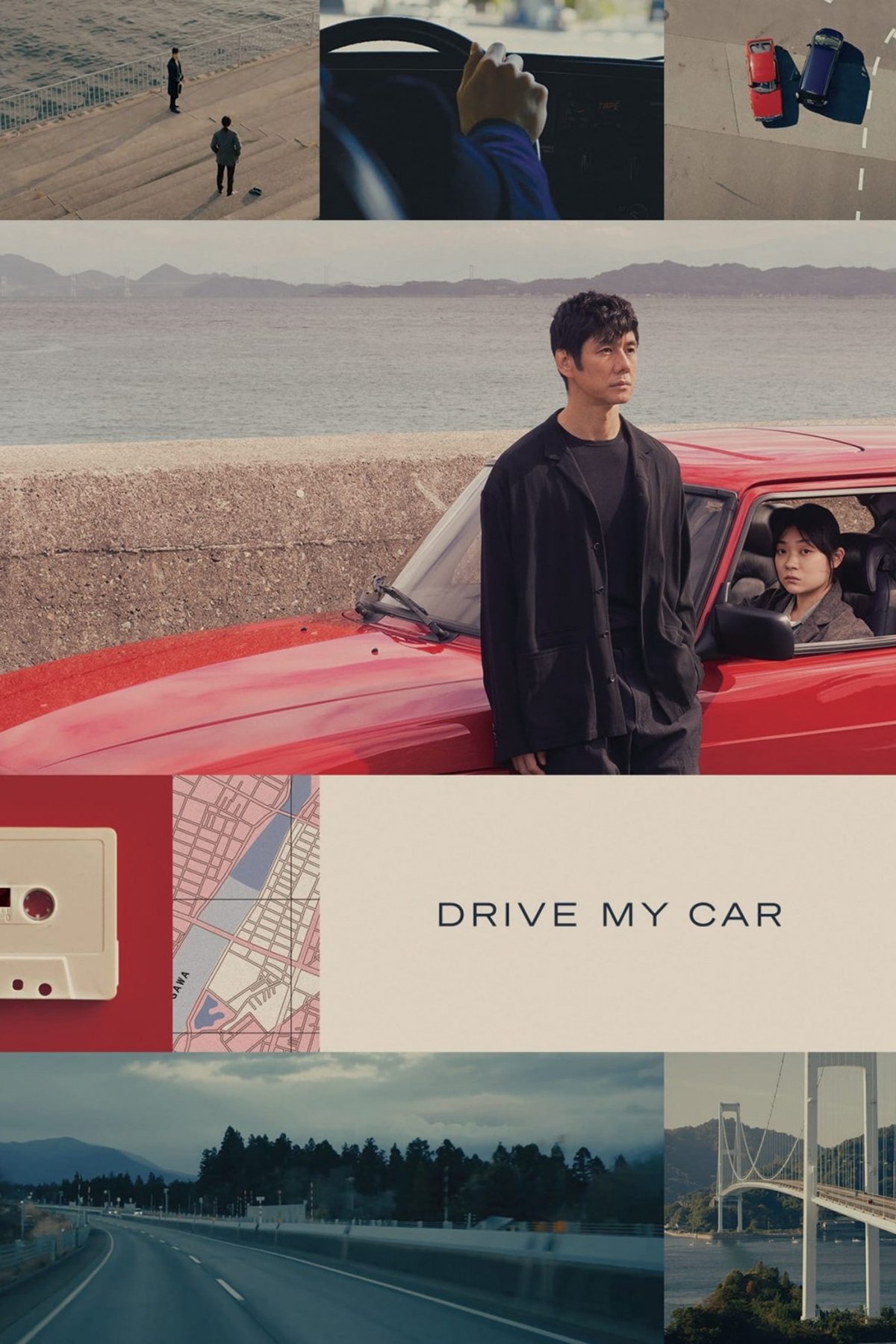
Some films linger long after the screen fades to black, and “Drive My Car” is one such cinematic haunt for me. When I first watched it, I was nearing the end of a relationship, and the quiet rhythm of its meditations on grief and communication struck me with eerie precision. There’s a patient honesty in Hamaguchi’s storytelling that I don’t often encounter—a willingness to sit in silence and let pain breathe, rather than rushing toward catharsis. The more I reflect on “Drive My Car,” the more I consider how its moments of stillness are perhaps the most articulate statements. Even now, months later, I recall how I measured my own losses against those of the film’s characters, wondering which wounds could ever properly heal and which would simply become silent passengers in my life.
What the Film Is About
At its core, “Drive My Car” offers a profound meditation on the intersection of love, loss, and the impossibility of perfect understanding between people. The story follows Yusuke Kafuku, a widowed stage actor and director, as he grapples not only with the secret infidelities of his late wife, Oto, but also with the challenge of mounting an experimental multilingual production of “Uncle Vanya.” What fascinates me most is not the literal journey (with its long, reflective drives) but the emotional landscape shaped by muted heartache, failed communication, and the slow crawl of forgiveness.
The film methodically strips away artifice, exposing the conflict at the heart of Kafuku’s life: his need for answers versus the essential unknowability of those closest to him. Through every conversation, every silent moment in the crimson Saab, I sense that Hamaguchi is less interested in traditional resolution and more invested in the spaces that form between questions and answers. For me, the film’s statement is both devastating and liberating: there are truths we will never be given, but we can choose to keep moving forward alongside the ghosts who shape us.
Core Themes
One theme that surfaces insistently is the inherent opacity of those we love. “Drive My Car” never pretends connection is easy or even entirely possible; instead, it dwells on how we must coexist with ambiguity. From my perspective, the film’s relevance to today lies in this quiet rejection of simplistic closure. In an era obsessed with confessions and clarity, Hamaguchi’s willingness to let questions remain open feels almost radical.
Grief, too, is woven through the narrative—not as melodrama, but as a daily, grinding presence. What I admire deeply is the film’s insistence that art—be it performance, translation, or the simple act of listening—offers us a structure to live with pain, even if it cannot erase it. The deliberate casting of actors who speak different languages, including sign language, transforms the play within the film into a metaphor for communication itself. The struggle to connect, to listen fully, and to express the inexpressible is what gives the film its subtle, aching pulse. As the world staggered out of isolation during the ongoing pandemic in 2021, I found “Drive My Car” articulating the fragility and necessity of our attempts to truly hear one another.
Symbolism & Motifs
The recurrent image of Kafuku’s red Saab 900 is, in my eyes, more than a simple car; it’s an avatar for his inner world. The vehicle shields him, literally and figuratively, as he follows prescribed routines—practicing lines recorded in his wife’s voice, turning circles around his own grief. That the car becomes both a sanctuary and a site of revelation as he’s forced to share it with his driver, Misaki, is essential to the film’s transformative arc.
Another motif that lingers in my memory is silence itself—long pauses, hesitant confessions, and the deliberate rhythms of rehearsal. These moments are not narrative gaps; they’re filled with what the characters cannot say, underlining the precariousness of language and the comfort that sometimes, words simply fail. In a film so concerned with performance and translation, every act of miscommunication or stuttering honesty becomes a form of expression in itself.
Finally, the film-within-a-film device—Chekhov’s “Uncle Vanya”—serves as more than a backdrop. I see it as a deliberate doubling of Kafuku’s life, its text echoing his heartbreak and unresolved longings. The act of repeatedly rehearsing this play, in various languages and cadences, gestures to the endless negotiation between past and present, self and others.
Key Scenes
The Mourning Rehearsal
In one quietly devastating sequence, Kafuku delivers Vanya’s climactic lines during a rehearsal. The porous boundary between actor and character collapses—his voice wavers, nearly breaking. The room’s stillness is weighted by shared recognition: that artifice can only shield us for so long before reality seeps through. I consider this a masterclass in vulnerability, unshowy but searing.
A Confession in Transit
Another indelible moment arrives during one of the drives with Misaki. Their conversation shifts from casual to intimate as Misaki reveals her own buried traumas, drawing Kafuku out of his guarded reserve. The simple intimacy of shared space, contrasted with the bleak winter landscape, crystallizes the way pain can be heard—even if it cannot be cured. For me, this is the film’s ethical heartbeat: presence over solutions.
Final Curtain, Open Wound
Rather than offer tidy closure, “Drive My Car” concludes with a sequence on stage—Kafuku participating in his play, the lines spoken in multiple languages, a moment simultaneously controlled and uncontrollable. I see the culmination of the film’s ideas here: the act of performance as both mask and revelation, a way to keep inhabiting life even as past wounds linger. It’s a bold refusal of sentimentality in favor of honest complexity.
Common Interpretations
Many critics interpret “Drive My Car” as a meditation on the healing power of art and the resilience of the human spirit. They focus on Kafuku’s gradual acceptance of ambiguity and loss as emblematic of a broader message about living with trauma. There’s often emphasis on the use of Chekhov’s play to mirror the central character’s emotional reckoning—a “film about storytelling,” as has frequently been summarized in reviews.
I appreciate these readings, yet what stays with me is less the optimism of art-as-salvation and more the film’s glacial patience with pain. To my mind, Hamaguchi is not promising comfort so much as recognizing the dignity in facing what cannot be resolved. Where some see catharsis, I see a hard-won willingness to endure uncertainty and unfinished conversations—a lesson I take as far more honest and sustaining, especially when contrasted with the expectations of tidy closure often found in other films about grief.
Films with Similar Themes
- “Tokyo Story” (1953): Ozu’s quiet exploration of familial misunderstandings and generational estrangement resonates with the emotional reserve and unresolved nostalgia of “Drive My Car.”
- “A Separation” (2011): Farhadi’s film also examines the inevitability of miscommunication and the moral murkiness at the heart of human relationships, akin to Hamaguchi’s ambiguous storytelling.
- “Lost in Translation” (2003): Coppola’s exploration of isolation and unexpected connection in a foreign land overlaps thematically with Hamaguchi’s depiction of characters bonding across linguistic and emotional divides.
- “Still Walking” (2008): Kore-eda’s film about family gatherings and the weight of unspoken sorrow carries the same careful attention to daily rituals and unresolvable regrets found in “Drive My Car.”
Conclusion
For those who are unaccustomed to the deliberate pacing or elliptical storytelling of “Drive My Car,” my advice is to give space for the silences. The film’s strength lies in its refusal to hurry, instead inviting us to witness the slow unfolding of honesty and vulnerability. In approaching Hamaguchi’s masterwork, I find that understanding its themes—loss, ambiguity, the limits of language—not only deepens appreciation but also encourages a more compassionate gaze toward the mysteries in our own relationships. There is value, I believe, in sitting with what we do not know, and this film shows us how to do so with rare delicacy.
Related Reviews
If you found value in my perspective, you might also enjoy exploring my thoughts on other cinematic landmarks such as “Tokyo Story” and “Lost in Translation.”
To broaden this interpretation, you may also explore how critics and audiences responded over time.
🎬 Check out today's best-selling movies on Amazon!
View Deals on Amazon