
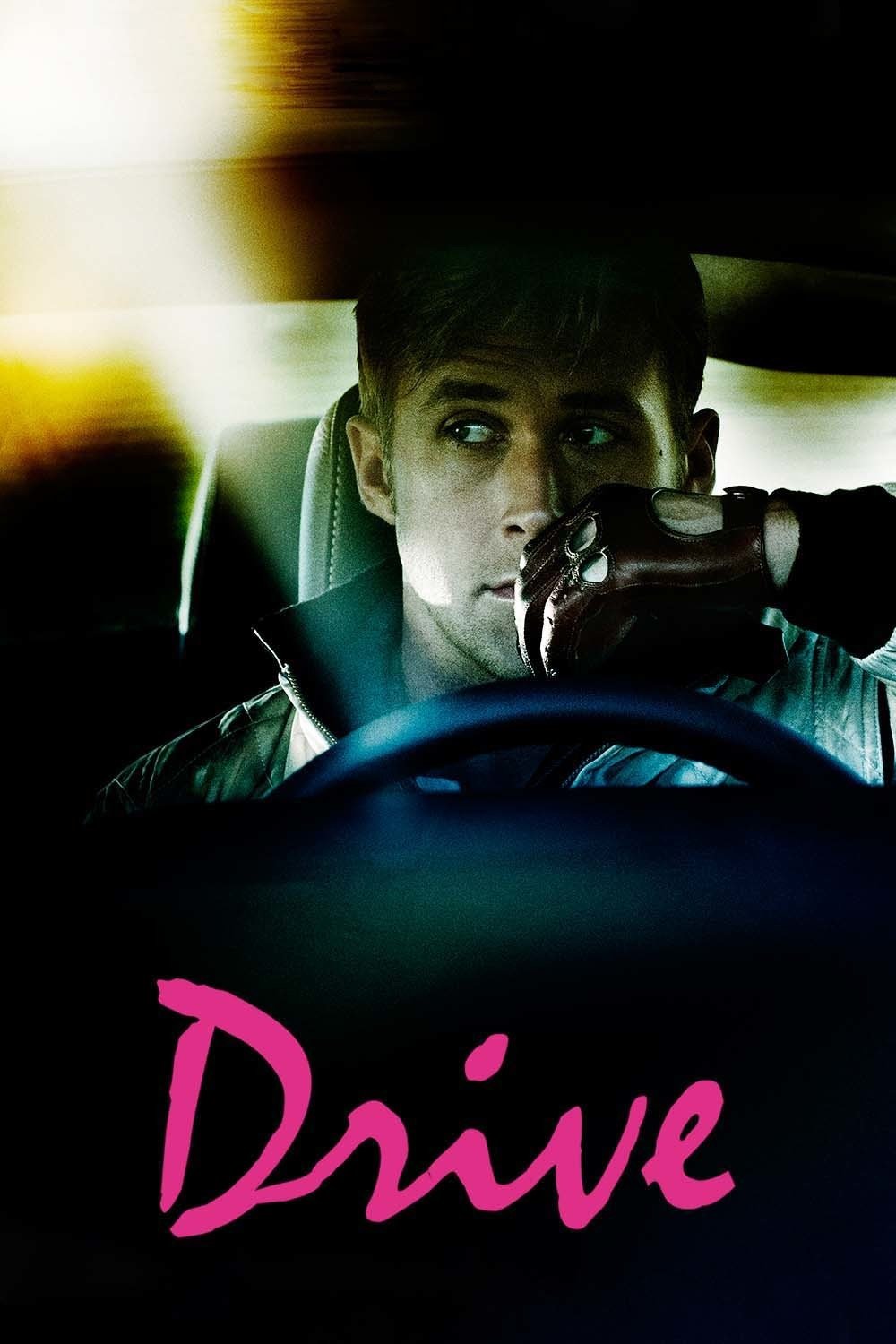
The Pulse Beneath the Chrome
The first time I watched Drive, I remember feeling the hum of Los Angeles at midnight in my chest, as if some secret engine had started running inside me. What struck me instantly was the coiled restraint at the heart of the film—how everything unsaid had as much weight as any line of dialogue or burst of violence. The city’s neon arteries and the soft hush of synths weren’t just style, they were the unspoken language of longing, distance, and danger. To me, this world felt haunted by possibility and regret, a place where every glance means more than a monologue. That’s the real trick of Drive: it draws you into a mythic stillness, then shatters it with sudden eruption, forcing you to read between the frames.
Heroes Built from Silence
There’s a reason I never forget the Driver’s face—blank, beautiful, and unreadable. He is a man defined by what he withholds, moving through his world like a ghost with unfinished business. Unlike the swaggering antiheroes of other crime films, the Driver is almost monastic: his wordless discipline and ascetic detachment speak louder than gunfire. The film’s minimal dialogue isn’t just a stylistic flourish; it’s a philosophical stance. By stripping away explanations and conversations, Refn invites us to participate in the mythmaking, to project our own questions onto the Driver’s mask. Has he always been this alone? Is he running from a past, or just incapable of joining the present? I find that every pause, every careful gesture, becomes loaded with the possibility of heartbreak.
Urban Fairy Tale or Tragedy in Disguise?
The neon-drenched Los Angeles of Drive is a fairy tale kingdom for lost souls. I can’t help but feel that Irene and her son are less characters than symbols—the possibility of redemption flickering in the night. But the film refuses the easy catharsis of a happy ending. Every act of tenderness contains the seeds of violence, every glimmer of hope is shadowed by fatalism. The story teases us with the fantasy that love might save the Driver from himself, only to remind us that he is, in the end, irrevocably apart from the world he longs for. This tension—between fable and fatality—runs like electricity through the film, making every quiet moment feel fragile and doomed. The elevator scene, so often discussed, becomes a kind of spell-breaking; beauty and brutality fusing for one luminous, heartbreaking instant.
The Masked Self: Identity and the Outer Shell
I’m endlessly fascinated by the scorpion jacket, glinting gold in dim parking garages. It’s more than a costume; it’s armor, mythology, and warning sign all at once. To me, the Driver’s jacket is a confession: he is both the hero and the villain, the one who saves and the one who stings. The scorpion, echoing the old fable of the scorpion and the frog, hints at the inevitability of his nature. He cannot be anything but what he is, and those who get close are destined to pay the price. The mask used during the heist isn’t just for anonymity—it’s almost a meta-commentary on the Driver’s existence, a man shaped by roles he plays for others and masks he cannot remove. Every costume and surface detail in Drive doubles as emotional camouflage, daring us to look for the real human beneath the lacquered surface.
Soundtrack as Inner Monologue
No analysis of Drive feels complete to me without talking about the music. The synth-pop score is more than atmospheric garnish—it’s the soul of the film, whispering the ache the Driver can’t express. When I hear “A Real Hero,” I feel the paradox of the title: he is a hero only in the abstract, a fantasy conjured by desperate circumstances and fleeting connection. The juxtaposition of dreamy, swelling music against cold, silent action scenes presses on my nerves, reminding me that violence always comes with a cost. The soundtrack’s nostalgic sheen creates a sense of yearning for a simpler, more innocent time—a time that may never have existed. In this way, the music becomes the true voice of the Driver, full of unspoken longing and hope, even as reality turns colder.
The Edges of Violence
It’s impossible for me to talk about Drive without acknowledging its shocking violence—the kind that makes you flinch even after the film has lulled you into a false sense of security. The violence feels abrupt and intimate, never gratuitous but always unsettling, as if to remind us of the fragility of the peace the characters pursue. What I find most interesting is that the brutality never feels stylish or cool, despite the film’s surface polish. Each act of violence is a rupture, a signal flare exposing the raw nerves beneath the film’s calm exterior. I sense that Refn wants us to ask ourselves why we are so drawn to characters who destroy as much as they protect. In these moments, I’m forced to confront my own complicity as an audience member, rooting for a man who can only express himself through ruin.
Emotional Distance as Survival
Something in the way Drive holds us at arm’s length feels both alienating and honest to me. The Driver’s emotional stoicism isn’t just a narrative device; it’s his only means of survival in a world where connection is dangerous and vulnerability is deadly. Even the relationships that flicker with warmth—especially with Irene—are doomed to remain unfulfilled, stymied by the ice in his veins. I read this as a meditation on intimacy in a world shaped by trauma: the notion that people scarred by violence and loneliness can only watch, never join, the lives they yearn for. The film’s visual language—tight compositions, shallow focus, and prolonged silences—echoes this isolation, creating a cinematic echo chamber that mirrors the Driver’s emotional world.
That Final Glance: The Price of Choosing Goodness
What lingers for me long after the credits is not the carnage or even the romance, but the quiet courage with which the Driver disappears into the night. His final decision feels both heroic and tragic, a sacrifice that neither absolves nor saves him, but at least reclaims a shred of human dignity. There’s an ambiguity here I find bracing: Is the Driver doomed to repeat his journey, seeking out new lives to orbit, or is there some redemption in anonymity? The film offers no easy answers, only the sense that goodness always comes with costs, and that heroism is sometimes only a momentary flicker in a life otherwise defined by shadows. The city lights recede, leaving us with a sense of possibility and irreparable loss. It’s an ending that refuses closure, asking us to find meaning in the spaces left unfilled.
Echoes Across the Decades: My Picks
For those who want to follow the trail of stoic outsiders and neon-lit longing, I always recommend watching Le Samouraï (1967) and Thief (1981). Both films trace the silhouette of men shaped by silence, discipline, and the magnetic pull of doomed connection—lonely figures navigating urban labyrinths, hunting for grace in the margins.
If you’re curious about how this film was originally perceived or how it compares to similar works of its era, these resources may be helpful.
🎬 Check out today's best-selling movies on Amazon!
View Deals on Amazon