
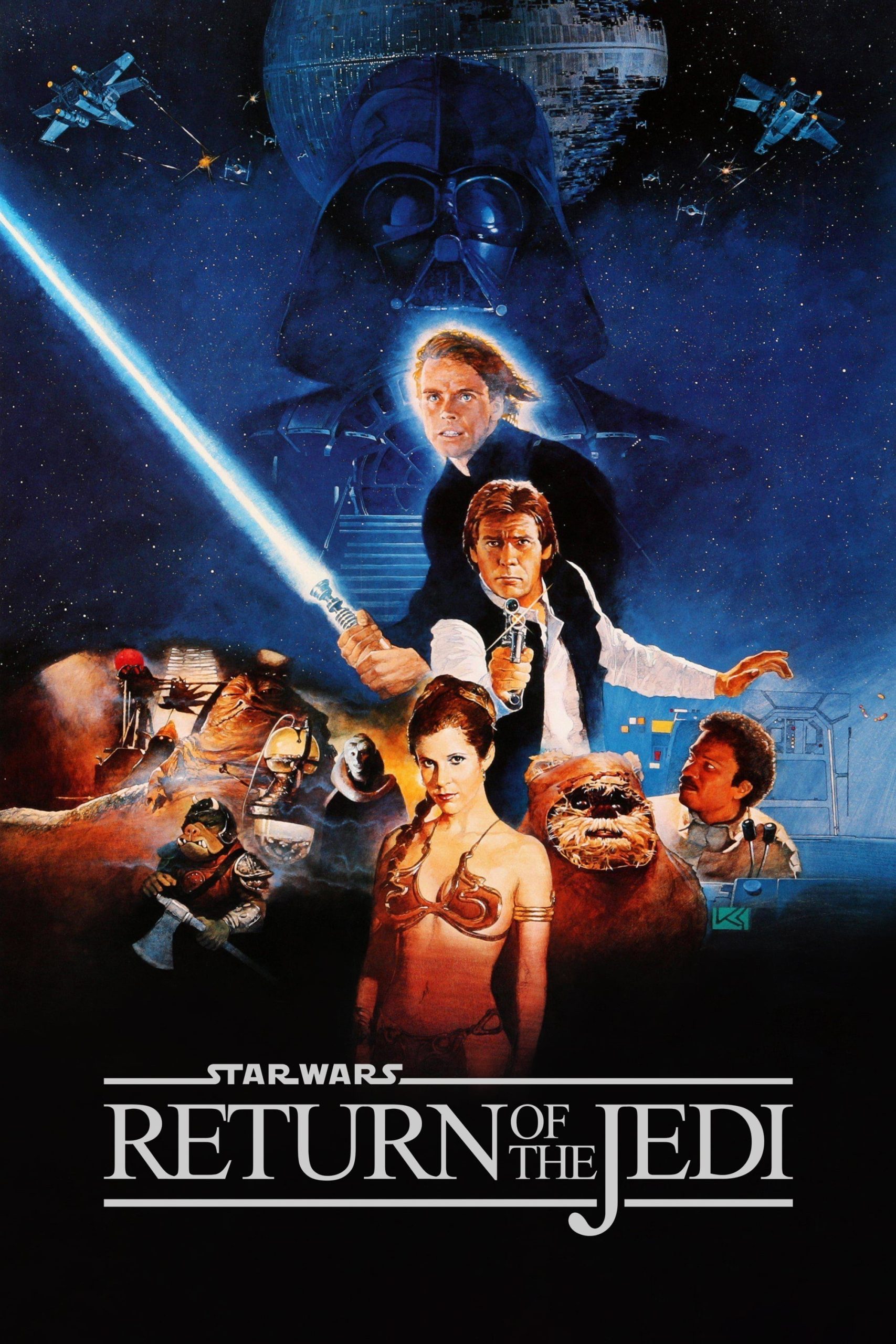
When I think of my own cinematic milestones, there is perhaps no saga as deeply imprinted in my consciousness as the original Star Wars trilogy. Yet, it is “Return of the Jedi” that always draws out my deepest personal reflections: a mixture of awe, nostalgia, and relentless scrutiny. I vividly remember the nervous excitement that preceded each rewatch, the way my heart swelled at its best moments and, even now, the existential questions it left me pondering. Set against the backdrop of galactic war, this 1983 film is more than just a finale—it’s a profound meditation on legacy, forgiveness, and generational cycles. Every time I revisit it, layers peel back, revealing not merely the closure of a space fable, but my own evolving engagement with how myth and memory collide.
The Final Orchestration: Destiny and Family at War
“Return of the Jedi” is, at its deepest core, a story propelled by emotional reckoning—a grand confrontation with the past as much as the Empire. The film’s emotional journey is marked by Luke Skywalker’s internal conflict as he faces not only the Emperor’s seductive threats but the shadow of his own paternity. It is perhaps the first film in the trilogy that unspools the full spectrum of fear, anger, and hope within one character. I found myself feeling a surprising empathy for Luke as he walks the treacherous tightrope between light and dark, surprise fuelling my own anxiety as he teeters at the edge of irreversible choices.
I’m always struck by how the emotional arc extends outward to the galaxy itself. The Rebel Alliance’s actions are spurred by desperation as much as principle, making every victory bittersweet. The fate of Han Solo, frozen in carbonite, is a microcosmic echo: will we be able to rescue our loved ones from the prisons we allow? As the narrative unfolds, the uncertainty isn’t about whether good will triumph over evil, but about what it costs—and whether redemption is even possible.
The pivotal family dynamic—Luke, Vader, and the Emperor—is freighted with generational trauma and the possibility of breaking the cycle. In my view, this is what elevates “Return of the Jedi”: the crisis is not just galactic, but deeply personal. Every moment vibrates with the question of whether love, remorse, and forgiveness can truly change the fate of not only a family, but an entire universe.
Threads of Redemption and Power: Themes Then and Now
There is an almost mythic resonance in the way the film balances ideas of redemption, power, and resistance. In 1983, these themes had an urgent relevance: audiences, reeling from the end of the Vietnam War and cautiously eyeing the Cold War’s final acts, found themselves questioning authority and hierarchical systems. The weakness and fallibility of seemingly invincible figures—be they Empires or parents—became ripe for exploration.
At its heart, “Return of the Jedi” is a meditation on the nature of power. The Emperor’s quiet, chilling control is portrayed as more dangerous than the histrionic aggression of previous villains. Power is insidious, and in Palpatine’s throne room, it manifests psychologically, seeking to corrupt and convert rather than merely destroy. This echoes strongly in my contemporary view: the film’s warning about institutional manipulation feels more potent as our world grapples anew with populist authoritarianism and cults of personality.
The theme of redemption threads through every major plotline, but none as powerfully as Vader’s. The notion that even an embodiment of evil can be saved was revolutionary to me, particularly in a genre rarely concerned with the moral rehabilitation of antagonists. Today, this message stands as a testament to the radical possibility of change—a relevant, and sometimes uncomfortable, reminder that empathy is not always easy, nor is it simple to forgive.
The Masks We Wear: Visual Echoes and Underlying Symbols
Watching “Return of the Jedi”, I can’t help but notice how certain visual motifs and recurring symbols shape its atmosphere. The most enduring of these is the motif of the mask. Vader’s helmet is not simply a costume piece but a symbol of identity and concealment, one that Luke literally and metaphorically peels away in the film’s climax. The act of unmasking serves as both revelation and catharsis—a release of emotional repression and, for me, a symbol of hope that even the hardest exteriors conceal vulnerability.
The throne room itself is a study in architectural symbolism. The vast, cold expanse of the Emperor’s chamber, with its ominous circular window framing the stars, evokes both the infinite possibilities of destiny and the inescapability of fate. I find it impossible to separate the geometry of that room from the psychological contours of the film—the way it fosters isolation, confrontation, and, ultimately, sacrifice.
Another recurring visual thread is the contrast between technological oppression and natural resilience. The mechanized, sterile world of the Empire is counterpointed by the forest moon of Endor, where nature, embodied in the resourceful Ewoks, disrupts and ultimately topples the technological terror of the Imperial war machine. This visual opposition crystallizes a central message: power that ignores connection to the organic, the humble, and the overlooked is doomed to crumble. The Ewoks, often debated in critical circles, are for me a reminder that simplicity and courage can overcome sophistication and arrogance.
Pivotal Beats: Moments That Define the Saga
Luke’s Temptation in the Emperor’s Lair
There is a taut, operatic intensity to the throne room sequence that draws me back every time. The interplay between Luke, Vader, and the Emperor isn’t just about lightsabers—it’s a violent symphony of psychological manipulation and emotional brinksmanship. The Emperor’s goading of Luke, pushing him to strike down in anger, crystallizes the entire saga’s meditation on choice. I still remember the first time I saw Luke’s anguish, the trembling uncertainty as he hovers between hate and compassion. This scene, more than any other, defines the saga’s faith in free will—the notion that, even when every urge points toward violence, one can still choose mercy over vengeance.
Vader’s Redemption: The Breaking of Chains
When I return to the moment Vader turns against the Emperor, the emotional punch never lessens. The camera lingers on Vader’s mask as silent tears well up in the audience—at least, in me. There is a profound grace in this act: a man so lost in shadow finding a sliver of light at the eleventh hour. The act of saving Luke transforms Vader from mythic villain to tragic hero. For me, this is where the film transcends standard genre tropes. Vader’s redemption does not erase his atrocities, but it gives weight to the notion that identity is mutable, and that legacy is not bound by one moment or even a lifetime’s mistakes.
The Battle of Endor: Triumph in the Trees
On the forest moon, warfare takes on a distinctly different tone. I used to dismiss the Ewoks’ victory over the Empire’s might as childish whimsy, but I’ve come to see it as a crucial parable. Endor represents the power of community and the limits of force. The ingenuity and collaboration on display—primitive traps against fearsome technology—offers a subtext about the value of underestimated resilience. The film’s focus on collective action, as much as individual heroism, is a theme that has grown in resonance for me as I view it through older, more contemplative eyes.
Myths, Misreadings, and My Personal Rebuttal
Over the years, I’ve encountered a variety of interpretations that seem to either venerate or disparage “Return of the Jedi” in equal measure. Among the most common is the claim that the film trades the gravitas and grit of “The Empire Strikes Back” for sentimentality and crowd-pleasing spectacle. Many critics argue that its lighter tone—embodied by the Ewoks and the more comedic beats—undermines the emotional complexity established in earlier films.
While I acknowledge these elements, I find such readings incomplete. The juxtaposition of innocence and darkness serves to highlight the true stakes of the conflict. The moments of levity aren’t distractions but reminders of what’s at risk: the preservation of joy, community, and play in a galaxy that often threatens to snuff them out. Rather than seeing the film’s optimism as a retreat, I embrace it as a deliberate and subversive choice—a belief in the worth of hope itself.
Another widespread interpretation focuses solely on Luke’s transformation and his lineage’s resolution, ignoring the ensemble’s agency. Yet, for me, Leia’s revelation as Luke’s sister—a moment that could easily seem tacked-on—resonates as a final affirmation that the familial bonds are not just about ancestry but chosen connection. The Return of the Jedi, in my eyes, is a film that argues for the redemptive power of collective love and resistance.
Galactic Echoes: Films That Share Its Spirit
- The Lord of the Rings: The Return of the King (2003) – A meditation on sacrifice, closure, and the burden of heroism in fantasy myth.
- Brazil (1985) – Satirical dystopia addressing power, resistance, and individual choice within crushing systems.
- The Iron Giant (1999) – Challenges expectations of villainy and heroism through themes of redemption and sacrifice.
- Akira (1988) – Explores generational trauma, power, and rebellion amid epic science fiction landscapes.
The Force Endures: Reflections on the Film’s Lasting Value
It is easy to forget, amid the merchandising and nostalgia, how subversive and soulful “Return of the Jedi” truly is. In its willingness to let its biggest villain experience grace, to let its heroes stumble before they stand, it forges a path rare in blockbuster cinema. For all its mythic trappings, it is a profoundly human story—one about choice, mercy, and the understandings we build across generations. For the modern viewer, the film remains not just a fitting conclusion to a beloved trilogy, but an enduring meditation on how we face our darkest impulses and seek out light, however hard-won. If the myth never quite ends, it’s because our own cycles of hope, regret, and redemption are always beginning anew.
If These Thoughts Resonated
If you found value in my perspective on “Return of the Jedi,” you may also enjoy my analysis of “The Lord of the Rings: The Return of the King” and “The Iron Giant.” Both explore themes of sacrifice, redemption, and building legacies across generations.
To broaden this interpretation, you may also explore how critics and audiences responded over time.
🎬 Check out today's best-selling movies on Amazon!
View Deals on Amazon