
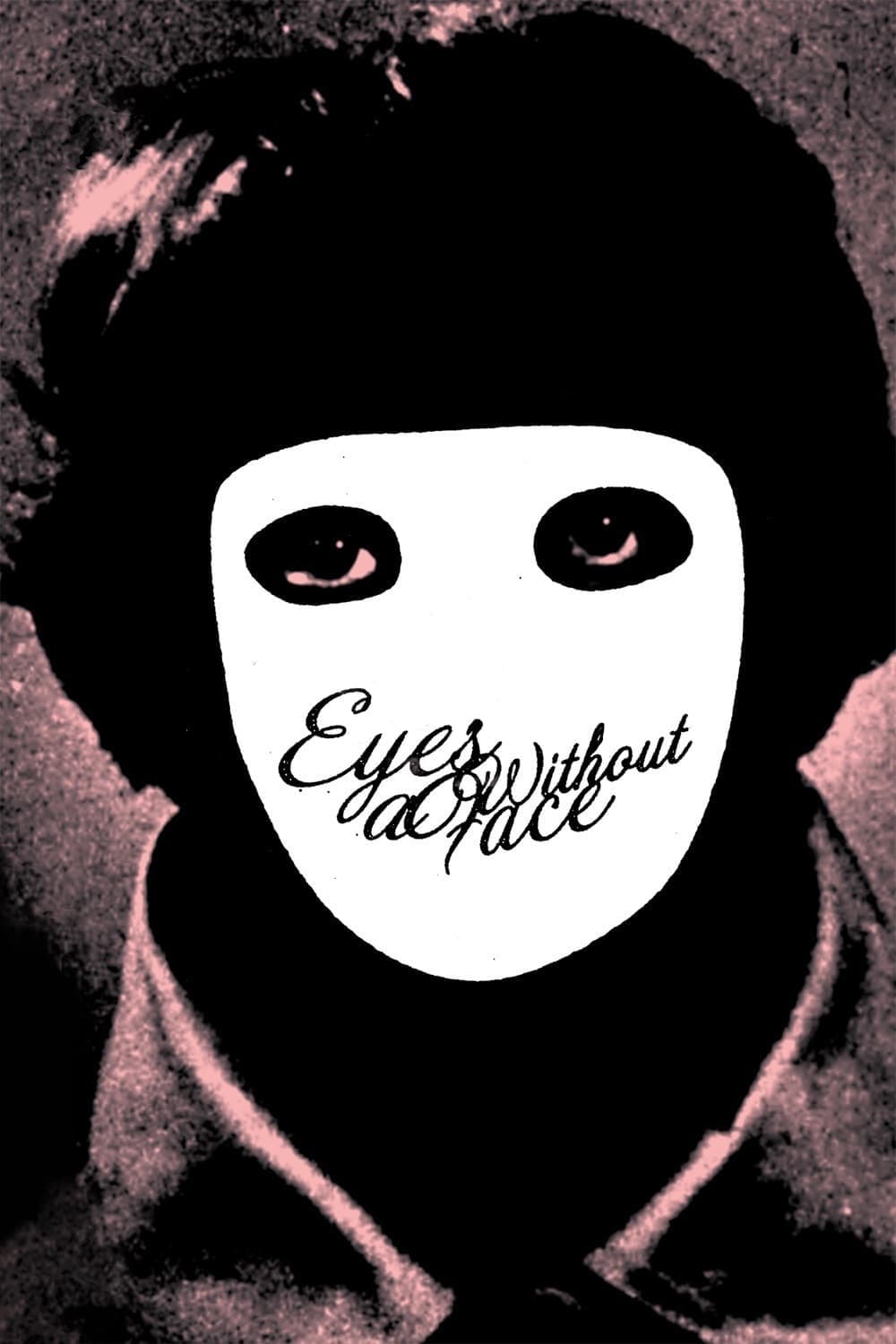
It’s difficult for me to explain the moment I first encountered “Eyes Without a Face”—not simply as a film, but as a haunting, slow-creeping atmosphere that followed me long after the credits rolled. I remember sitting in a shadowed room, half-knowing I was about to see something that would rattle my sense of cinematic genre and still not being quite prepared for the spectral lyricism that unfolded. The film didn’t so much terrify me as it unsettled me; it felt like witnessing a fever dream, delicate and menacing in equal measure. What fascinates me is not merely the morbidity of its premise, but the way it marries beauty with horror, creating an aesthetic space where tragedy shimmers and evil lurks behind the mask of devotion.
What the Film Is About
At its essence, “Eyes Without a Face” is a story of obsession and grief masquerading as scientific zeal. The emotional axis of the film spins on the broken relationship between Dr. Génessier and his daughter, Christiane, whose face has been destroyed in an accident for which he was responsible. The doctor’s quest to restore her former beauty is never merely about healing—it’s an act of atonement that mutates into something monstrous. Watching the film, I’m gripped by the sense that every character is searching for redemption or escape from their circumstances, only to find themselves ensnared in new and more terrible prisons of their own making.
There’s a brutal tenderness at play. Christiane’s isolation, her imprisonment behind an eerily blank mask, is rendered with such sensitivity that her suffering becomes palpable. For me, the central conflict of the film is not science versus morality, but love curdled by denial. The real horror for me is not the surgical violence, but the emotional claustrophobia—the way every gesture, every attempt at rescue or repair, only deepens the tragedy. It’s a meditation on how impossible it is to return to innocence once it’s been lost, and how those who try can become monsters even as they convince themselves they’re acting out of love.
Core Themes
What I find remarkable in “Eyes Without a Face” is its preoccupation with identity and the price of perfection. At the time of its release in 1960, society was anxiously grappling with postwar advances in medicine and the ethical dilemmas they posed. Here, the allure and danger of reconstructive surgery become more than a metaphor—they’re the stage on which questions of agency and bodily autonomy play out with chilling clarity. Christiane’s mask, both her shield and her prison, becomes a synecdoche for her erased identity; she’s neither alive nor dead, neither loved nor free.
These themes feel bracingly modern to me. In an era obsessed with appearances and self-modification, the film’s critique of the ways we impose standards of beauty—often violently and always at a cost—is timeless. Génessier’s inability to accept his daughter as she is mirrors, to a disturbing degree, the contemporary urge to fix, to repair, to conform. The narrative’s grim suggestion is that even the desire to heal can warp into a hunger for control. For me, the film resonates as a cautionary tale about the tyranny of ideals and the monsters that lurk within our best intentions.
Symbolism & Motifs
In my view, the recurring motif of masks is the film’s beating heart. The stark, expressionless mask Christiane wears is a piece of practical costuming that transcends its function; it unsettles precisely because it renders her simultaneously visible and invisible. It evokes a porcelain doll, all surface and no soul, and in certain moments, I found myself doubting whether there was a real person behind it at all. Masks here are not just tools for hiding, but symbols of emotional repression and the violence done in the name of propriety.
Another motif that lodged itself in my mind is the use of the house as a gilded cage. The Génessier estate, vast and shadowed, becomes a gothic prison—a monument to the doctor’s ambition and the daughter’s despair. This physical environment underscores the claustrophobia of the film, reinforcing how Christiane’s world has contracted to a series of corridors and closed doors. Mirrors, too, proliferate—their absence as significant as their presence. Christiane’s desperate need to see herself, to reclaim an identity denied her by others, is symbolically echoed every time her masked reflection is withheld or shattered.
Key Scenes
The Unveiling: Beauty Rendered Uncanny
What lingers with me most forcefully is the scene where Christiane’s mask is removed. The camera lingers; there is no music, only the clinical detachment of the lens. For me, this moment is horrifying not for the graphic content, but for the vulnerability it exposes. The transformation of the human face into an object of pity and revulsion is complete—the film’s meditation on identity laid bare, asking us to confront not Christiane’s monstrosity, but our own voyeurism.
The First Surgery: When Compassion Turns to Violence
It’s impossible to overstate the impact of the surgical sequence where Dr. Génessier and Louise, his assistant, methodically excise the face of an unsuspecting victim. What shocks isn’t the explicitness (remarkable for its era) but the cold, almost ritualistic calm with which the atrocity unfolds. In this moment, the film’s thematic project crystallizes for me: the boundary between care and cruelty is erased; love becomes indistinguishable from violence. I find myself recoiling less from the physical act than from the moral abyss it represents.
Christiane’s Liberation: Release from Both Villain and Victimhood
Near the end, there’s a surreal beauty as Christiane drifts through her father’s house, releasing the caged dogs destined for experimentation. Her final act of mercy is also an assertion of agency—the mask, once forced upon her, becomes a symbol of her own liberation. The image of her walking into the moonlight, surrounded by freed doves, strikes me less as a moment of triumph than as a delicate, ambiguous question: what does it mean to escape, and at what price?
Common Interpretations
There’s a robust critical tradition that reads “Eyes Without a Face” as a parable about the hubris of science, a narrative exposing the dangers of unchecked experimentation and the dehumanization inherent in the medical gaze. Others see it as an early feminist horror, a story about the subjugation and commodification of women’s bodies. While I find value in these perspectives, my own reading is more philosophical—and more personal. For me, the film is primarily about the mechanisms of denial—the ways we lie to ourselves and others out of love, shame, or guilt.
I part company with critics who fixate on the film’s shock value or its medical ethics. What I carry from it is a lingering sadness. The horror is secondary to the empathy it demands of us: the invitation to see past Christiane’s mask, to recognize her longing not just for beauty but for an existence unmediated by her father’s—for anyone’s—dreams for her. If “Eyes Without a Face” is a horror film, it is so because it dramatizes the very human terror of being defined by another’s desire.
Films with Similar Themes
- “The Skin I Live In” (2011) – Pedro Almodóvar’s film owes a great debt to “Eyes Without a Face,” revisiting the intersection of surgical obsession and fractured identity.
- “Peeping Tom” (1960) – Released the same year, Michael Powell’s film probes similar ground in its exploration of voyeurism, trauma, and the violence inherent in obsession.
- “Frankenstein” (1931) – The classic tale of tragic scientific overreach shares the same thematic core of invention turned monstrous and the search for recognition behind monstrous façades.
- “Possession” (1981) – Andrzej Żuławski’s feverish horror channels the desperation and horror that stem from love, identity, and the boundaries the self is willing to cross for connection or liberation.
Conclusion
To approach “Eyes Without a Face” today is to encounter a film that ripples beneath the surface of genre with an abiding empathy for the wounded, the haunted, and the exiled. For me, returning to Franju’s masterpiece is never redundant; each viewing reveals new facets of sorrow and rebellion. Understanding its themes, particularly the entwined anxieties of beauty, identity, and autonomy, deepens not only one’s appreciation for 1960s cinema, but for our own age’s moral predicaments. I believe that for viewers willing to look beyond the mask, the film rewards with emotional resonance far greater than its shocks alone might promise.
Related Reviews
If you found value in my perspective, you might also enjoy exploring my thoughts on other cinematic landmarks such as Les Diaboliques and Diabolique.
To broaden this interpretation, you may also explore how critics and audiences responded over time.
🎬 Check out today's best-selling movies on Amazon!
View Deals on Amazon