
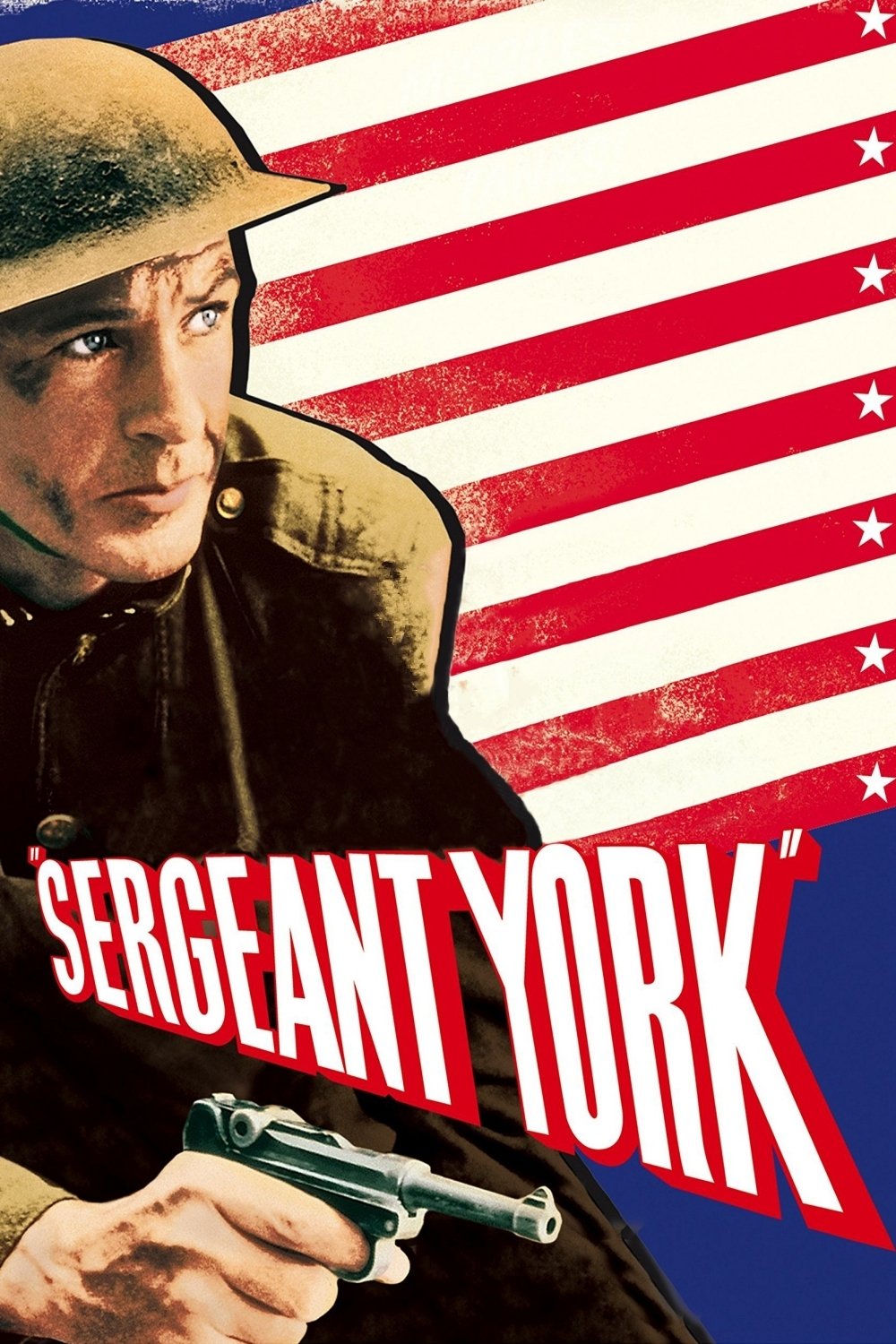
Confronting War With a Farmer’s Conscience
From the very first time I watched Sergeant York, I found myself drawn not only into a dramatic retelling of an American legend but into an intimate portrait of spiritual reckoning at the edge of war. Alvin York’s story is widely known—his transformation from rural Tennessean to one of World War I’s most decorated American soldiers—but the film’s resonance for me lies not in the feats of battlefield heroics, but in the way it frames the moral, ethical, and spiritual struggles behind them. The heart of the film is York’s internal conflict: his profound reluctance to kill, rooted in his Christian faith, and his eventual acceptance of wartime violence as a tragic necessity. The film pushes me to grapple with questions of faith, duty, and the cost of heroism unlike any other wartime biopic of the era.
Between Plow and Rifle: The Land as Moral Battleground
I’ve always been struck by the way Howard Hawks, the director, uses the Tennessee landscape not simply as backdrop, but as an active participant in York’s spiritual journey. The fields, forests, and muddy roads are more than scenery—they embody York’s connection to a preindustrial, agrarian America, one that values individual conscience, hard work, and community above all else. The recurring imagery of the plow, the soil, and the rain speaks to a life grounded in the cycles of nature, far removed from the mechanized horror of trench warfare.
When York is offered the land he covets after becoming a war hero, I read this not only as a narrative reward but as an emblem of spiritual homecoming. The land is the place of moral stability, the site where his values were born—and to which he must ultimately return, even after being changed by the violence of war. His journey from plow to rifle and back again is the film’s most poignant metaphor for the American struggle to reconcile personal conviction with national service.
The Crucible of Conscience: Faith Tested on the Battlefield
So much of what makes Sergeant York enduringly relevant, at least to me, is the way the film lingers on York’s religious dilemma. Unlike many patriotic war films, this one doesn’t turn away from the ethical horror of killing. I find York’s internal debate—captured in quiet scenes of prayer, scripture reading, and self-doubt—much more riveting than the explosive battle sequences. His conversations with Pastor Pyle about turning the other cheek are not just dramatic beats; they are the soul of the film.
York’s struggle is not portrayed as weakness, but as profound strength—his pacifism is rooted in a deep moral seriousness that the film refuses to trivialize. When he eventually decides to fight, it is after an agonizing period of reflection, depicted with a gravity that few films of the time dared to show. His decision is not triumphant, but sorrowful—a necessary compromise with a violent world. I find this portrayal unusually honest: York’s faith is not broken by war, but tempered—made deeper and more complex by lived experience.
The Making of an American Folk Hero: Myth and Memory
As I watch Gary Cooper’s iconic performance, with its mix of humility, awkwardness, and quiet determination, I am reminded how cinema shapes national memory. The film consciously mythologizes York, positioning him as the embodiment of American values—individualism, humility, and resourcefulness—while sidestepping the jingoism that infects many wartime dramas. The scenes in which York reluctantly accepts public adulation at home are tinged with ambivalence, even discomfort. He does not crave celebrity, nor does he see his actions as something to be celebrated. This self-effacing heroism is, to me, the cornerstone of the film’s moral vision.
The process of mythmaking is itself thematized within the movie. The Medal of Honor ceremony, newspaper interviews, and York’s eventual return to Tennessee all become stages for the transformation of a private man into a public symbol. The film invites me to question what it means to be a hero, and whether such recognition is a blessing or a burden.
Symbolic Contrasts: Light, Shadow, and the Weight of Decision
One of the most compelling aspects of Sergeant York is its visual language. I’m fascinated by how Hawks and cinematographer Sol Polito use light and shadow to externalize York’s inner turmoil. Early scenes are bathed in the soft, natural light of rural Tennessee, suggesting innocence and clarity, but as York’s struggle intensifies, the lighting becomes stark and expressionistic. In the pivotal night of prayer before York’s decision, the interplay of candlelight and darkness reflects the uncertainty of his soul.
The battlefield sequences abandon the earlier warmth for a palette of greys and browns, offering no romanticism—only the grim reality of war. The visual shift mirrors York’s transformation: the journey from moral simplicity towards painful complexity. This is cinema as emotional weather, mapping the landscape of the soul onto the screen’s surface.
The Power and Peril of Patriotism
As an American film made in 1941, Sergeant York inevitably engages with the politics of its moment. I’m always aware, when watching, of the broader currents swirling around its release: the looming entry of the United States into World War II, and the need to rally a nation divided over the prospect of another overseas conflict. Yet the film’s patriotism is complicated—rooted not in flag-waving, but in the tension between personal conviction and collective duty.
York’s ultimate decision to fight is not portrayed as a surrender of principle, but as a reasoned, deeply personal reckoning with the world’s evil. The film never suggests that service or patriotism is simple; instead, it insists that true loyalty to one’s country must be filtered through conscience. This nuanced position, rare in the propaganda-inflected cinema of the era, is what makes the film feel urgent and honest to me, even today.
Performance as Spiritual Testimony: Gary Cooper’s Transformative Subtlety
Gary Cooper’s portrayal of Alvin York is, in my view, one of the most spiritually resonant performances in American film. Cooper draws out the tension between humility and resolve, resisting the temptation to play York as either a naïve rube or a swaggering superman. His slow, awkward speech, hesitant posture, and shy glances all evoke a man not used to the world’s gaze—a man whose heroism is rooted in his ordinariness.
When I watch Cooper in the scenes of prayer and doubt, I sense an actor who understands the burden of conscience. The emotional climax—York’s anguished plea for guidance—is played with such restraint that it brings a hushed gravity to the screen. His transformation in the trenches is not that of a man who relishes violence, but of one who accepts it as a last resort. This subtlety is, for me, what elevates the film beyond mere patriotic spectacle.
Echoes of Doubt: War’s Aftermath and the Limits of Redemption
What lingers in my mind after watching Sergeant York is not the triumph of victory, but the quiet aftermath. The final sequences, with York returning home, are suffused with relief but also a whispered sorrow. The film acknowledges that even the most righteous use of violence leaves scars—on the land, on families, and most of all, on the spirit of the man who committed it.
York’s reward—the land he has always longed for—offers a kind of redemption, but it is a redemption shadowed by the memory of what has been lost. The narrative suggests that peace after war is never simply a return to innocence, but a forging of new values out of hardship and regret. I find in this ending a quietly radical message for its era: the true hero is not the man who revels in battle, but the one who can live with its aftermath, and still choose generosity, humility, and faith.
For Those Who Cherish Moral Dilemmas in Wartime Drama
If you find the spiritual and ethical complexities of Sergeant York compelling, I recommend exploring:
- The Ox-Bow Incident (1943)
- All Quiet on the Western Front (1930)
If you’re curious about how this film was originally perceived or how it compares to similar works of its era, these resources may be helpful.
🎬 Check out today's best-selling movies on Amazon!
View Deals on Amazon