
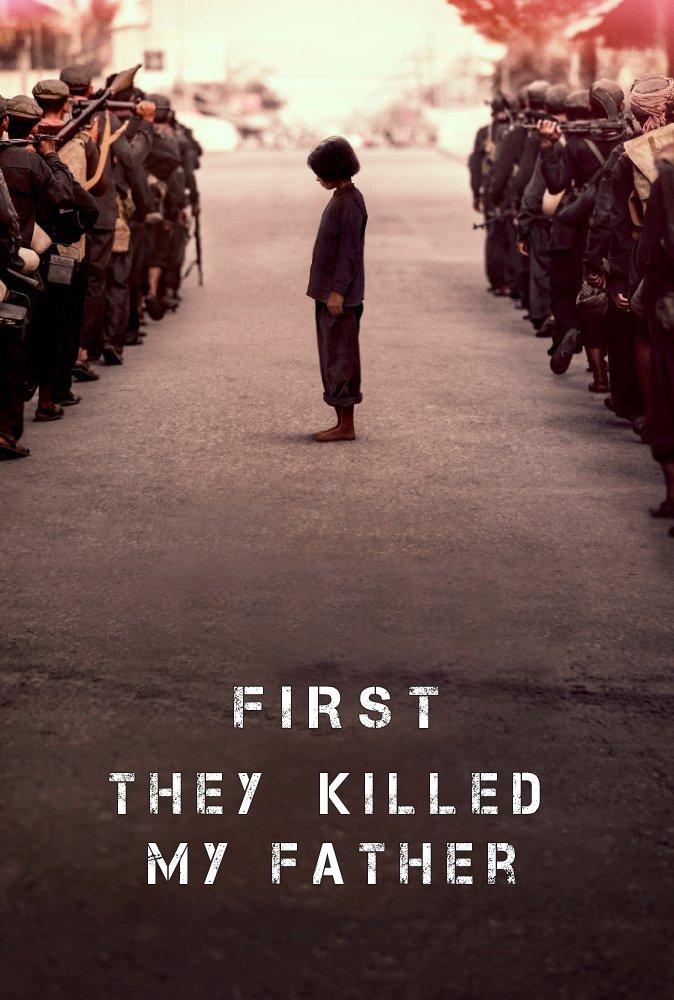
When I first encountered “First They Killed My Father,” it wasn’t with the anticipation of seeing a typical war film but rather a quiet, tightly wound sense of unease. Stories of survival in the face of atrocity always leave me profoundly unsettled, and this was doubly true here—not just because of the subject matter, but because of Angeline Jolie’s directorial commitment to viewpoint. Growing up hearing faint echoes of the Khmer Rouge era in passing conversations, I was never prepared to undergo a mediation so personal and unshielded. Watching this film, I wasn’t simply observing; I felt forcibly plunged into the physical and emotional landscape of a childhood upended, compelled to confront truths about family, trauma, and innocence I wish were not universal.
What the Film Is About
At its heart, “First They Killed My Father” is a relentless unraveling of a young girl’s sense of self in a world that grows hostile overnight. Based on Loung Ung’s memoir, the film follows her experience as the Khmer Rouge seizes control of Cambodia and systematically dismantles her family, her community, and her world. It is not a movie about abstract political machinery but about the acute intimacy of loss—how it creeps into the fiber of daily life and rewrites the definition of home, belonging, and survival.
What stays with me most powerfully is the immediacy of Loung’s perspective. Instead of neutrally cataloging events, Jolie anchors the audience squarely within the child’s line of sight. I was reminded, sharply, that the horror of war is not processed in statistics, but in the sound of running feet, the taste of unripe fruit, in the faces of siblings, and the brittle hope clung to by parents. The central emotional conflict is Loung’s struggle to hold onto her inner world as it erodes around her—and the film presents this journey not with grandiose statements but aching, sometimes wordless exchanges.
Core Themes
For me, the prevailing theme is the destruction and defense of identity under external pressure. Loung’s transformation from a spirited city child into a survivor in a labor camp exposes the way political ideologies bend and break personal identities, especially among children. Every action in the film is refracted through this existential conflict—a child quietly taught to lie about her family, a sister learning to numb herself for self-preservation, the smallest acts of resistance hidden as play or habit.
Watching in 2017, I saw immediate points of resonance with a world nervously eyeing waves of nationalism, forced migration, and the scapegoating of minorities. The film’s meditation on the vulnerability of the powerless—particularly children—remains terrifyingly pertinent. Its refusal to romanticize survival demands the audience consider what is truly lost in the wake of political cleansing—not simply life, but the possibility for a future one’s own.
I also find the film’s examination of memory—how it haunts, fragments, and preserves—incredibly relevant. It raises the question: who owns suffering, and who gets to remember it? As I watched Loung’s memories flicker between horror and happier times, I reflected on how trauma lingers in individuals and nations, sometimes resurfacing at the most unexpected moments.
Symbolism & Motifs
No matter how many times I revisit the film, the visual language grips me. Jolie’s commitment to a child’s-eye-view isn’t just a narrative device but a recurring motif. The low, often shaky camera angles and tight framing create a suffocating intimacy—a world in perpetual upheaval, where security is always just out of frame. The style forces me to experience Loung’s shrinking sense of security on a visceral level; when the world narrows to a pair of feet or a single object, it’s not just a technique, but the expression of a mind fighting to process the incomprehensible.
Red earth and battered footwear become loaded symbols. Every repeated shot of bare, dirt-caked feet evokes the loss of childhood, the endless journey, and forced displacement. Likewise, the recurring images of food—or the lack thereof—encapsulate both immediate hunger and the larger deprivation of comfort, normalcy, and nurturance. I find it almost unbearable how something as simple as a piece of fruit transforms from a treat into a symbol of fierce necessity, an emblem of lost innocence that haunts the entire film.
The ubiquitous black uniforms of the Khmer Rouge aren’t just historical detail, but serve as visual markers of faceless authority. When the screen fills with rows of identical clothing, it renders the oppressors as a dehumanizing, almost spectral force—one that swallows individuality and difference whole. In my eyes, this motif crystallizes the horror of ideological conformity at the expense of humanity.
Key Scenes
Arrival in the Work Camp: The Aftershock of Exile
Once the characters arrive at the labor camp, the camera lingers on their disorientation and fear, exposing the first brutal rupture in their former identity. Watching this, I was struck by how the chaos of relocation is filtered through silence—the adults’ anxious glances, the children’s stifled cries—and how quickly the idea of home becomes alien. This sequence is pivotal; it shows the irreversible shattering of comfort and normality. From this point, Loung’s psychological journey begins in earnest.
The Landmine Incident: Childhood in Peril
Few cinematic moments have shaken me quite like the tense, harrowing sequence involving the hidden landmines. Here, danger doesn’t arrive with bombast but crouches in every step, as children are forced to serve as unwilling soldiers amid threats invisible and omnipresent. The film’s anti-spectacle approach forces the viewer to internalize the terror and randomness of death, particularly for the young and powerless. For me, this scene is less about shock than it is about the normalization of fear—how trauma embeds itself, even in play.
Loung’s Final Memory Sequence: Survival and Sorrow
In the final act, as Loung is confronted by a montage of images—flashes of her pre-war family life, the horrors she’s endured, the fleeting moments of kinship—the film coalesces into a meditation on the permanence of loss and the longing for a world irretrievably gone. Here, the director wields the power of recollection not as escape, but as a narrative reckoning. Even as the fighting subsides, the emotional scars remain—and for me, this is the film’s real legacy.
Common Interpretations
Many critics have approached the film as a testimonial of resilience and survival, focusing on its detailed portrayal of historical events from a “necessary” outsider’s perspective, given Jolie’s directorial role and Loung Ung’s involvement as co-writer. It’s frequently lauded for bringing Cambodian trauma into international consciousness, and for its refusal to offer easy closure or melodramatic redemption.
Yet, I diverge from the consensus that casts Loung’s story as primarily redemptive. For me, the film is less about triumphing over tragedy and more about the impossibility of stitching oneself—or one’s country—back together. I’m skeptical whenever I see reviews that highlight the courage of individual will as the creation of hope. I believe “First They Killed My Father” challenges that very notion; hope, in the world it depicts, is frail and ambivalent, always shadowed by the persistence of memory and guilt. That’s why I experience the film as an unvarnished reflection on trauma rather than a clear-cut narrative of resilience.
Films with Similar Themes
- “Grave of the Fireflies” (1988): Both films unflinchingly showcase the devastation of war through a child’s perspective, and refuse sentimentality in portraying loss and survival.
- “The Pianist” (2002): This story of endurance in a genocidal regime is analogous in its depiction of personal identity and dignity eroded by authoritarian violence.
- “The Killing Fields” (1984): Directly revisiting Khmer Rouge Cambodia, this film shares thematic focus on survival and the psychological cost of witnessing atrocity.
- “Come and See” (1985): With its similarly immersive, trauma-drenched journey through a child’s war-torn landscape, this film amplifies the way trauma distorts memory, perception, and humanity.
Conclusion
For modern viewers, “First They Killed My Father” isn’t simply an historical account—it’s a haunting exploration of the price individuals pay for collective madness. I urge anyone approaching this film today to resist the urge to look away or reduce its narrative to a lesson in resilience. Instead, reckon with its ambiguity, with the uncomfortable silence that lingers between its spoken lines and in each gaze. Understanding the film’s core themes of lost innocence, trauma, and identity helps give context to a troubled world—yesterday and today. It is a cinematic act of remembrance that refuses to simplify what was destroyed, or what survives.
Related Reviews
If you found value in my perspective, you might also enjoy exploring my thoughts on other cinematic landmarks such as “The Killing Fields” and “Grave of the Fireflies”.
To broaden this interpretation, you may also explore how critics and audiences responded over time.
🎬 Check out today's best-selling movies on Amazon!
View Deals on Amazon