
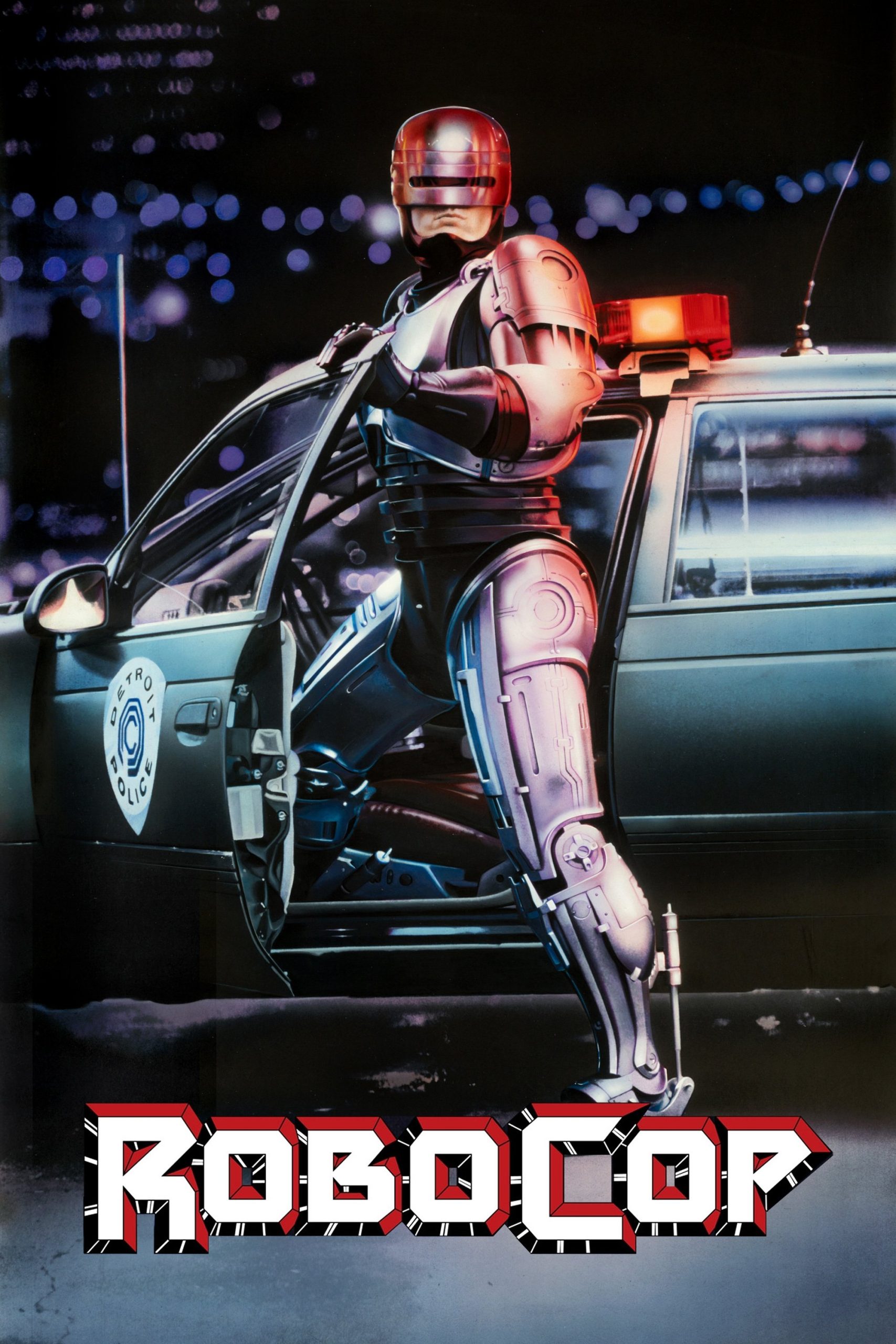
I have never encountered a film that so ruthlessly skewers its own era while simultaneously thrilling audiences as powerfully as Paul Verhoeven’s RoboCop does. From the first jarring blast of satirical news reports to the final, bitterly ironic exchange, this film dares me to laugh, recoil, and reflect—often all at once. Beneath its pulpy, sci-fi surface, I see a film vibrating with political rage, philosophical complexity, and a wry sense of humor that almost hurts.
The Corporate Dream: Privatization and Dystopia
The thing that strikes me first about RoboCop is how it weaponizes the very concept of corporate America. OCP, the megacorporation at the heart of the film, is more than a villain; it’s a vision of unchecked capitalism brought to grotesque, satirical life. The film’s setting—Detroit, reduced to a war zone of poverty and violence—serves as the perfect backdrop for this corporate takeover. OCP’s plan to replace public infrastructure with privatized, mechanized authority is both chillingly plausible and darkly amusing.
When I watch the boardroom scenes, with their antiseptic brutality and cold ambition, I sense a profound disgust with the direction America was heading in the late 1980s. The executives don’t just represent bad businesspeople—they embody a worldview where profit supersedes humanity. This is not simply anti-capitalist rhetoric; it’s a chilling reflection of the era’s faith in market solutions for every social ill. The film constantly reminds me how easily human beings—and even human bodies—can be reduced to profit margins within such a system.
The Body as Battlefield: Flesh Versus Machine
On a visceral level, RoboCop is obsessed with bodies—their destruction, their commodification, and their reclamation. Murphy’s horrific death and subsequent resurrection as RoboCop is one of the most unsettling transformations I have ever seen onscreen. The film lingers on the process, forcing me to witness not only Murphy’s physical pain but his erasure as a person. The birth of RoboCop is a violation as much as it is a technological marvel, and I’m left questioning where the line lies between enhancing a human and erasing one.
RoboCop’s metallic body becomes a prison as much as a weapon. The way he moves, interacts, and even dreams is colored by his inhuman form. Yet, the film’s genius is in showing Murphy’s struggle to reclaim fragments of his previous life—the flashbacks, the haunted moments, the slow assertion of will. This tension between flesh and steel becomes a metaphor for the struggle to maintain identity in a dehumanizing society.
Media as Noise: Satire, Irony, and the American Mind
No analysis of RoboCop would be complete without grappling with its assaultive, pitch-black media satire. The film constantly interrupts itself with fake commercials, news bulletins, and painfully chipper television catchphrases. To me, these aren’t just comic relief—they’re a kind of cultural white noise, desensitizing and distracting, distorting tragedy into spectacle. The media in RoboCop is not here to inform, but to numb and sell—and in doing so, it turns suffering into product.
These moments are more than just clever skits. They frame the story, suggesting that every act of violence, every technological wonder, and every corporate powerplay is already packaged and commodified for mass consumption. I’m left with the unsettling sensation that the real dystopia isn’t just in the streets, but in the collective psyche of a society that absorbs tragedy as entertainment and policy as advertising.
Justice Rewired: Law Enforcement as Allegory
As I follow RoboCop’s arc, I see a powerful allegory for the automation and mechanization of justice. The film asks me: what happens when the enforcer of law loses the very element—human judgment—that should make law just? RoboCop begins as the perfect cop: tireless, incorruptible, utterly impartial. But these qualities soon reveal their own horrors. Without the ability to question, to empathize, or to resist orders, RoboCop is simply a weapon wielded by those in power.
Yet the film doesn’t stop there. RoboCop’s gradual reclamation of his identity is not just a personal triumph; it’s a rebellion against the idea that order can be imposed without morality. When he overrides his programming, investigates his own death, and seeks justice beyond his corporate directives, he becomes more than a machine—he becomes a symbol of the stubborn persistence of the human spirit.
The Grotesque and the Comic: Verhoeven’s Subversive Tone
What fascinates me most about RoboCop is the way Paul Verhoeven mixes the grotesque and the comic, violence and laughter, in a style that is both exhilarating and deeply uncomfortable. The film’s violence is so excessive—so cartoonishly bloody—that it forces me to question why I’m enjoying it. This oscillation between shock and amusement is deliberate, a strategy to expose the way violence is aestheticized and commodified in American culture.
I see in Verhoeven’s approach a sly European sensibility, a refusal to let American audiences take their pop culture at face value. Every shootout, every boardroom murder, every grotesquely funny commercial is a dare: are you entertained, or are you complicit? It’s satire as self-examination, a mirror held up to both society and the viewer.
The Lost Family and the Ghost of Humanity
For all its satire and violence, RoboCop is at its core a tragedy of identity and loss. The film’s emotional center, for me, is Murphy’s longing for his vanished wife and son—a family that has been erased as surely as his own name. The glimpses of his past, the haunted visits to his old home, are almost unbearably poignant. RoboCop is not just a machine seeking justice; he is a ghost, mourning a life stolen by both violence and corporate ambition.
These moments of vulnerability are brief but devastating. I feel the weight of all that Murphy has lost, and the hollowness of what he has become. The tragedy is not simply that a man has been turned into a cyborg, but that every act of reclamation is shadowed by the impossibility of return. There is no going back; the future promised by OCP and their vision of progress is one of alienation and loss.
The City as Apocalypse: Urban Decay and Hope
Detroit in RoboCop is more than a setting; it’s an apocalyptic nightmare, a city devoured by decay, crime, and the promise of corporate salvation. I don’t see this just as background worldbuilding—it’s a portrait of failed urban policy, racial division, and economic abandonment. The desperate violence of the streets and the cold ambition of the boardroom are two faces of the same disaster. The city’s decay is not natural, but engineered, a stage for OCP’s power grab and a warning about the perils of abandoning the public good.
And yet, amidst this devastation, I catch glimpses of hope—not in the triumph of technology, but in the resilience of individuals. Anne Lewis, RoboCop’s partner, stands out as a beacon of empathy and courage. The film dares me to imagine that even in a ruined city, small acts of loyalty and resistance can take root. The hope in RoboCop is fragile and personal, not systemic; it is the flicker of humanity that refuses to die, no matter how mechanized the world becomes.
The Machine Remembers: Memory, Identity, and Resistance
One of the most powerful aspects of RoboCop is the role of memory—how it survives, fragments, intrudes, and ultimately asserts itself. The film is haunted by images of Murphy’s former life, which break through his programming in disjointed flashes. Memory is not simply nostalgia; it is resistance, the seed of rebellion against control. Every time RoboCop remembers, he asserts that he was, and maybe still is, a person.
I find these moments deeply moving, both for what they represent in the narrative and for their philosophical implications. If memory is identity, then RoboCop is not just a machine with memories, but a human being fighting to reconstitute himself from fragments. The film’s ending—when Murphy reclaims his own name—offers a bittersweet victory. The self can be wounded, distorted, and nearly erased, but it cannot be wholly mechanized.
Recommendations for Those Who Crave More Dystopia
- Metropolis (1927)
- Brazil (1985)
If you’re curious about how this film was originally perceived or how it compares to similar works of its era, these resources may be helpful.
🎬 Check out today's best-selling movies on Amazon!
View Deals on Amazon