
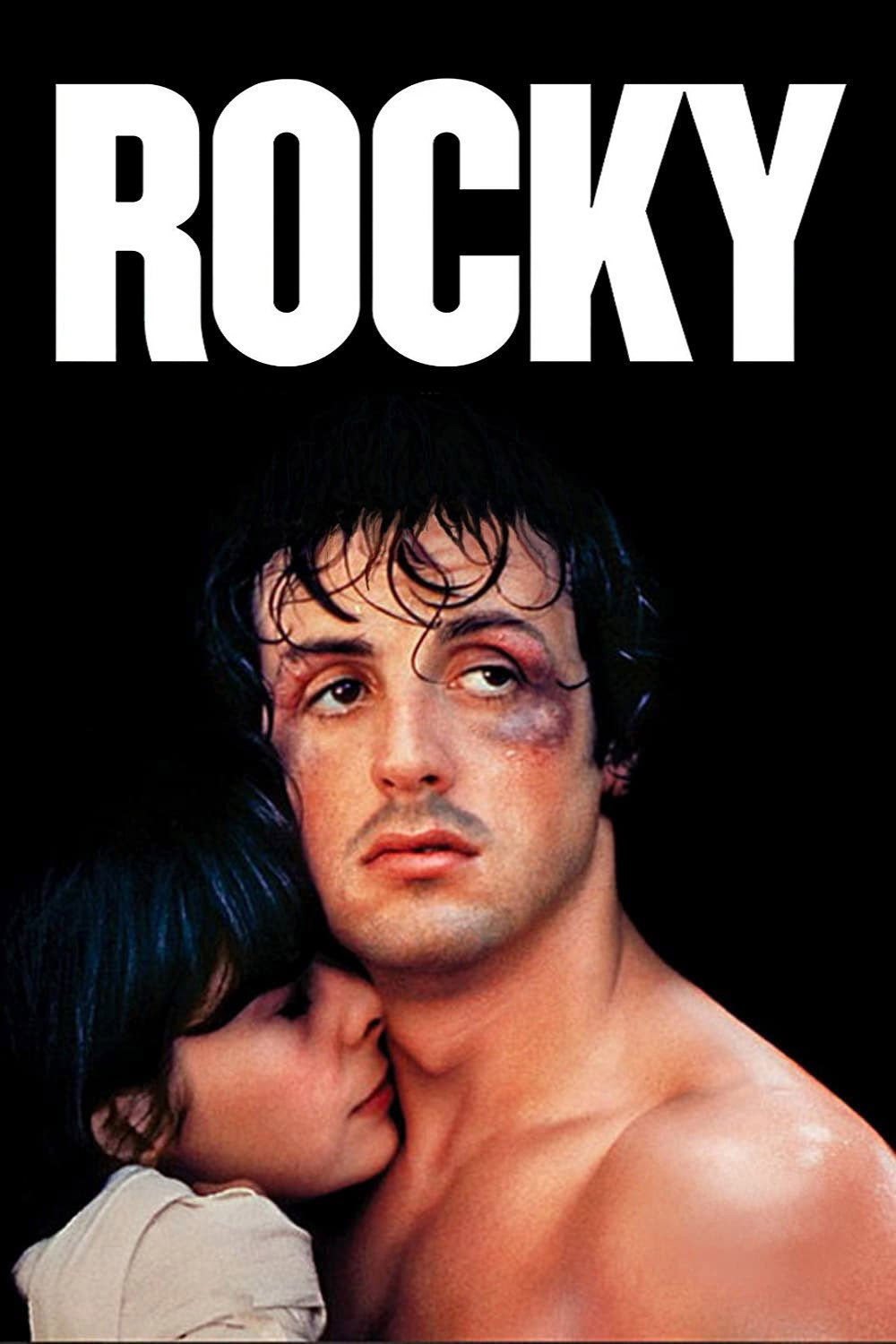
Every time I watch “Rocky,” I am instantly transported to a space where ambition, vulnerability, and the unflinching grit of ordinary people become cinema’s most honest mirror. The opening trumpet strains of Bill Conti’s now-iconic score don’t merely announce a boxing movie—they herald the arrival of working-class grandeur. Yet, as the story of Rocky Balboa unfolds, I find myself returning not to the details of his punch combinations or his physical ascent, but to that ineffable yearning for self-worth, for a shot, for proof that I—like Rocky—matter, even if it’s just to myself. For me, “Rocky” offers a raw, unapologetic glimpse into the soul’s quiet hunger for validation.
On the Margins: The Emotional Gut Punch
At its battered heart, “Rocky” isn’t a tale of athletic triumph or underdog sports heroism in the sense we’ve come to expect. When I engage with the film, what always strikes me most is how it zeroes in on the emotional condition of an outsider. Rocky Balboa isn’t just fighting Apollo Creed; he’s fighting oblivion. A low-level fighter from a faceless Philadelphia neighborhood, Rocky’s greatest conflict is existential—he pushes against a life of anonymity, quietly haunted by the possibility that he may never matter to anyone or himself.
The emotional heft comes not from the boxing ring, but in scenes of silent longing, shaky confidence, and tender awkwardness. Rocky’s world is one of backroom bargain gyms, solitude in the cramped apartment he shares with his pet turtles, and a job collecting debts he despises. The love story with Adrian, equally shy and sidelined, is the film’s tender pulse—a wounded courtship that explores how two broken people shore each other up. As I see it, the movie’s deep conflict lies in the everyday negotiations of dignity, self-respect, and the hope that a single, transformative opportunity might finally allow someone to feel seen. This is where “Rocky” surpasses formula; the emotional journey is far less about a bout with a world champion than it is about a man daring to redefine the outline of his life.
Chasing Resilience: Themes from Seventies Streets to Today
“Rocky” is painted from the palette of resilience. The overriding theme of perseverance in the face of long odds resonates so deeply because the film’s canvas is streaked with economic worry, lost dreams, and a palpable yearning for self-actualization. In 1976, America was wrestling with the fallout of Vietnam, political disillusionment, and a withering sense of the American dream. For me, “Rocky” was a necessary antidote to cynicism—a blue-collar fantasy carved from sweat and humility, with the message that the marginalized could, on occasion, be more than footnotes in someone else’s story.
Today, the themes echo perhaps even more loudly. The world has grown more atomized, and so many of us feel detached in environments that value spectacle over substance. “Rocky” counters that with the belief that validation is not bestowed from on high—it’s seized inch by agonizing inch. Watching Rocky fight not for victory but for the chance to prove he can go the distance is a potent rebuke to a culture obsessed with winning above all else. In 1976, this meant a great deal to underdogs; in 2024, when anxieties about meaning and visibility feel endemic, it’s arguably even more radical.
The Paper Cut Blues: Visual and Narrative Symbolism
What lingers with me aren’t the victorious crescendos, but the subtle, everyday motifs that director John G. Avildsen and screenwriter-star Sylvester Stallone quietly weave throughout “Rocky.” The most persistent motif is that of climbing—literal and figurative. Rocky’s legendary run up the steps of the Philadelphia Museum of Art is more than mere cardio; it’s a ritual of transcendence from the inertia that’s shackled him. Every time he rises, breathless and alone, I’m reminded that ritual—no matter how humble—can mark a personal resurrection.
More understated but just as powerful is the motif of coldness: the meager, dimly-lit apartment, the frigid streets, Adrian’s heavy coats and hats, the perpetual winter chill that envelops both leads. These visual signals speak to lives in emotional and economic hibernation. The warmth in the film—light filtering through Adrian’s pet store or the gym’s fluorescent glow—coincides with moments of connection and hope. In the fight itself, the American flag trunks and bright ring lights become symbols not simply of nationalism, but of scrutiny, judgement, and the possibility that a life can be illuminated by one moment in the spotlight. And then there’s the turtles, Cuff and Link—small, unassuming, and slow moving, just like Rocky’s own emotional progress. I always feel Stallone’s script was winking at the idea that hard shell exteriors are forged by a need to shield delicate interiors from a harsh world.
Turning Points in the Gritty Tapestry
The Meat Locker Ballet
One of Rocky’s most humble, resonant moments is his unconventional training in the meat locker, pounding slabs of beef until his fists bleed. Here, the rawness of his struggle becomes tactile—not just because of his scrappy methods, but because the act itself is both pathetic and beautiful. I always sense the depth of Rocky’s determination, striving with borrowed tools, fusing dauntless hope with brutal reality. Media crews may snicker at his methods, but, for me, this is the film’s clearest assertion of making do with whatever life grants you. Every punch reverberates as an act of defiance.
Steps to Glory: The Museum Run
If there is one scene that transcends all cliches, it is Rocky’s climactic sprint up the frozen steps at dawn. What moves me most is not his achievement but the weary triumph in his eyes as he raises his fists alone, Philadelphia’s skyline arrayed below him. Here, the gesture isn’t for applause. It’s his own affirmation that he belongs in this story—if only for a moment. The camera’s sweep, the soaring score, the city under sunrise—all amplify the lyricism of a man who has, if only fleetingly, graduated from anonymity. It’s cinematic proof that ritual, performed with heart, can shape meaning out of banality.
The Final Bell’s Quiet Truth
Many sports films answer struggle with victory, but “Rocky” delivers something more complex. The final fight is a mess of pain—brutal, unglamorous, unpretty. What fascinates me every viewing is not the scoreboard (spoiler: Rocky loses) but the desperation in his final gasp to Adrian, the agony and release in his plea. He doesn’t care about the result; he needs her to know he “went the distance.” This pronouncement always lands as the film’s true climax—a moment in which the pursuit of dignity and companionship outweighs superficial triumph. Rocky’s battered face at the end is the face of every person who’s ever settled for self-respect over trophies.
Reading Between the Ropes: Beyond the Sports Narrative
There is a persistent reading of “Rocky” as a classic sports underdog film, and certainly, that’s not without merit. Critics and casual viewers alike often highlight the Cinderella story about an everyman achieving the impossible. This interpretation foregrounds its inspirational aspects, emphasizing its resonance with the American dream mythos—bootstraps, second chances, onward and upward for all. It’s a reading that’s informed an entire genre of sports cinema, spawning copycats, parodies, and even monstrous sequels that, in my mind, sometimes flatten the film’s intricacies into mere wish-fulfillment fantasies.
Yet, my experience of “Rocky” is less about victory and more about vulnerability. I see it as a film about the necessity and the risk inherent in believing you’re worth something even when the world sees you as dispensable. Rocky doesn’t want to win so much as he wishes not to vanish; he wants a witness to his pain and his hope. The film’s sense of loss—the missed opportunities, the broken relationships, the ache of faded youth—gives it a mournful undertow I find lacking in most other sports stories. In this sense, it becomes a love story between two people and their last shot at self-worth. The boxing is a backdrop, a device for examining what it means to fight without illusions.
Other Journeys from the Underdog’s Corner
- “Raging Bull” – Another bruised portrait of a boxer, this time exploring self-destruction and redemption with visceral force. If you admire “Rocky” for its emotional candor, Scorsese’s film deepens the conversation.
- “The Pursuit of Happyness” – Like “Rocky,” this story transforms the grind and heartbreak of lower-class ambition into cinematic poetry, focusing on perseverance and paternal love.
- “Cinderella Man” – Evoking Depression-era struggle, Ron Howard’s film stands as a spiritual cousin in its embrace of the blue-collar fight for dignity.
- “Billy Elliot” – Although not a sports film, Billy’s journey through dance becomes another powerful metaphor for working-class escape and self-definition.
Lasting Echoes from a Philadelphia Winter
To watch “Rocky” in a contemporary context is to remember that the pursuit of meaning, however bruising, never goes out of style. For me, the film’s value today lies less in nostalgia than in its invitation to stay tender, to risk loving and being loved, to fight because your soul demands it—even if the victory is private and momentary. Rocky Balboa’s story stands as a beacon for everyone who ever wondered if they’d get their shot, and if so, what might remain when the final bell rings. In the end, it’s not a cheer for winners, but an elegy for all who keep trying.
If you found value in my perspective, you may also appreciate my reviews of “On the Waterfront” and “The Wrestler.”
To broaden this interpretation, you may also explore how critics and audiences responded over time.
🎬 Check out today's best-selling movies on Amazon!
View Deals on Amazon