
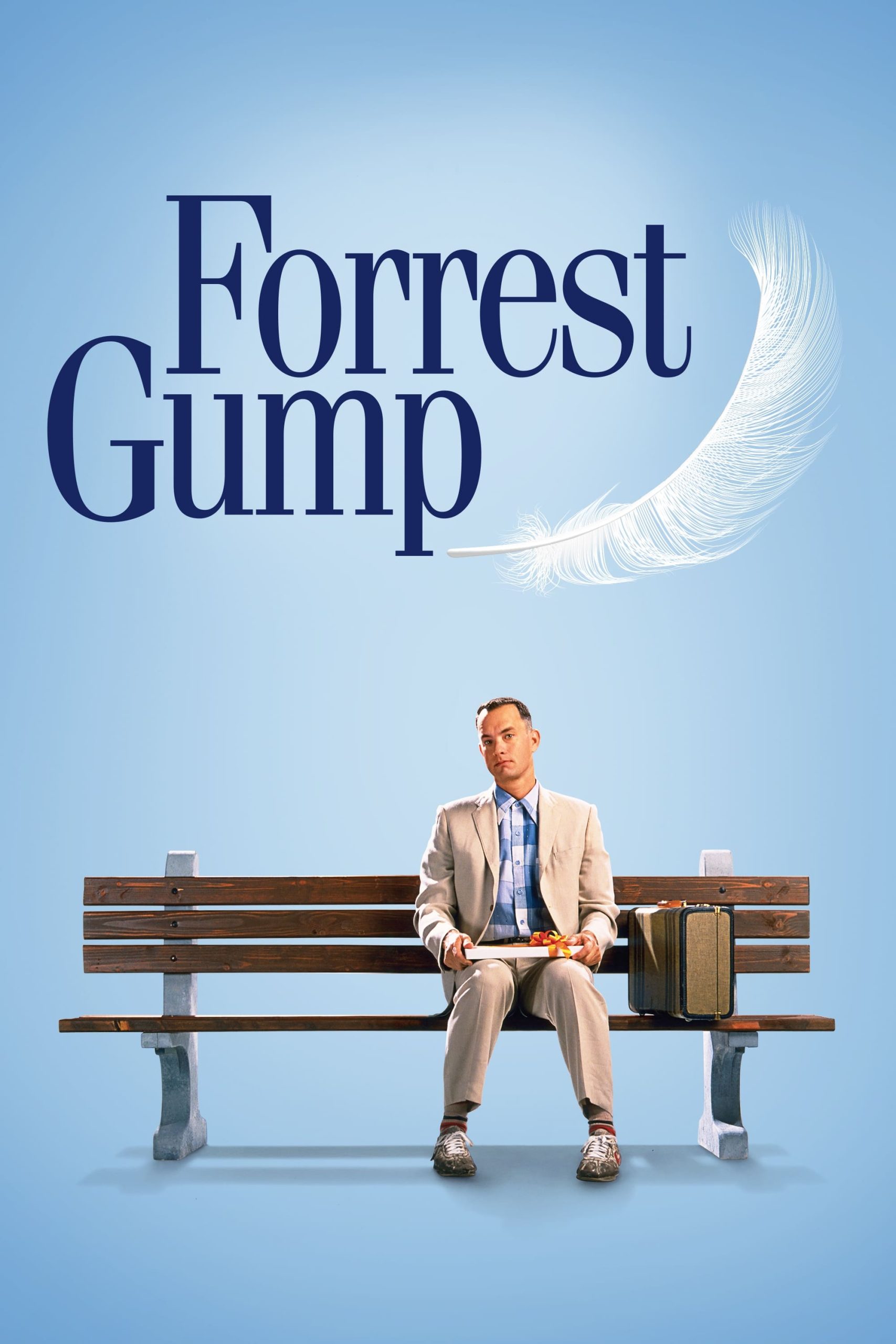
In the winding tapestry of my cinematic memories, Forrest Gump occupies a place marked not only by nostalgia, but by recurring fascination. I first saw the film as a child, swept up in the comedy and spectacle of this man’s improbable life. Years later, returning as an adult, the film revealed a depth beneath its whimsy—a curious interplay between chance, innocence, and the rhythms of American history. What has always held me captivated is not just the plot’s magical realism or Tom Hanks’s iconic performance, but the way the film invites me to question what it means to find meaning when the world stubbornly refuses to make sense. The simplicity of Forrest’s worldview stands in stark contrast to my desire for answers or patterns—an irony I revisit every time I watch.
What the Film Is About
At its surface, Forrest Gump charts the journey of a man of limited intellect through a period of extraordinary turbulence in America. Yet, every time I return to it, I am less interested in the literal events than in Forrest’s emotional navigation amid chaos and unpredictability. The “life is like a box of chocolates” motif—so often quoted it risks becoming trite—underscores a central tension: how does one move forward when life’s contents are unknowable? For me, the film is about perseverance in innocence, the resilience of simply being oneself even when the world defies understanding.
Underlying the packaged feel-good narrative, there is a current of sadness and longing: Forrest is forever at the mercy of forces outside his comprehension—war, love lost, shifting cultural tides. And yet, rather than being a victim, he becomes an emblem of tenacity amid uncertainty. His story is a meditation on the possibility of humility and grace in a rapidly changing society; rather than conquering his circumstances, Forrest adapts with earnestness and care. It is this emotional honesty, more than the chronology of his life, that remains the true subject of the film in my eyes.
Core Themes
Resilience, destiny, and love—in particular, unreciprocated or complicated love—float to the surface as the film’s major themes. Forrest’s journey underscores the ambiguity of “success” and invites a reevaluation of what constitutes a valuable or meaningful life. At the time of its release in 1994, America was engaged in rigorous debates about personal achievement and historical memory. The Cold War had ended, and there was an ambient nostalgia for allegedly simpler, more heroic times. In that context, Forrest’s story, which combines personal myth with public history, resonated deeply. The idea that pure-heartedness and endurance could carry someone through calamity was comforting—and possibly controversial given the national mood.
Today, the film’s themes strike me as even more urgent. We live in an era equally defined by unpredictability and disillusionment. Forrest’s refusal to become hardened by tragedy, his ability to love and to accept, feels less naive and more radical to me now. His story questions whether intelligence and cynicism truly serve as better armor against suffering, or whether, paradoxically, a readiness to simply “run,” to persist without agenda, is the wiser path. In its portrait of Jenny, the film offers a counter-theme: the cost of chasing after elusive ideals, and the wounds left by history. The interplay between Forrest’s simplicity and Jenny’s struggle for agency becomes a powerful commentary on generational trauma and the search for belonging.
Symbolism & Motifs
One of the film’s greatest strengths, in my experience, is its subtle but persistent use of symbols. Running is a recurring image that bookends much of Forrest’s story—from his childlike escape from bullies, to his cross-country marathons spurred by heartbreak. Running serves both as a literal and figurative means of survival. For me, it embodies the paradox of movement without direction: sometimes, when explanations and solutions fall short, persistence itself becomes the answer.
Another striking motif is the feather, hovering in the air at the film’s opening and closing. I’ve always interpreted the feather as a stand-in for fate, suggesting that we are at once carried by wind and yet, briefly, able to adjust our own trajectory. It is a reminder of the boundaries between agency and accident—one of the film’s quiet philosophical riddles. The use of American pop cultural landmarks—the ping pong paddle, the box of chocolates, the leg braces—function as touchstones, locating Forrest’s tale within the shared hallucination of the American dream. Each object reinforces how history happens in the space where private longing collides with public spectacle.
Key Scenes
The Feather’s Descent and the Opening Sequence
I find immense poignancy in the film’s first moments, as the camera follows a delicate feather drifting through the air, ultimately landing beside Forrest as he waits for a bus. This sequence, to me, is more than a poetic prologue; it sets the metaphysical tone of the film, proposing that randomness, beauty, and accident are central to existence. The feather’s movement is echoed throughout Forrest’s own life—it sometimes feels as if he too stumbles onto significance unexpectedly, carried by forces unseen.
Forrest Meets Jenny Again After Years Apart
The gravity of Forrest and Jenny’s reunion in her apartment is an emotional axis for the film. Jenny—whose journey is marked by pain, rebellion, and self-destruction—contrasts with Forrest’s simplicity. When she tells him, “I wished I could have been there with you,” I am acutely aware of the gulf between love given and love received; the ache of missed opportunities and impossible reconciliations. This scene crystallizes the central question: can love heal, or merely accompany us through life’s wounds?
The Speech at the Washington Reflecting Pool
Despite the comic chaos that undercuts Forrest’s anti-war speech, I have always been moved by the image of him hugging Jenny after wading through a crowd. The scene is both a parody of the momentous (Forrest’s words are drowned out) and a genuine emotional climax—the public world fades into insignificance when Jenny and Forrest are reunited. This collision of private feeling and collective history, all staged in the charged heart of Washington D.C., encapsulates the genre-bending daring of the movie.
Common Interpretations
Over the years, critics have analyzed Forrest Gump as a paean to the American dream, or conversely, as a sly critique of that myth. Many point to its treatment of history as playful revisionism—Forrest the accidental participant in iconic events—a way of softening cultural trauma through nostalgia. There are readings that see Forrest as a Christ figure, or Jenny as a tragic stand-in for the costs of social upheaval.
While I acknowledge these interpretations, I resist the temptation to entirely intellectualize Forrest’s journey. I see the film as less a political statement than an existential inquiry refracted through an ingenue’s perspective. It is not merely about American history, or even about “success.” What strikes me most is the gentle assertion that goodness and endurance are possible without heroism or irony. In Forrest’s refusal to become embittered or sophisticated, I find a wisdom that critiques both my cynicism and my longing for certainty.
Films with Similar Themes
- The Curious Case of Benjamin Button: Like Forrest Gump, this film explores a protagonist swept unwittingly through historical events, forced to contemplate love and loss against a backdrop of fate and temporal strangeness.
- Rain Man: Both stories center on characters whose unique cognitive landscapes lay bare society’s definitions of normalcy and success, challenging viewers to reconsider what it means to be “compassionate” or “competent.”
- Big Fish: Here, personal myth-making, reconciliation, and the blurry line between truth and fantasy echo the storytelling dynamics found in Forrest Gump.
- A Beautiful Mind: Although far darker, this film complements Forrest Gump’s meditation on resilience and outsider status, using real-world events as a canvas for personal triumphs and tragedies.
In Closing: Finding Meaning in the Unlikely
My approach to Forrest Gump has shifted over time, deepening with each viewing. I believe contemporary audiences will find not only nostalgia and entertainment here, but an enduring invitation to reflect on how we navigate uncertainty and love. By embracing its central themes of humility, endurance, and compassion, modern viewers can discover a richness that transcends period detail or pop culture references. For me, honoring the film’s emotional undercurrents is what makes each return a discovery—and a reassurance that, sometimes, to keep running is enough.
Related Reviews
If you found value in my perspective, you might also enjoy exploring my thoughts on other cinematic landmarks such as Big Fish and A Beautiful Mind.
To broaden this interpretation, you may also explore how critics and audiences responded over time.
🎬 Check out today's best-selling movies on Amazon!
View Deals on Amazon