
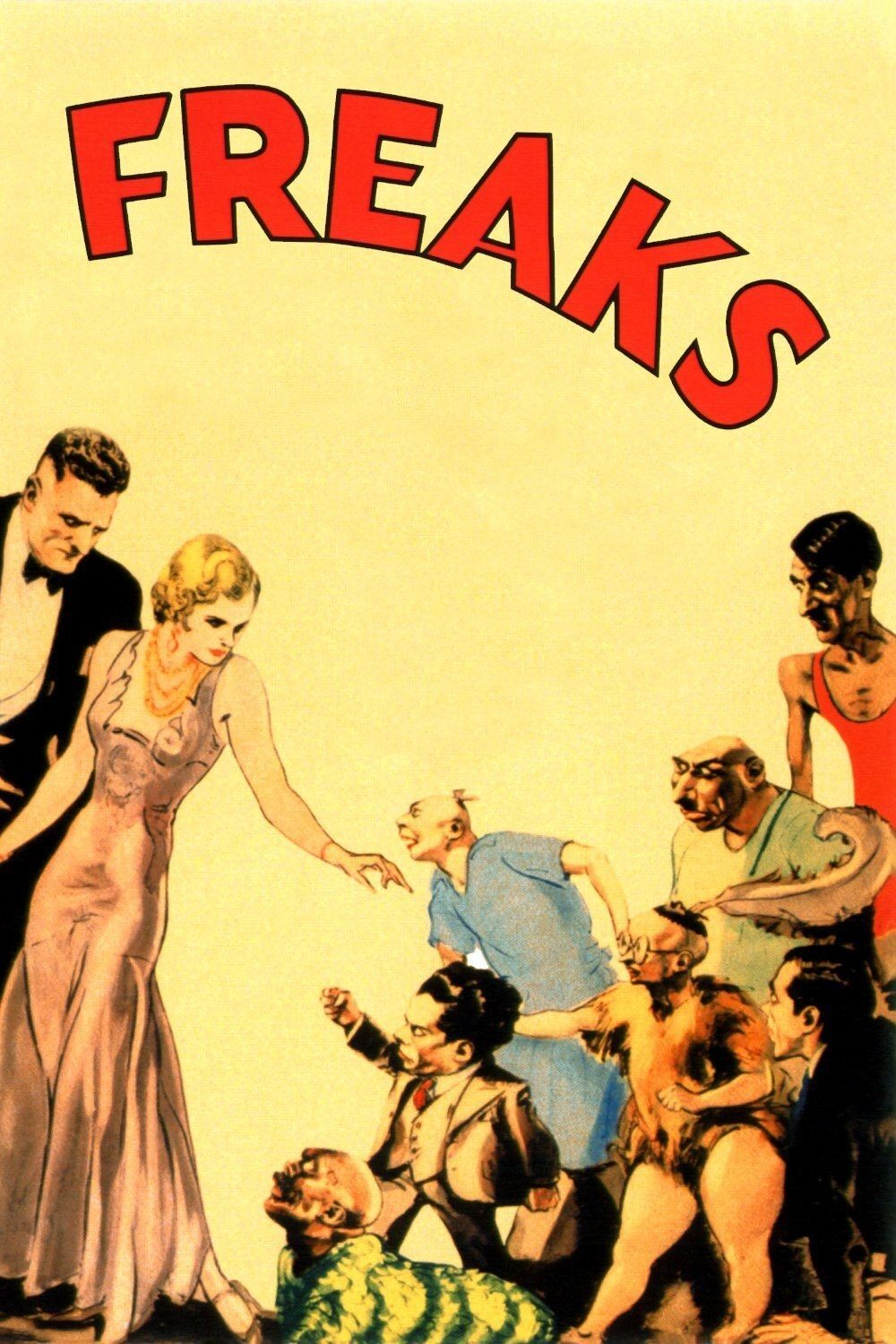
When I think back to the first time I watched Freaks, I remember a distinctly uneasy curiosity—a sensation that never quite dissipates with each revisit. What began as a casual late-night venture into “pre-code” cinema quickly became a confrontation with my own perceptions of difference, otherness, and the machinery of spectacle. This is not just a movie that sits passively on the screen but one that seeps into you, urging introspection and discomfort in equal measure. I found myself transfixed not solely by what director Tod Browning chose to capture, but more so by what he dared to ask: Who truly are the monsters in our midst?
What the Film Is About
At its surface, Freaks functions as a twisted carnival melodrama, where love, exploitation, and revenge percolate among the oddities of a traveling circus sideshow. But beneath this lurid scaffolding lies an emotional journey about belonging and betrayal. From the very first scenes, there’s an undercurrent of longing—the so-called “freaks” form a makeshift family, fiercely loyal and tightly knit, a pointed contrast to the “normal” outsiders who see them as sources of profit or amusement.
The central conflict—the ill-fated romantic entanglement between Hans, a little person, and Cleopatra, the statuesque and predatory trapeze artist—descends from curiosity to contempt, intimacy to violation. Here’s what I see: The film exposes cruelty not in the physical appearance of its characters, but in the hard, mercenary hearts of those who exploit innocence for personal gain. By the time vengeance is meted out in the infamous climax, the lines between victim and villain have been indelibly blurred. Freaks dares me to interrogate not only how I empathize, but with whom.
Core Themes
Otherness, exploitation, and the hypocrisy of normalcy are the main thematic pillars around which Freaks is constructed. What I find enduringly powerful is how Browning shatters the traditional definitions of beauty, wholeness, and community. In a world still obsessed with surface distinctions, the circus sideshow becomes both a literal and figurative stage for society’s uncomfortable relationship with the “unknown.”
Back in 1932, this narrative was radical—almost unthinkably so. The film confronts prejudice head-on, decades before mainstream culture would even approach such conversations. Today, these same themes hold up, estranged perhaps only by the evolution of our vocabulary around them. What the circus “freaks” endured for entertainment’s sake shadows the way marginalized identities continue to be commodified and ostracized in modern media. For me, this is not a period piece, but an ever-relevant indictment of where our empathy begins—and more often, where it ends.
The concept that “we accept you, one of us” is far more than chant—it’s a manifesto of unity and an indictment of exclusion, echoing even more poignantly in our polarized era.
Symbolism & Motifs
Recurring images and symbols quietly strengthen every frame of Freaks. The motif of the communal table—a scene where the performers gather and initiate Cleopatra with their infamous chant—is seared into cultural memory. To me, this scene and the motif of communal meals represents much more than acceptance; it’s an emblem of the fragile, almost utopian bonds among those pushed to the margins.
Another recurring visual that stands out is the juxtaposition of the grotesque and the human. Browning shoots his cast members in moments of vulnerability and joy, contrasting these with the cold detachment and cruelty of the “normal” characters. This inversion is the point: The monstrous is never where we expect to find it.
Rain and mud, especially during the film’s climax, become not just set dressing but a kind of elemental justice. As the avengers crawl and slither toward their target, the landscape itself seems to morph in solidarity, blurring who’s animal and who’s civilized. The sideshow—ostensibly a place of shame—mutates into a space of agency and retribution, its earthiness a reminder that liberation is often messy, never sterile.
Key Scenes
“One of Us” – The Table Gathering
For me, nothing embodies the heart of Freaks more completely than the dinner table scene where the circus troupe embraces Cleopatra as “one of us.” The infamous chant, echoed in a drunken haze, is as much an invitation as a dire warning—“We accept you, one of us! Gooble gobble, gooble gobble!” The camera lingers, soaking in both the revelry and the simmering unease. Here, Browning masterfully exposes the gulf between intent and interpretation: what to the group is sacred initiation, Cleopatra receives as horror and revulsion. I find this duality haunting because it frames inclusion as both a privilege and, contingently, as a threat when refused.
The Betrayal Unfolds – The Poison Plot
A quieter yet equally chilling moment occurs as Cleopatra’s plan to poison Hans unfolds. Her feigned affection and sly exchanges with Hercules are orchestrated with cold efficiency, and we, as the audience, are made complicit witnesses to Hans’s growing helplessness. The silent expressions—the glances among the “freaks” as they begin to realize the treachery in their midst—are a study in suppressed rage and communal heartbreak. To me, this scene’s power rests in how it transforms the “freaks” from passive spectacle into perceptive, feeling individuals.
Storm and Retribution – The Climax in the Rain
The climactic chase in the rain is a nightmarish tableau that refuses to leave my mind. Beneath a downpour of mud and shadows, the troupe, crawling and slithering through the muck, becomes the embodiment of collective retribution. The terror palpable in Cleopatra’s face radiates not out of cruelty but of justly earned consequence. This moment, with its primal visuals, underscores my conviction that the true terror is the stripping away of civility to reveal the raw power of wronged humanity. For me, this is not just revenge, but a reclaiming of narrative—minorities who have long borne indignity finally seizing the stage.
Common Interpretations
Freaks has attracted a tidal wave of analysis over the decades. Many critics see it as a progressive, if deeply unsettling, plea for acceptance and an attack on so-called “normal” society’s cruelty. Others interpret its horror elements as problematic—using real people with disabilities as vehicles for shock rather than empathy.
I see the validity in both camps, but my own reading tends toward the film’s radical empathy. There are undoubtedly exploitative elements, a tension inherent in its creation. Yet, the frankness with which it depicts difference, and the refusal to code the “freaks” as otherworldly or evil (except in the pursuit of justice), strikes me as revolutionary, especially considering its era. Modern reactions often vacillate between admiration for its bravery and discomfort with its ethical ambiguities. My experience is always a complex mix of both.
Films with Similar Themes
- The Elephant Man (1980): Explores society’s treatment and gaze on physical difference, echoing the struggle for dignity found in Freaks.
- Edward Scissorhands (1990): Another film where the outsider’s vulnerability uncovers the hidden cruelties of suburban “normality.”
- Peeping Tom (1960): Examines voyeurism, spectacle, and the dark urge to turn suffering into entertainment, much as Browning’s film does.
- Nightmare Alley (1947): Set in a carnival environment, it interrogates exploitation, transformation, and the fragility of communal bonds.
Conclusion
Freaks is not an easy film to “enjoy,” but it is one I find indispensable. For today’s viewers, the challenge is in seeing past the initial shock—there is empathy, critique, and artistry that reward a thoughtful, open-minded approach. Understanding these themes not only adds a layer of depth to the viewing, but also provides a mirror to prejudices and fears that are hardly relics of the past. For anyone willing to look beyond the surface, the film remains as provocative and vital as it was in 1932.
Related Reviews
If you found value in my perspective, you might also enjoy exploring my thoughts on other cinematic landmarks such as The Elephant Man and Nightmare Alley.
To broaden this interpretation, you may also explore how critics and audiences responded over time.
🎬 Check out today's best-selling movies on Amazon!
View Deals on Amazon