
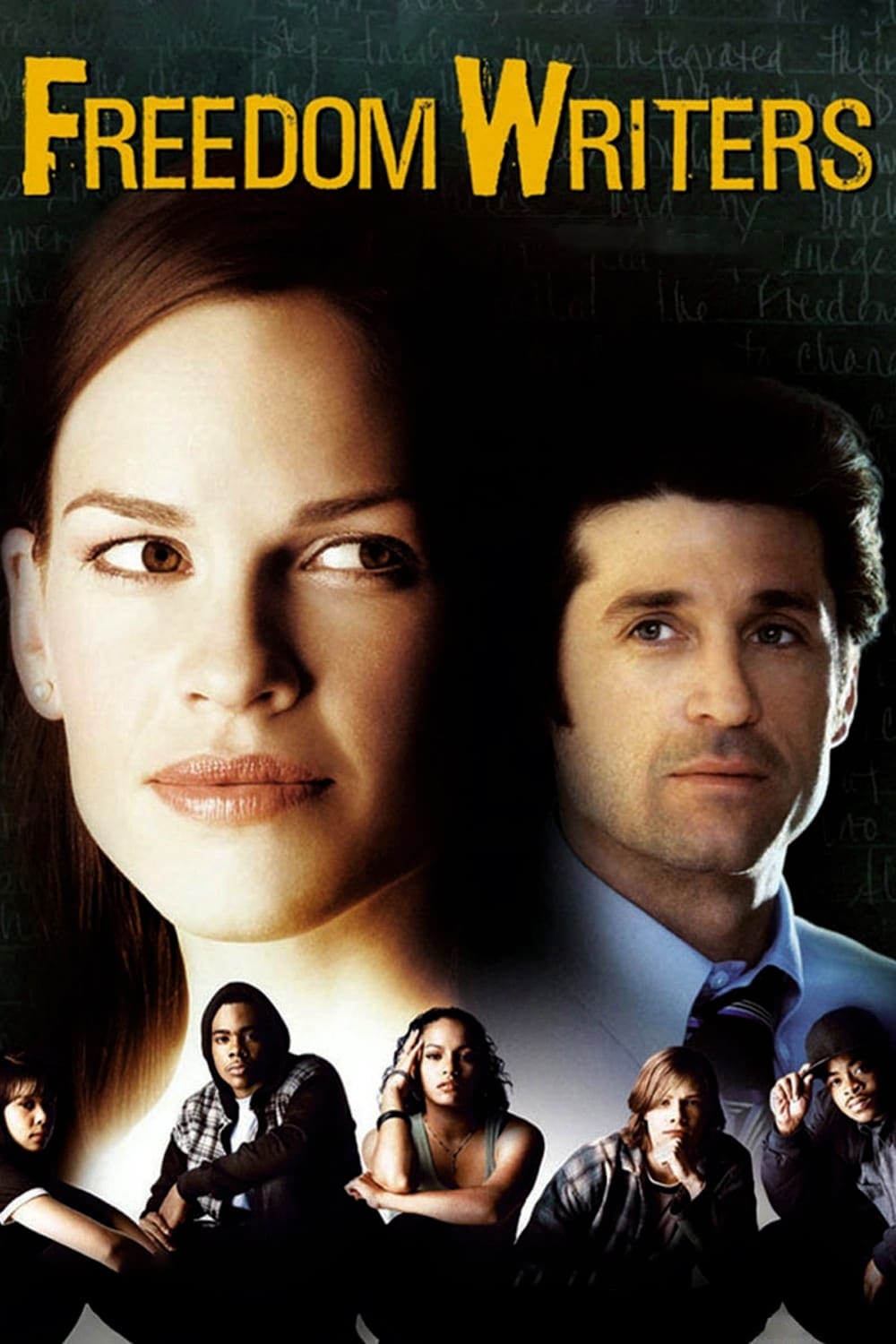
They Walk In With Their Guard Up: The Classroom as Battlefield
I’ll admit, the first time I watched “Freedom Writers,” I felt a knot forming in my stomach. The opening scenes thrust me into a world I only understood in abstraction—a world where every hallway glance is a potential threat and every morning starts with a tally of who didn’t show up alive. I wasn’t expecting a story about a classroom to feel like a war movie, but that’s exactly what the film delivers, and it’s within this tension that the deeper meanings start to bloom. “Freedom Writers” isn’t a simple underdog story; it’s a document of survival, mistrust, and the slow thawing of hardened hearts in a city that offers few second chances.
Chalk, Paper, and the Architecture of Defiance
What struck me immediately was the way the classroom itself becomes a character—both a sanctuary and a trap. Every desk, every faded poster on the wall, speaks to the way institutions shape young minds, for better or worse. The fluorescent lights flicker not just over lessons, but over histories of trauma and resilience. The film insists that education isn’t neutral; it’s either a weapon or a shield, wielded by those with the courage to care. For Erin Gruwell, her chalk is a tool of rebellion as much as instruction. She’s not just teaching; she’s breaking codes, redrawing boundaries, and, most dangerously, asking her students to trust her with their pain.
Trust as a Currency and Its Uneven Exchange
For me, the most poignant moments come not from grand speeches, but in the quiet, hesitant exchanges—a returned notebook, a shy question, a rare smile. Trust in “Freedom Writers” is the most valuable currency, but it’s in desperately short supply. The film’s deeper message lives in the gradual, uneven way that trust is won and lost, not just between teacher and student, but among the students themselves, whose worlds have taught them to expect betrayal at every turn. When Gruwell asks her class to keep journals, it’s not the act of writing that’s radical; it’s the act of believing someone will read their words and care enough to understand. That risk, that gamble, is the film’s true drama.
Stories as Shields: Owning the Narrative
There’s a moment when the students read “The Diary of Anne Frank,” and I found myself bracing for cliché, but the film sidesteps easy analogies. What matters isn’t the comparison between eras or tragedies—it’s the recognition that every teenager in that room has a story they’re desperate to tell, if only they’re given the chance and the audience. “Freedom Writers” is obsessed with the question of who gets to narrate their own suffering, who gets consigned to the margins, and what happens when those margins are breached. The journals become more than assignments; they are shields, weapons, even invitations to intimacy. The act of storytelling is presented as both cathartic and terrifying—liberation is never simple, and writing is an act of self-exposure as much as defiance.
The Violence of Low Expectations
One of the film’s most devastating indictments comes from its portrayal of the adult world outside the classroom—school administrators, parents, and even Gruwell’s own colleagues, who have written off her students as irredeemable. “Freedom Writers” asks us to consider the subtle violence done by low expectations, by the silent sorting of children into categories of ‘worth saving’ and ‘already lost.’ The indifference of the education system, the bureaucracy that measures progress in test scores and attendance sheets, is laid bare as a more insidious kind of hostility. Watching Gruwell fight for classroom supplies and field trips feels less like an inspiring montage and more like trench warfare against institutional apathy.
Hope as a Dangerous, Necessary Choice
I’ve always found the concept of hope both exhilarating and terrifying, and “Freedom Writers” captures this tension perfectly. For Gruwell and her students, hope is never a given. It’s a choice—dangerous, exhausting, and, at times, self-destructive. What the film really argues is that hope isn’t a soft, sentimental thing; it’s hard-edged and bloody, forged in disappointment and loss, and chosen again and again in spite of everything. Watching these students stake their futures on hope, despite every rational reason to abandon it, is wrenching. It’s the film’s greatest act of artistry that it never lets hope feel cheap or easy.
The Myth and Reality of the “Savior” Teacher
I wrestled with my discomfort during moments that seemed to lean into the “savior teacher” narrative—the idea that one passionate outsider can swoop in and rescue students from their circumstances. But “Freedom Writers” complicates this trope more than I remembered. Gruwell is persistent, yes, but she’s also naïve, overwhelmed, and often wrong. True transformation in the film isn’t about Gruwell bestowing wisdom; it’s about her learning to listen, to decenter herself, and accept her own limitations. The students are never passive recipients of charity; they push back, negotiate, and, most importantly, form alliances with each other. The real magic happens not when Gruwell “fixes” her students, but when her presence allows them to see each other as more than rivals or enemies.
The Cost of Caring: Sacrifice and the Limits of Empathy
The personal toll on Gruwell, as she burns through relationships and sacrifices her own happiness, feels almost masochistic at times. “Freedom Writers” is honest about the costs of empathy—it drains, isolates, even destroys. Gruwell’s marriage crumbles, her friendships with colleagues fracture, and she’s left facing the reality that caring deeply can cut both ways. This isn’t the story of a hero who triumphs and rides off into the sunset; it’s about what’s left after hope and effort have scraped you raw. The film refuses to glamorize sacrifice, instead offering a portrait of someone whose victories are always incomplete and whose losses are agonizingly personal.
Where the Film Leaves Me: Refusing to Look Away
When the credits rolled, I realized “Freedom Writers” had done something I didn’t expect—it left me unsettled, unwilling to look away from the uncomfortable truths it raised. At its core, the film is about the stubborn persistence of humanity in the most inhuman of circumstances. It’s an argument that listening—really listening—is revolutionary, that bearing witness can ignite a transformation as profound as any act of defiance. The hope here is messy, the victories partial, and the future uncertain. That’s precisely why it resonates: it dares to suggest that sometimes the bravest thing any of us can do is care, even when the world insists it’s pointless.
For Anyone Haunted by Stories Like These
If you, like me, find yourself drawn to films that wrestle with hardship, resilience, and the power of personal testimony, I’d urge you to revisit “To Sir, With Love” and “Blackboard Jungle.” Both classics offer their own uncompromising perspectives on the classroom as a crucible of transformation, echoing the hard-won hope that pulses through every frame of “Freedom Writers.”
If you’re curious about how this film was originally perceived or how it compares to similar works of its era, these resources may be helpful.
🎬 Check out today's best-selling movies on Amazon!
View Deals on Amazon