
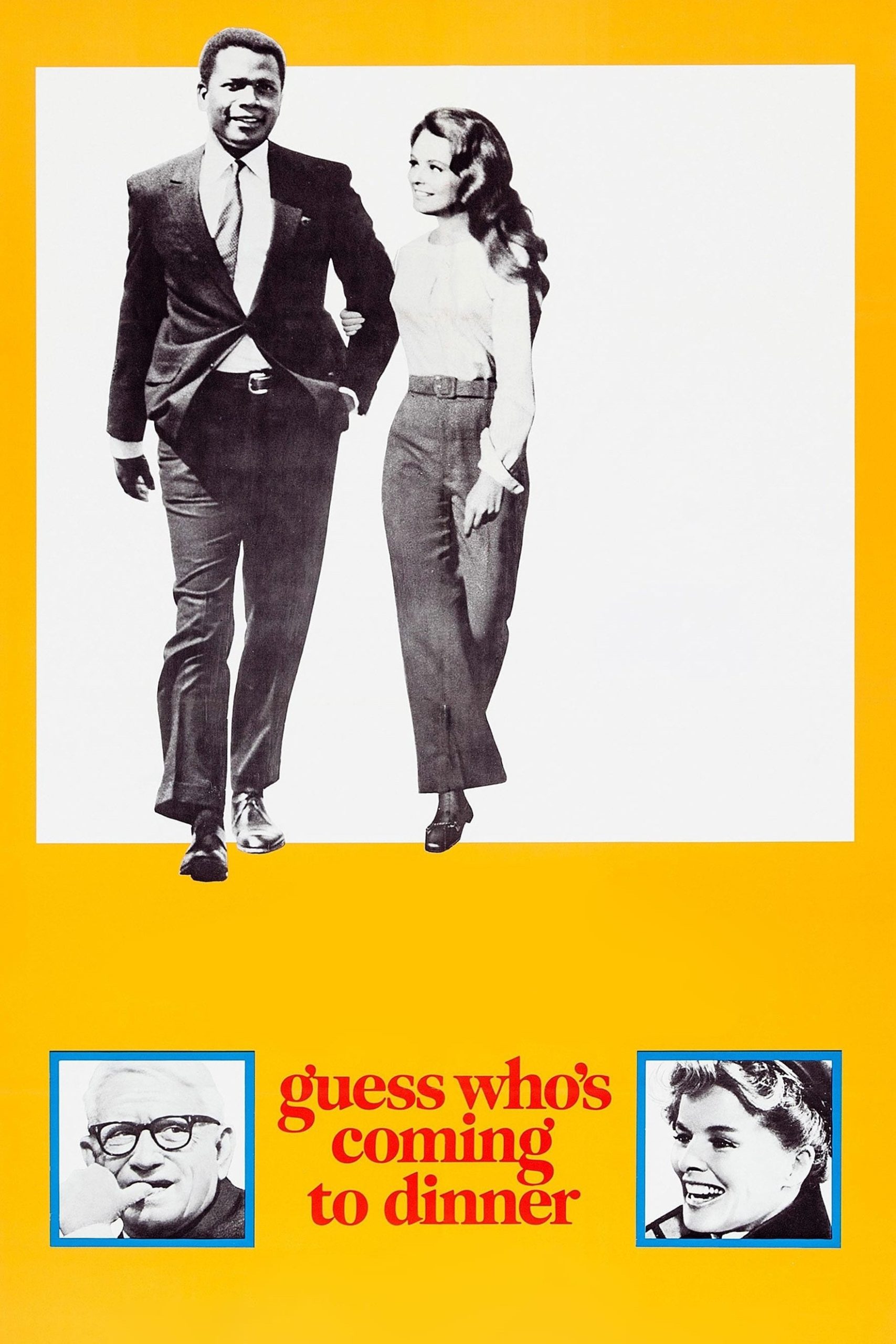
The first time I watched “Guess Who’s Coming to Dinner,” I was caught off guard by just how quietly radical it feels—hidden under what at first glance appears to be a polite, almost genteel drawing-room drama. I remember that I was much younger, barely able to grasp the historical powder keg sitting beneath its premise, yet deeply affected by the steady, earnest tension humming through every scene. What fascinates me now, after years of returning to it, is how the film captures the ache of generational change, something I’ve often navigated in my own life, as well as the nervous optimism of confronting prejudice with something as disarming as sincerity. There’s an energy to the film that feels at once quaint and subversive—it’s a time capsule, certainly, but a living one, still capable of stirring discomfort and introspection.
Exploring the Emotional Core: The Collision of Love and Prejudice
From the outside, “Guess Who’s Coming to Dinner” seems to hinge on a simple dilemma: a young woman introduces her fiancé, a Black doctor, to her liberal white parents, confident they will support her choice. Yet, what unfolds is not simply a melodrama about disagreement but an emotional dissection of the boundaries between ideals and reality. The real tension, as I see it, lies within each character’s private reckoning—the gap between the principles they trumpet and the reflexes their upbringing has woven into them.
For me, what the film interrogates, beneath its social relevance and clever dialogue, is the intimate psychological journey demanded by progress. It’s not just parents who have to catch up to their daughters, or older generations struggling to let go of outdated fears; it is each of us, when faced with a challenge to our sense of who we are. The entire movie seems to pose a personal dare: can love—familial, romantic, or platonic—force us to become braver than we imagined, even when it costs us comfort? What the story truly attempts is to transform a charged, external debate over race into something that feels internal and raw—an emotional gauntlet that refuses easy answers.
Tangled Loyalties and Social Awakening: Thematic Resonances
At its core, the film is preoccupied with the collision between private conviction and public posture. What strikes me most is how it exposes the contradictions lying at the heart of self-professed liberalism. In 1967, when the country was reeling from the Civil Rights Movement and violence was a backdrop to daily news, this movie dared to tiptoe into white middle-class homes and ask whether their often-declared support for equality could withstand the prospect of their child entering a mixed-race marriage.
The themes—racial identity, generational conflict, moral courage, and the discomfort of social transition—are as piercing now as they were in 1967. In today’s landscape, these ideas remain urgent: I’m continually encountering the same uneasy questions about performative allyship, parental expectations, and the limits of tolerance. Yet, the film’s insistence on letting its characters wrangle messily with their values, rather than offering tidy “lesson learned” epiphanies, is what gives it such lingering power and present-day relevance.
Patterns of Meaning: Iconography and Repeated Imagery
There’s a formal, almost ceremonial rhythm to how Stanley Kramer’s direction deploys space and repetition. The house itself—bathed in warm light, full of comfortable trappings—is not just a backdrop but a sort of battleground. I notice how repeatedly the dining table becomes a site of negotiation: a place where food is meant to unite but instead highlights fractures, where what’s said is never quite as important as what’s withheld. The tablecloths are white, pristine, nearly oppressive in their neatness—as though attempting to maintain control in a situation spun out of it.
Mirrored reflections, such as when characters inspect themselves in the foyer’s wall-length mirror or glance at each other across doorways, recur with symbolic potency. For me, these moments signal the film’s obsession with self-perception; everyone is constantly measuring how they appear versus who they truly are. The sight of the golden hour light bathing the characters near day’s end feels allegorical—the promise, or perhaps the naive hope, that something pure can emerge after a stormy reckoning.
Pivotal Moments: Three Scenes That Resonate Deeply
The Awkward Initial Encounter
When John Prentice, played with superb restraint by Sidney Poitier, first meets the Draytons, everything is lacquered over with strained politeness. What lingers in my mind is not the dialogue but the charged, unspoken tension—the quickness with which the parents try to appear progressive, the reflexive discomfort that flares in flickers across their faces. This scene sets in motion the real work of the film: disentangling self-image from inherited fear.
Matt Drayton’s Private Reckoning
The crux of the emotional journey arrives during Matt Drayton’s solitary reverie, as Spencer Tracy inhabits his character’s uncertainty with extraordinary vulnerability. Alone, Matt contemplates the true stakes for his daughter, himself, and his marriage. It is here that the supposed certainties of a lifetime seem insufficient. This moment always strikes me for its portrayal of authentic moral struggle—one that is unresolved, halting, and entirely human.
Christina’s Act of Defiance
When Christina Drayton (Katharine Hepburn) dismisses her bigoted employee in an act of moral clarity, I feel the undercurrent of anger and pride. The scene is brief, but it feels seismic—a quiet assertion that platitudes are meaningless unless backed by action. It’s a reminder that allyship, even politically safe ones, must eventually take a public stand.
Looking Beyond: Standard Takes and My Own Perspective
Most classic criticism treats the film as an earnest, if somewhat dated, missive in favor of tolerance—a moment of Hollywood conscience. Many highlight its awkward didacticism, the sometimes stilted dialogue, and question whether it is actually as progressive as it thinks. I agree, to an extent: there’s an undeniable stiffness, a way in which the film skirts the fury and danger of real racism, instead opting for the assurance of a “good” Black man and a sanitized confrontation.
But what I believe critics often overlook is the film’s willingness to stage discomfort rather than paper it over. The very stiffness is the point; earnestness can be painful, especially when it lays bare our own limitations. To me, the film dares to be awkward, and in doing so, it promises no heroic catharsis—just the honest, anxious process of trying to close the chasm between belief and action.
Films with Parallel Pulses
- In the Heat of the Night (1967) – Also led by Sidney Poitier, this film explores racial tension and justice in the Deep South, probing the boundaries of professional respect and personal mistrust.
- Do the Right Thing (1989) – Spike Lee’s tour de force explodes with generational debate and neighborhood conflict, examining how race, empathy, and identity collide in an urban crucible.
- Far from Heaven (2002) – Todd Haynes’ homage to 1950s melodrama reckons with interracial romance and societal boundaries, mapping prejudice’s enduring grip through a lens both haunting and hopeful.
- A Raisin in the Sun (1961) – The generational dreams and deep frustrations of a Black family facing housing discrimination mirror the emotional texture of “Guess Who’s Coming to Dinner,” inviting comparison through a different point of view.
How to Approach the Film: Lessons for the Present
For contemporary viewers, “Guess Who’s Coming to Dinner” is both a slice of its time and a living prompt, daring us to examine our own instincts when challenged. What I find tremendously valuable is the film’s invitation to sit, uncomfortably if necessary, in the tension between stated belief and practiced conviction. It asks: how far are we willing to go for equity, even when the ideal collides with our fears? Watching it today reveals as much about us as about the characters; it is a test, not only of their bravery, but of our willingness to grow uncomfortable, to listen, to change.
Related Reviews
If you found value in my perspective, you might also enjoy exploring my thoughts on other cinematic landmarks such as In the Heat of the Night and Far from Heaven.
To broaden this interpretation, you may also explore how critics and audiences responded over time.
🎬 Check out today's best-selling movies on Amazon!
View Deals on Amazon