
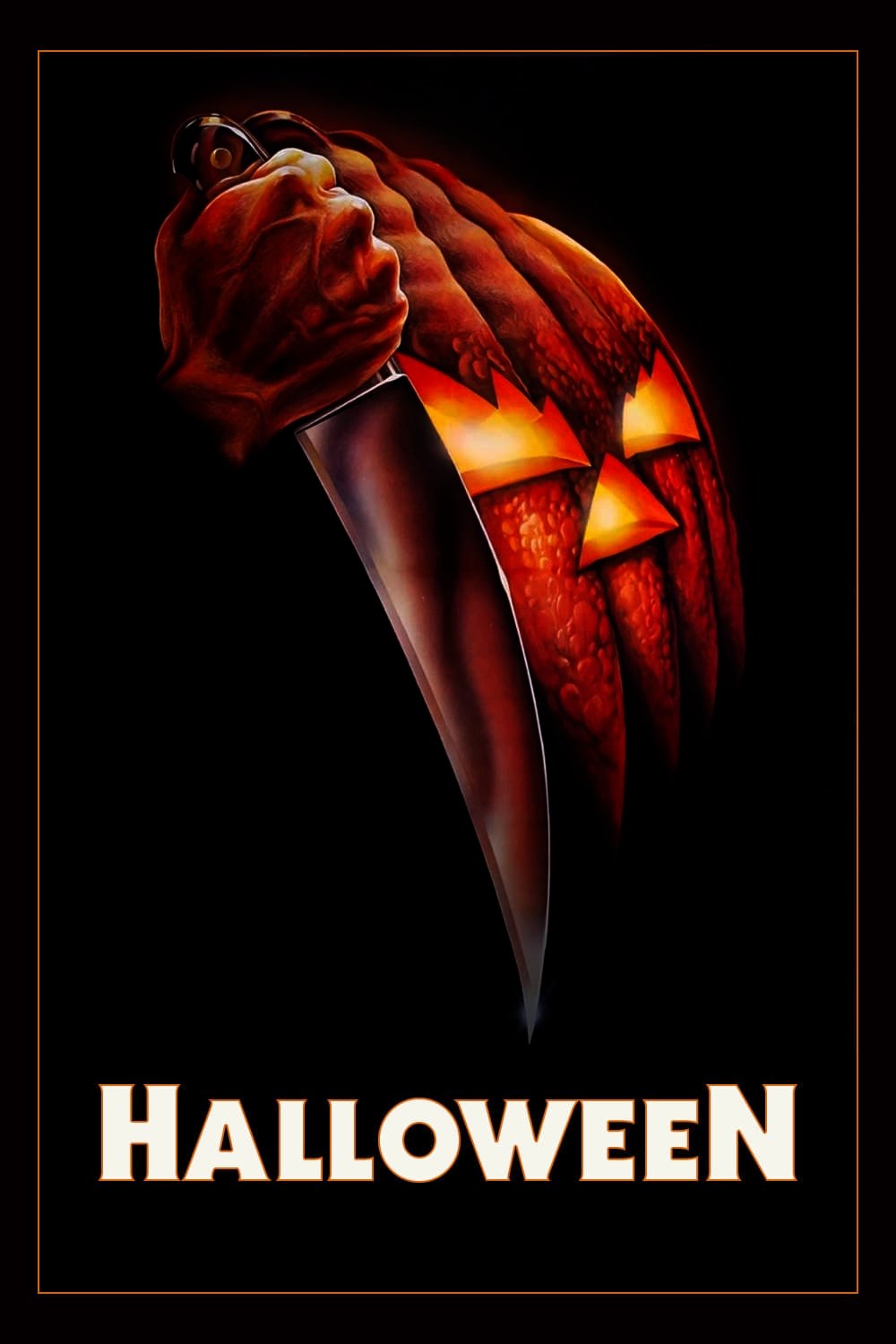
Night Descends on Suburbia: Where Evil Finds Its Shape
Every October, as the leaves rustle and the days shorten, I feel the urge to revisit Halloween (1978)—not just as a seasonal ritual but as a personal reckoning with fear itself. From the opening moments, I’m reminded that this film has nothing to do with complex backstories or detailed motivations; instead, it dares me to confront the idea that evil can be both arbitrary and deeply rooted in the familiar. I find the concept even more unsettling today than when I first encountered John Carpenter’s film as a teenager, because it frames terror as something woven into the fabric of ordinary American life, cloaked in the guise of the everyday.
The Banality of the Boogeyman
What sticks with me most about Michael Myers is his void-like simplicity. He’s not merely a killer or a figure of childhood trauma, but something closer to a force of nature—distant, silent, and unstoppable. Unlike the monsters of earlier horror films, who might have origins in folklore or tragedy, Myers is terrifying precisely because he is inexplicable. Carpenter’s choice to call him “The Shape” in the credits feels like more than a stylistic quirk—it serves as a thesis statement. Watching Halloween, I see Myers as the representation of a fundamental truth: evil is not always dramatic or supernatural, sometimes it simply persists, indifferent and unfathomable. That realization lingers longer than any jump scare.
A Suburban Dream, Shattered
I can’t help but notice how Carpenter weaponizes suburbia itself. Haddonfield, with its tidy lawns, picket fences, and friendly neighbors, is the embodiment of late-70s American safety. Yet, once the camera moves through those streets, following Michael’s faceless gaze, the familiar turns treacherous. The film’s true horror stems from the intrusion of chaos into the safe and predictable. Watching Laurie Strode walk home from school or babysit on Halloween night, I’m reminded that our most cherished environments can offer no guarantee against the unexpected. The camera’s slow, predatory movements make me complicit in this invasion; I am both observer and participant, chilled by how easily protection can be perforated.
Laurie Strode and the Cost of Vigilance
Jamie Lee Curtis’s portrayal of Laurie Strode has always fascinated me, not just as the archetype of the “final girl,” but as a rare embodiment of youthful watchfulness and the burden of responsibility. Laurie isn’t merely lucky or pure; she is attentive and anxious, sensitive to disturbances others ignore. Her friends dismiss warning signs and tease her for her caution, but Laurie cannot quite shake her sense of impending threat. I see her as a stand-in for anyone who has ever sensed danger before it has a name. Her journey is not just survival; it’s a painful awakening to the knowledge that evil does not always knock or announce itself—it sometimes slips through the cracks when we’re least prepared.
Unseen Threats and the Tyranny of Perspective
Halloween’s mastery lies as much in its form as its content. Each time Carpenter employs his signature long takes and steadicam shots, I’m reminded how the film blurs the line between victim and voyeur. The opening sequence, told through the eyes of a child Michael, establishes that perspective is powerful—and dangerous. This device recurs, putting me uncomfortably close to becoming the predator. The camera’s omnipresence suggests that surveillance and vulnerability go hand in hand; in Haddonfield, everyone watches, and everyone can be watched. I find myself questioning my own role as a spectator: am I complicit in the violence, or merely helpless to witness it? There’s a subtle indictment here of how we consume fear and tragedy through screens, protected yet implicated.
Minimalism as Dread
Every time the synthesizer score pulses in, I feel my nerves tighten. Carpenter’s music—relentless, repetitive, almost childlike in its simplicity—reminds me that terror is most effective when it leaves space for my imagination to fill in the gaps. Halloween’s restraint, its refusal to indulge in gore or elaborate effects, forces me to confront my own anxieties. The film trusts me to bring my own demons, and so the scares linger, ambiguous and personal. I’ve often thought about how this minimalism invites a kind of existential dread: what’s left unsaid, what lurks just out of sight, is always worse than what is shown outright. The shadow on the wall, the empty street, the half-open closet—these are the places where fear metastasizes.
The Illusion of Safety and Parental Absence
One of the film’s most persistent undercurrents, for me, is the palpable absence of adults—of any real authority. Dr. Loomis stalks the periphery, frantic and ineffectual, while parents and neighbors remain oblivious. This lack of intervention feels like a rebuke of a culture that assumed its children would always be safe in suburbia. When evil finally arrives, there is no cavalry, no wise adult to offer protection, only the children and Laurie’s quick thinking. I interpret this as a pointed commentary on generational blind spots, a warning that complacency can be as dangerous as malice. Watching the film now, I think about how this dynamic echoes anxieties about parenting, trust, and the fallibility of institutions tasked with keeping us safe.
Masking and the Fear of the Faceless
Michael Myers’s mask is among the most iconic images in horror, but its blankness says more to me than any grotesque visage could. Every time the white mask appears in shadow or silhouette, I’m forced to reckon with the power of anonymity. The mask renders Michael not just inhuman, but almost anti-human—a vessel emptied of empathy, desire, or remorse. It’s not that he hides who he is, but that there is nothing behind the mask but void. For me, this elevates Michael from a serial killer to a symbol of impersonal, motiveless evil. I see the mask as an indictment of all the ways we refuse to face what frightens us—a blankness we project our worst fears onto, because it gives us nothing back.
Endings That Refuse Comfort
I never feel relief when the credits roll. Carpenter’s final shots—those empty, familiar rooms and streets, reclaimed by silence after violence—resonate with me long after. The suggestion that Michael Myers could be anywhere, that he might never die, is a rejection of tidy closure. The notion that evil is not defeated, merely displaced, hovers over the film’s ending like a chill. I often think about how this choice denies me the narrative satisfaction I crave; instead, it leaves me haunted by the knowledge that some threats are cyclical, returning generation after generation, no matter how vigilant we become.
Two Kindred Spirits in the Shadows
Every time I recommend Halloween to someone, I think of two classic films whose atmospheres and subtexts echo its peculiar blend of dread and meaning: Black Christmas (1974) and Psycho (1960). Both probe the boundaries of safety and the terror of the home invaded, while daring to suggest that real evil is less a freak anomaly than a force lurking just beyond—or within—the places we trust most.
If you’re curious about how this film was originally perceived or how it compares to similar works of its era, these resources may be helpful.
🎬 Check out today's best-selling movies on Amazon!
View Deals on Amazon