
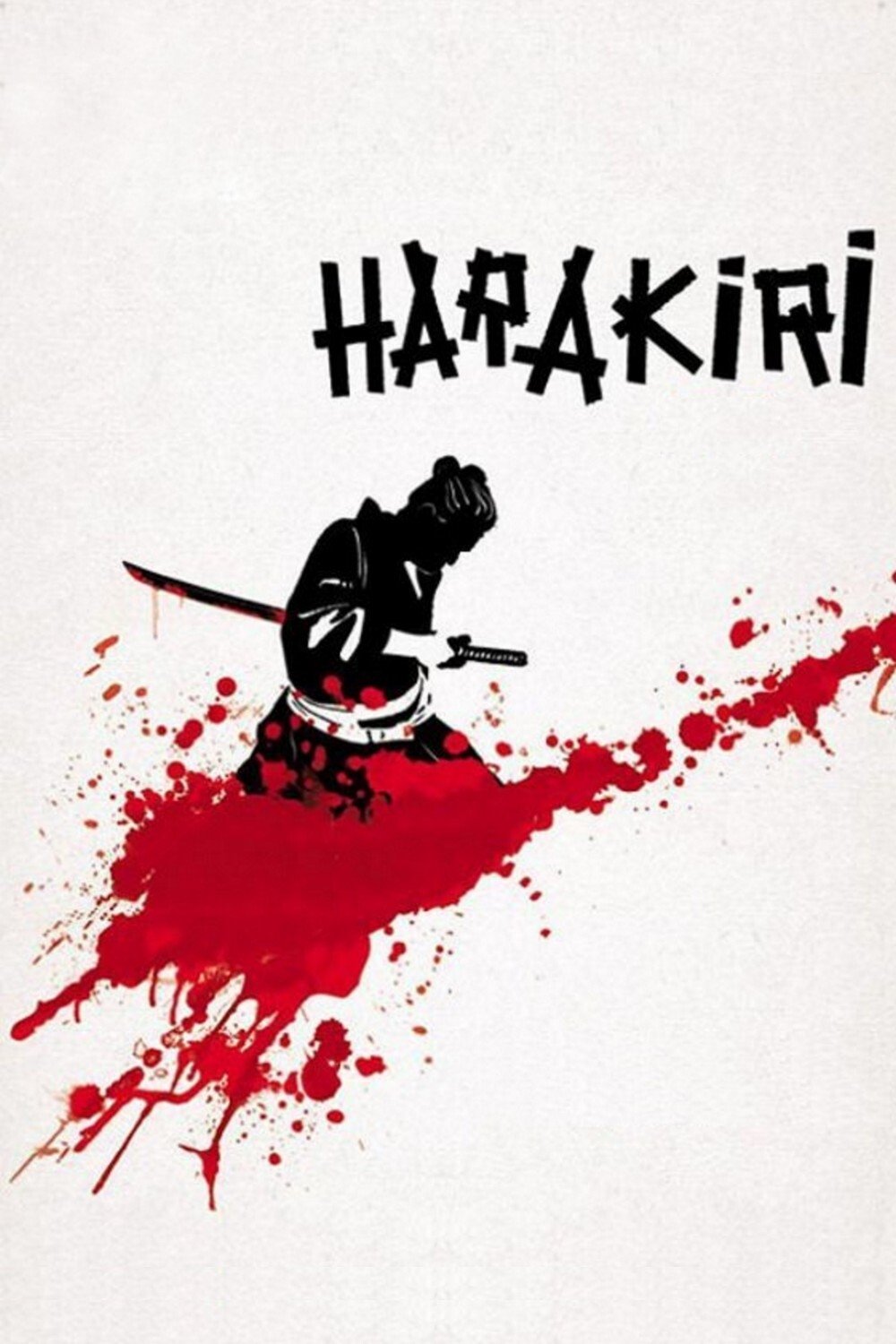
During the humid summer I first encountered Masaki Kobayashi’s Harakiri, it didn’t feel like just another period film about feudal Japan. Instead, I was immediately seized by the audacity with which the film dismantles the conventions of the samurai genre itself. What fascinated me most wasn’t the violence, though it is undeniably arresting, but the searing sense of injustice that crawled under my skin. I remember pausing midway to collect myself, unsettled by how the film’s quiet, deliberate pacing forced me to reckon with concepts of honor, hypocrisy, and desperation—so much so that I had to watch it twice in a week, unable to shake the feeling that it was speaking to a far broader suffering than the specifics of its era.
What the Film Is About
Harakiri centers on Tsugumo Hanshirō, a masterless samurai, or ronin, who arrives at the House of Ii seeking permission to commit ritual suicide in their courtyard. On the surface, this premise might seem like a mere exploration of samurai codes, but what unfolds is an aching deconstruction of power and pretense. Through Hanshirō’s journey, I am drawn into courtly rituals that mask callous brutality. Each measured conversation, every superficial gesture of respect, is a performance—emphasizing a society whose commitment to honor is more about appearance than substance.
The emotional core of the narrative is suffused with a deep sense of irony and suppressed fury. As Hanshirō’s tale is meticulously unveiled, I find myself caught between rage and sorrow. There is a mounting tension between what is said and what is truly meant, poking holes in the façade of bushido (the samurai code). From my perspective, the film acts as an indictment of any system—ancient or modern—that enshrines tradition above humanity. The central conflict is not just man versus society, but principle versus compassion, dignity versus survival. The weight of these opposing forces is what propels the film’s emotional journey.
Core Themes
The most glaring and, to my mind, courageous theme of Harakiri is its exposure of the emptiness of institutionalized honor. Kobayashi strips away the romantic veneer of the samurai myth, illuminating how codes of conduct can be weaponized by those in power. This critique was incendiary in 1962 Japan, a nation reconciling with its wartime past—when talk of duty and obedience had proven to be tragically hollow. Hanshirō’s suffering is a bitter retort to the notion that tradition is always wise. The harrowing fates of the film’s characters reveal, through their powerlessness, how rituals can become tools of oppression.
I find the film’s focus on hypocrisy chillingly relevant today. When rules and customs outlive their humane intent, they start to serve institutions, not people. This theme echoes into the present—consider any bureaucracy or hierarchy where image trumps honesty, where mercy is sacrificed for stability. Harakiri insists that such compromise is rarely benign.
On a more intimate level, the film explores grief, pride, and the desperate need for agency in a world that strips men of their worth. This personal resonance is what transforms Hanshirō’s ordeal from period drama into something hauntingly universal. The struggle to die with dignity, or perhaps more crucially, the struggle to live with integrity, forms the film’s heart—a theme I return to again and again.
Symbolism & Motifs
Kobayashi’s visual language is some of the most meticulously composed I have ever encountered. The rigid architecture of the House of Ii, with its symmetrical courtyard and oppressive interiors, becomes a physical manifestation of institutional cruelty. The courtyard—the scene of so much supposed honor—quickly morphs, under the director’s gaze, into an execution ground disguised as tradition.
Then there are the samurai swords themselves, which take on roles far beyond their expected violence. When Hanshirō discovers that his son-in-law was forced to commit suicide with a bamboo blade—a pitifully inadequate tool, offering only humiliation—I felt revulsion. The bamboo sword becomes the ultimate symbol for how the trappings of honor can be empty, even fraudulent. The act is stripped of all supposed glory and reveals the rot beneath the ritual.
Light and shadow underscore the emotional chasms between characters. Long static shots hold us captive, reminding me that the roots of injustice are not sudden or fleeting, but structural and enduring. The clockwork movement of the retainers, their faces impassive, show how individuals can become complicit in cruelty simply by refusing to question a system. Motifs of enclosure—rooms, screens, gates—are ever-present metaphors for social and psychological imprisonment.
Key Scenes
The Ritual Request: False Equanimity
Early on, Hanshirō’s stoic request to die in the courtyard is met with icy, formal hospitality. This seemingly benign exchange is, for me, a masterclass in tension: each pleasantry hides a threat, every word is double-edged. Only at the end does the full weight of this initial formality become clear. This scene beautifully lays the groundwork for all the duplicity and posturing that follows, and I always find myself queasy with anticipation from the moment this ritual commences.
The Bamboo Blade: Agony and Exposure
When the film reveals, in flashback, how Motome is forced to carry out seppuku with a bamboo sword—a moment achingly drawn out, excruciating to watch—I am compelled to confront my own assumptions about heroism and suffering. The discomfort is not just physical but existential; the men of the court persist in their charade of propriety even as actual agony unfolds before them. This scene crystallizes for me the film’s core accusation: that dogma, enforced blindly, produces not honor but horror.
The Climactic Confrontation: Vengeance and Vindication
Hanshirō’s final, explosive showdown with the House of Ii’s retainers is not your typical climactic battle. Rather, it is measured chaos—a one-man rebellion staged in silence and despair more than rage. Even as Hanshirō dispatches his would-be executioners, I never sense a conventional victory. This scene is essential because it lays bare the cost of resistance in a world that values appearances over justice. The culminating act is not triumph, but exposure: Hanshirō tears down the symbols of empty dignity, leaving the audience unable to regard ritual with innocent eyes ever again.
Common Interpretations
Critics often frame Harakiri as an outright anti-samurai film, a direct rebuke of the mythic codes lionized in Japanese cinema up to that point. They tend to emphasize the political aspects, viewing it as Kobayashi’s response to authoritarianism and postwar guilt. Many write that the director is most interested in deconstructing national ideology, using the samurai class as a pointed allegory.
I don’t disagree—but for me, the power of Harakiri goes even deeper, into painfully personal territory. Where readings often dwell on the systemic, I am struck by the moments of individual grief: Hanshirō’s quiet scenes with his family, the humility of Motome’s final wishes, even the terror in the eyes of his executioners when confronted with the consequences of their own inertia. What lingers for me is less a political treatise and more a meditation on dignity in the ruins of civilization. The film’s injustice is not just a critique, but a request for empathy—something I rarely hear emphasized enough in critical circles.
Films with Similar Themes
- Seven Samurai – Kurosawa’s epic interrogates the nature of heroism and self-sacrifice within another tightly ordered world, making it essential viewing for comparisons in the treatment of honor and social structure.
- Rashomon – Another Kurosawa milestone, exploring the subjective nature of truth and justice, resonating with Harakiri’s distrust of official narratives.
- The Ballad of Narayama – Shohei Imamura’s film also delves into how tradition is used to justify cruelty, offering a rural parallel to the feudal critique of Harakiri.
- Ikiru – While set in postwar Japan, this Kurosawa masterpiece similarly examines an individual’s struggle for meaning and authenticity within a suffocating hierarchy.
Final Thoughts on Its Enduring Relevance
If today’s viewers approach Harakiri with an open mind and a willingness to look beneath the surface, they will find a devastatingly relevant study of power, performance, and the human cost of conformity. These themes, explored through masterful direction and heart-rending performances, refuse to age, inviting modern audiences into an uncomfortable, necessary reckoning with both history and themselves. Ultimately, the true value of understanding this film lies in its capacity to sharpen our perception of the rituals and systems that shape our lives—often at enormous, unseen expense. I cannot recommend this journey highly enough.
Related Reviews
If you found value in my perspective, you might also enjoy exploring my thoughts on other cinematic landmarks such as The Human Condition and Sansho the Bailiff.
To broaden this interpretation, you may also explore how critics and audiences responded over time.
🎬 Check out today's best-selling movies on Amazon!
View Deals on Amazon