
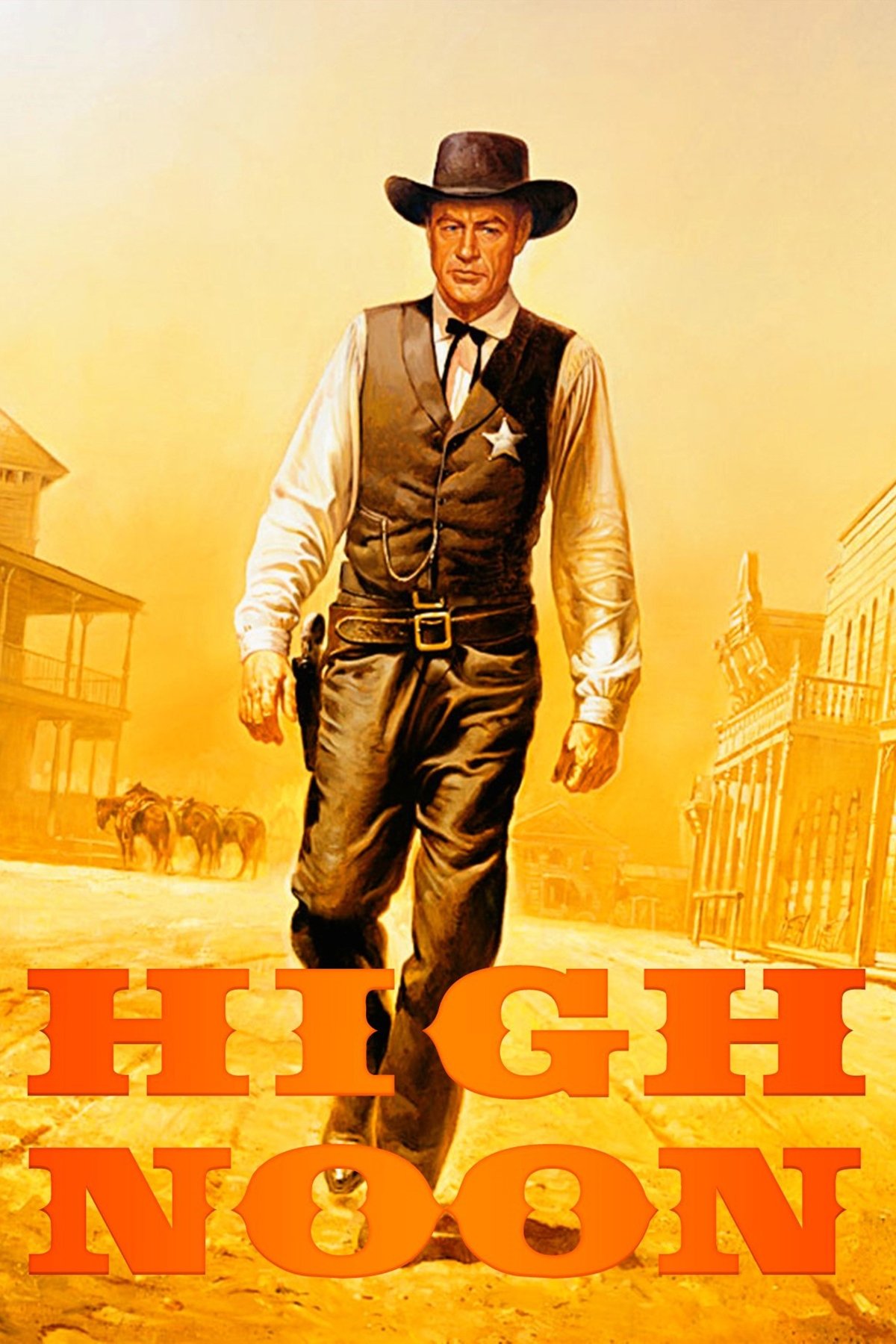
I often think about the experience of waiting—how the clock can seem to slow, the weight of decisions intensify with each tick, and isolation grows sharper as critical moments draw near. “High Noon” pulls me into that crucible of anticipation like nothing else. The first time I watched it, I was struck by how its world shrank to one man against the silence, the camera obsessed with clocks and empty streets. The way the film weaponizes time and solitude isn’t just suspenseful; it’s personally invasive, forcing me to ask myself how I’d defend my convictions when there’s nowhere left to hide.
What the Film Is About
On its stark surface, “High Noon” tells the story of Marshal Will Kane, a man trapped by his own sense of duty as a vengeful gunslinger, Frank Miller, rides back into town seeking retribution. Yet to me, the story resonates far beyond western showdowns. It is fundamentally the drama of an individual’s moral trial—a study in fear, loyalty, and abandonment under the blinding clarity of an approaching deadline. Every frame is tense with the knowledge that time isn’t just a background element here; it tightens around Kane’s neck with each striking chime, as the people he’s protected now turn from him in his moment of greatest need.
The real conflict, as I read it, isn’t between Kane and Frank Miller, but between Kane and his own community—a town suddenly exposed in its frailty and hypocrisy. The emotional journey is not about heroism in the conventional, guns-blazing sense, but about the agony of standing alone when every comforting illusion of solidarity peels away. The film urgently interrogates what it means to do the right thing when it is neither popular nor safe, and the toll this takes on conscience.
Core Themes
“High Noon” is a film obsessed with the corrosive effects of fear and the burden of individual responsibility. No one, not even his closest friends, will stand with Kane; their justifications range from self-preservation to rationalizations about letting trouble pass. I find this exploration just as urgent now as it was in 1952. Its probing of collective cowardice and the lonely price of integrity still feels modern in an era when standing up—publicly or privately—can be dangerous or simply inconvenient.
When the film first emerged, it infamously ruffled feathers during the McCarthy era. Many interpret Kane’s abandonment as an allegory for Hollywood blacklists and the broader American paranoia—a metaphor for the refusal to stand by those being unjustly persecuted. Even stripped of its historical context, the film’s themes of moral clarity and social complicity echo for anyone who wonders how communities fracture under stress and where courage is found amid pervasive hesitation.
Symbolism & Motifs
Visually, “High Noon” builds a hypnotic rhythm out of repetition and spare composition. The recurring motif of the clock—inescapable, looming—serves not only as a literal countdown but as a symbol of Kane’s tightening isolation. Each cutaway to the ticking face reminds me that justice and time are marching forward together, unsympathetic to human frailty.
Another persistent image is the empty street: sun-baked, silent, almost sterile. This stark emptiness underlines how a bustling community can evaporate when principles are tested. Even the close-ups of faces in shadow, some anxious, some evasive, paint portraits of complicity and denial. And there’s Kane himself, his black suit and white hat functioning as a walking paradox—he is the law, but he is also exposed and all-too-human.
Key Scenes
The Desolation of Main Street
The moment Kane steps out into the deserted road, hat brim low, nerves taut, is among the most iconic in cinema. Here, the setting tells the story: the absence of allies, the unforgiving daylight, the infinite horizon suffused with dread. This scene, more than any dialogue, reveals the sheer existential weight shouldered by a solitary person choosing to act in spite of abandonment.
Confrontations Behind Closed Doors
The scene in the church, where Kane pleads for help from townsfolk, is startling in its honesty. This gathering becomes a microcosm of society’s comforts and self-interests, where appeals to justice are countered by bland pragmatism and fear. For me, this is the true face of the film’s antagonism—not Miller and his outlaws, but the erosion of principle among ordinary people.
The Final Reckoning—A Town’s Shame
At the film’s climax, after the smoke clears and Kane drops his star in the dirt, I’m left with ambivalence rather than triumph. There is no celebratory music or parade; his gesture is a silent rebuke to the people he protected, a resignation that speaks volumes about disillusionment with heroism as a communal bond. This ending, withholding catharsis, invites me to ruminate on what is lost—both for Kane and for the collective conscience.
Common Interpretations
Academics and critics have long latched onto “High Noon” as a political allegory—a veiled critique of McCarthyism and Hollywood’s cowardice in the face of blacklisting. This reading is valid, and the film’s writer, Carl Foreman, was blacklisted himself; it’s impossible to separate the context from the work. However, I never see it as only a historical artifact.
Many reviews overemphasize the external political symbolism while missing the more personal, existential dread that underpins every scene. For me, “High Noon” endures not just as a snapshot of Cold War America, but because it asks—at a granular, personal level—what it means to uphold conscience in the face of ambiguity and communal failure. Its enduring relevance lies less in the specifics of 1952 than in its merciless confrontation with human weakness and the solitary nature of ethical action.
Films with Similar Themes
- Shane (1953): Another western examining the burden and cost of standing alone, particularly in the face of communal inaction and moral gray areas.
- 3:10 to Yuma (1957): Features a protagonist pressed by the ticking clock, moral ambiguity, and the loneliness of when duty becomes a personal mission.
- On the Waterfront (1954): Explores the consequences and nobility of standing up against corruption, with a protagonist grappling with betrayal by those closest to him.
- A Man for All Seasons (1966): Shifts genre, but also scrutinizes the integrity and isolation of the individual facing overwhelming societal pressure.
Conclusion
Nearly seventy years on, “High Noon” refuses to dim; its compressed storytelling and unwavering focus on conscience feel more urgent the more I revisit them. Modern viewers can approach the film not as a relic of its time, but as a stark mirror for moments when doing the right thing requires standing alone. Appreciating its themes illuminates choices we continue to face in every era. The discomfort it provokes is precisely its gift, forcing us to ask not just whether Kane is right, but whether we’d be anything other than absent in his hour.
Related Reviews
If you found value in my perspective, you might also enjoy exploring my thoughts on other cinematic landmarks such as The Ox-Bow Incident and Paths of Glory.
To broaden this interpretation, you may also explore how critics and audiences responded over time.
🎬 Check out today's best-selling movies on Amazon!
View Deals on Amazon