
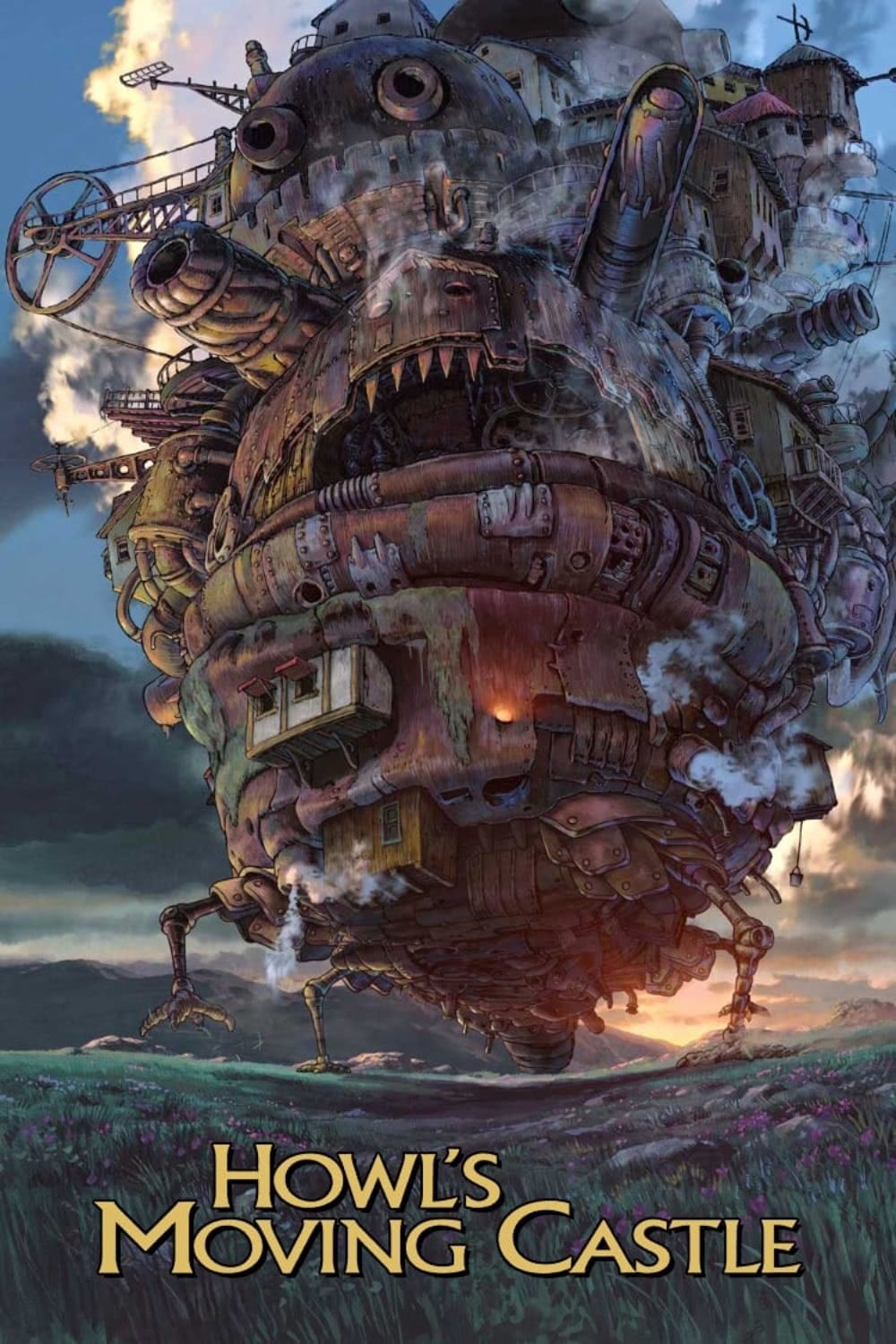
I remember the first time I watched “Howl’s Moving Castle” being utterly unprepared for how quickly I would surrender to its sense of wonder. There was something ineffably enchanting about the way the castle lumbered across the countryside—awkward, alive, mysterious. As a lifelong admirer of magical realism, I found Miyazaki’s touch uniquely stirring, and the film planted seeds of curiosity about transformation and the mercurial nature of freedom. Whenever I revisit this film, I notice how my emotional reading deepens. What once seemed a dreamlike fairy tale now feels like a commentary on the courage to change, especially when life’s burdens weigh heaviest.
What the Film Is About
“Howl’s Moving Castle” traverses far more than an enchanted landscape; its true journey, to me, is internal—a passage through self-doubt, disguise, and self-acceptance. At its heart lies the transformation of Sophie, a young woman cursed into old age by a witch’s spite. Her odyssey isn’t about breaking a spell in the traditional sense; rather, it’s about awakening the dormant potential for love and strength inside herself. The castle, both fortress and sanctuary, becomes a metaphoric vehicle for Sophie’s introspection and growth.
The central conflict pulses between autonomy and entanglement. Howl, a wizard notorious for vanity and avoidance, is drawn into a devastating war he desperately wishes to escape. As Sophie’s world collides with Howl’s, “curses” become metaphors—his for a fractured spirit, hers for internalized self-doubt. Miyazaki orchestrates this collision as a meditation on the capacity to reshape one’s fate. In viewing their relationship, I see a poignant commentary: we both shield and reveal ourselves in the process of loving another—sometimes at great cost, always with the risk of being changed in return.
Underlying the spectacle is a deep skepticism of conflict. The war raging throughout the film consumes faceless victims, stains landscapes, and threatens to obliterate the possibility of connection. I read Howl’s evasiveness not as cowardice but as principled resistance. What if, the film asks, the greatest magic lies in refusing to give in to hatred or despair—even when the world demands it?
Core Themes
One theme I always find unavoidable is the tension between external appearance and internal truth. Both Howl and Sophie are transformed against their will; their outward forms rarely align with their authentic selves. For Sophie, aging becomes an unexpected liberation—a stripping away of pretty-girl expectations that allows her wit and willpower to flourish. For Howl, physical beauty is both shield and shackle, mirroring his fragile ego and his estrangement from reality. This obsession with surfaces feels as relevant now as it did in 2004, in our era of filtered images and curated identities. Miyazaki suggests that to reclaim agency, we must embrace—fearlessly—who we are beneath the masks.
Another central strand is resistance to violence and the value of nonconformity. In Myazaki’s vision, the castle’s erratic path through dangerous terrain is not directionless; it’s a courageous refusal to participate in the machinery of war, a declaration of independence. I see it as a fantastical meditation on pacifism—an outright critique of the cultural forces that demand complicity and glorify aggression. At the time of release, the world was roiled by conflict; today, the message only feels more urgent, as collective anxieties over power and violence remain persistent.
But perhaps most powerfully, I’m drawn to the theme of transformation as both curse and blessing. The narrative is woven through with metamorphosis—not just magical, but emotional and existential. We see love and friendship impart real change, shattering curses that are less magical than psychological. “Howl’s Moving Castle” compels its audience to reconsider conventional definitions of strength, suggesting that vulnerability and care are radical choices, especially in uncertain times.
Symbolism & Motifs
For me, the film’s lush iconography is inseparable from its emotional impact. The castle itself is the boldest symbol: a creaking patchwork of scrap, irresistibly alive, and constantly in flux. It suggests the idea that home is less a fixed place than an ever-evolving entity, shaped by those who shelter within it. Watching the castle’s doors swing open to reveal different realities captures the multiplicity of identity—how one may be someone different, depending on who’s knocking at the threshold.
Another recurring visual motif is flight. Howl’s transformations—morphing into birdlike forms and soaring above a ravaged countryside—symbolize both escapism and the haunting allure of freedom. Yet, flight is double-edged; it can also indicate an inability to settle, to commit, or face responsibility. When Howl flies, I feel both the exhilaration and the ache of detachment, underscoring the film’s intricate stance on what it really means to be free.
Fire and light play crucial roles. Calcifer, the fire demon powering the castle, is a literal and figurative heart—capricious, indispensable, sustaining everything yet chained by its own bargains. The act of tending Calcifer, feeding him or risking his fury, encapsulates the delicate maintenance of relationships and the hidden sacrifices that keep stories (and families) moving forward. The shifting weather—from sudden squalls to luminous sunrises—mirrors the mercurial nature of transformation, both for the world and the individual souls within it.
Key Scenes
The First Walk Through the Door
The enchanted portal in the castle, coded by color, epitomizes the film’s fascination with choice and possibility. When Sophie first turns the dial and steps into new worlds, I always feel a visceral thrill. This scene articulates the film’s insistence that our destinies are mutable; one turn, one decision, can uncover entirely unfamiliar landscapes. The doors are more than entrances—they’re invitations to leave behind a circumscribed life and author one’s own adventure, regardless of age or circumstance.
Howl’s Transformative Battle with the Warplanes
Few sequences are as wrenching as Howl’s aerial skirmish above the burning cities. The visual splendor—feathers shedding like tears, the wizard caught between beauty and monstrosity—distills the tension between personal conviction and public pressure. Here, Howl’s refusal to fight for either side, despite his power, becomes a potent gesture of defiance. What resonated with me is how he deteriorates with each sortie, hinting that refusing to conform is both costly and courageous. This scene continually redefines my understanding of what it means to be a “hero”—not strength in violence, but in standing against it.
Sophie’s Confession and the Lifting of the Curse
The climactic scene of Sophie declaring her love for Howl is an emotional touchstone. In this moment, the curse shatters not by grand spellcraft, but by authentic vulnerability. The film delicately refutes the trope of a male savior; Sophie’s honesty and self-acceptance become the real keys to liberation. When Sophie confronts her own worthiness and extends that belief to Howl, the entire world of the film seems to breathe out—a powerful reminder that compassion changes not just others, but ourselves, in real and irreversible ways.
Common Interpretations
Many critics interpret “Howl’s Moving Castle” as an anti-war manifesto, a fantasy fable railing against the logic of destruction. While I agree that Miyazaki’s politics permeate the film—the faceless war, the mechanized violence, the explicit weariness with authority—I find the anti-war reading somewhat reductive. Where critics see simple pacifism, I see something more intimate: a meditation on the price of withdrawal and the difficulty of holding onto personal values in morally ambiguous times.
Another common interpretation centers on the film as a coming-of-age narrative for Sophie. Critics often describe her journey as one of self-empowerment, a feminist assertion of agency. There’s truth in this, but what moves me most is not empowerment in the traditional sense; it’s the gentle acknowledgment that vulnerability is indispensable to love. The true magic of the film, in my view, is not in becoming powerful but in letting go of the need for certainty, beauty, or even youth.
Finally, I find the tendency to treat Howl as an archetype of flawed masculinity—childish, self-absorbed, ultimately redeemed—misleading. I see his arc as a collaboration, a mutual rescue with Sophie, emphasizing that nobody saves themselves alone. The film’s ambiguities, its unwillingness to neatly resolve either character, are precisely where I find its enduring power.
Films with Similar Themes
- Spirited Away (2001): Both films use magical settings and transformation as metaphors for self-discovery, exploring how adversity can lead to growth and compassion.
- The Shape of Water (2017): Del Toro’s film, like Miyazaki’s, champions empathy and difference, focusing on love that flourishes in the margins and in defiance of societal norms.
- Pan’s Labyrinth (2006): Both works blend fairy tales with the horrors of war, using fantasy as a lens to question authority, innocence, and resistance.
- The Tale of the Princess Kaguya (2013): Takahata’s adaptation resonates through its themes of impermanence, personal agency versus social constraint, and the bittersweet ache of transformation.
Conclusion
“Howl’s Moving Castle” rewards repeated viewings, especially for those willing to step outside plot expectations and engage with its emotional and visual textures. For modern audiences, I believe the rewards are profound: the film’s refusal to offer easy answers is a powerful antidote to the certainty our current moment so often demands. By bringing its ambiguities close, we glimpse how love, courage, and self-acceptance remain acts of conscious rebellion—and sources of enduring hope.
Related Reviews
If you found value in my perspective, you might also enjoy exploring my thoughts on other cinematic landmarks such as Spirited Away and Pan’s Labyrinth.
To broaden this interpretation, you may also explore how critics and audiences responded over time.
🎬 Check out today's best-selling movies on Amazon!
View Deals on Amazon