
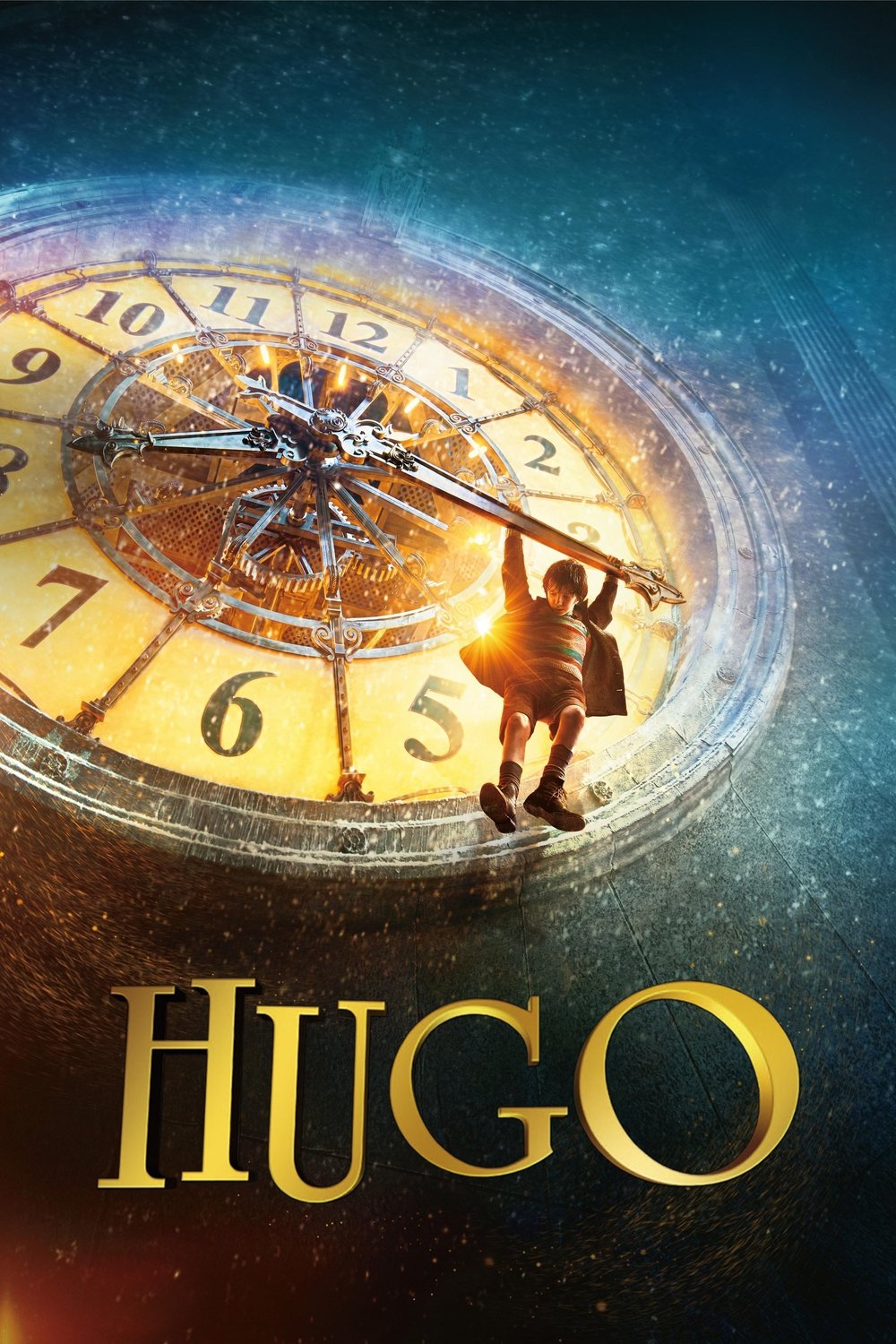
During one rain-dipped evening in Paris, as trains rattled overhead and clocks ticked their hidden lives away, I found myself completely transported by the gentle machinery of “Hugo.” This isn’t just a movie I revisit for nostalgia; it’s one that captures my ongoing fascination with film as both magic trick and memory. Watching Scorsese, a director so closely associated with gritty American tales, leap so gleefully into a child’s view of 1930s France—one awash in lost wonders and clockwork—is, for me, a deeply personal act of rediscovery. Each return to “Hugo” offers something rare: I’m reminded not merely why I love movies, but why stories matter in the first place, and how a film can become an automaton—containing all the yearning and possibility we put into it.
What the Film Is About
At its beating heart, “Hugo” is an orphan’s search for connection—both to his vanished father and to the fractured world swirling past him. Hugo Cabret is a boy trespassing in a labyrinth of time and broken dreams, desperately clinging to rituals (winding clocks, fixing broken things) to keep chaos at bay. The clear-eyed curiosity with which he observes Paris Central Station is both survival and an act of love toward a departed parent. It’s this emotional journey—the movement from isolation to belonging—that lingers on the mind well after the film’s mechanical marvels have played their part.
What resonates most with me is how Scorsese uses Hugo’s quest to mend the automaton as a metaphor for repairing our own battered spirits—and, by extension, the battered legacy of cinema itself. The story asks what remains when all the gears slip and the world no longer makes sense; the answer, it insists, is that healing comes through acts of preservation, creation, and, above all, compassion. The unlikely bond Hugo forms with the bitter toy shop owner, Georges Méliès, becomes more important than completing any mechanical figure. It’s about healing the artist as much as restoring the art, and that’s the film’s truest magic.
Core Themes
The themes coursing through “Hugo” are layered like the intricate workings of the station clocks. The longing for connection amidst loneliness is everywhere, reflected not only in Hugo himself but in every side character—Isabelle, the Station Inspector, even the automaton. The search for purpose after suffering great loss—be it parental, creative, or existential—forms the emotional bedrock of the film.
What truly elevates “Hugo” to lasting relevance, however, is its celebration of memory and art as the means to knit together a fractured collective identity. In 2011, at a time when physical film was rapidly giving way to digital and many cinephiles feared an irreplaceable era was ending, the film’s call to preserve our artistic heritage and honor the past so that the future has roots couldn’t have been timelier. Even now, “Hugo” feels prescient as society grapples with technological change and the ever-shifting value we place upon our own histories—personal and communal. The film offers, quite tenderly, an antidote to cynicism: belief in the redemptive power of stories, and a plea to remember those who first dared to tell them.
Symbolism & Motifs
“Hugo” is constructed with the cunning of an automaton, each moving part loaded with resonance. The most obvious symbol—the clocks—suggest time’s relentless passage but also humanity’s attempt to order chaos. For Hugo, maintenance is a form of ritual, an act of faith against the disorder of orphanhood and city life. The frequent framing of characters within the circular faces of clocks, spirals of staircases, and whirring gears reinforce this existential motif: we move ceaselessly, but with purpose, if only we find our reason to wind the clock again.
The automaton stands as a cipher for lost knowledge and undiscovered wonder. Its secrets are unlocked not by technology alone, but by love and memory; it is a stand-in for the silent movies Hugo’s father adored, and later, for Méliès’s own battered creativity. For me, every gear and key in “Hugo” works to emphasize that meaning isn’t found, but made—through acts of restoration and caring. And then there are eyes—close-ups of Hugo’s, Isabelle’s, the automaton’s—inviting us to look, to find magic and heartbreak both in what we see, and in what we sometimes overlook.
Key Scenes
Revelation in the Attic: A Meeting with Méliès
There is a hushed moment when Hugo and Isabelle climb into Georges Méliès’s hidden attic and discover a trove of film reels and props, the relics of a fallen magician. For me, this scene is where the film’s emotional machinery truly engages: it’s a resurrection, both of Méliès’s forgotten past and of the boy’s belief that magic—cinematic and personal—can endure devastation. The dust motes in the projector’s light feel sacred; film is restored as reverie and as religion.
Chase Through the Gears: Hugo’s Escape
The central chase sequence—a harried Hugo pursued through the clockworks—not only delivers pulse-quickening suspense, but crystallizes the film’s mechanical metaphors. At this fevered moment, the labyrinthine gears, cogs, and bridges become an externalization of Hugo’s own interior struggle: order versus chaos, hope versus anxiety. The sequence is pure Scorsese: a lesson in restlessness, fear, and the urgent need to survive. It also links childhood peril with the larger project of piecing together a broken world.
The Automaton Draws: The Revelation of Purpose
When the automaton finally sketches the image of the rocket striking the Man in the Moon, revealing direct ties to Méliès’s own vanished artistry, I’m always hit by the sweep of cinema history knocking against personal narrative. The film achieves catharsis by merging Hugo’s individual yearning with a broader retrieval of lost cinematic heritage. In that moment, “Hugo” insists that our most private dreams are intertwined with collective cultural memory—the automaton’s sketch becomes a signature from the past upon the present.
Common Interpretations
Many critics have embraced “Hugo” as Scorsese’s personal love letter to the birth of cinema, a technically dazzling paean to film preservation and the resilience of artists like Méliès. They rightly note how the movie celebrates visionaries whose work risked being forgotten, and heralded the director’s playful experiments with 3D, using the format not as gimmick, but as a form of immersive magic.
While I value these readings, I find them somewhat incomplete. My own response places less emphasis on the film-historian’s nostalgia, and more on the way “Hugo” treats orphanhood and broken families as metaphors for a world struggling to rebuild after loss—be it cultural or personal. The reconciliation scenes, especially between Hugo and Méliès, strike me hardest not as cinephilia, but as portraits of wounded people learning to need each other again. For me, the heart of “Hugo” is not simply about preserving movies, but about preserving hope itself: how we rescue each other—across generations, between strangers—by bearing witness to one another’s stories.
Films with Similar Themes
- The Artist (2011): Shares “Hugo’s” reverence for silent cinema and its anxiety about being forgotten when new technologies arrive. Both are love letters to the magical uncertainty of early film.
- Midnight in Paris (2011): Also set in a dreamy vision of Paris—this one time-traveling—where the search for meaning, legacy, and lost golden ages echoes the longing at the heart of “Hugo.”
- Pan’s Labyrinth (2006): Guillermo del Toro’s film, like “Hugo,” entwines a child’s trauma and creative escape, using fantasy and old-world myth to survive suffering and renew hope after loss.
- Cinema Paradiso (1988): Anchored in nostalgia for vanished movie palaces, this Italian tale wrestles with the transmission of memory, art, and love across generations—very much in “Hugo’s” thematic orbit.
Conclusion
Modern viewers approaching “Hugo” today can expect more than a sumptuously crafted adventure; they will find a film wrestling with the legacy of storytelling itself, inviting us to become caretakers for the dreams of those who came before. By embracing its themes—loss, recovery, the reanimation of wonder—we’re reminded that cinema, like people, needs tending to, lest we lose both the technology and the tenderness that built it. Every viewing offers me fresh perspective: as an elegy, as a salve, as a call to remember why we care for both stories and each other.
Related Reviews
If you found value in my perspective, you might also enjoy exploring my thoughts on other cinematic landmarks such as “Cinema Paradiso” and “Pan’s Labyrinth”.
To broaden this interpretation, you may also explore how critics and audiences responded over time.
🎬 Check out today's best-selling movies on Amazon!
View Deals on Amazon