
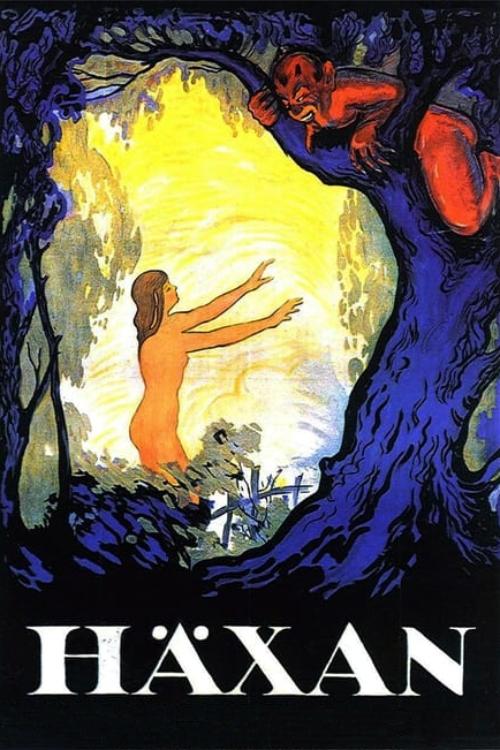
My First Encounter with an Unruly Vision
I still remember the first time I stumbled upon Häxan, not through a recommendation or a film studies syllabus, but almost as if the film itself had conjured me. I felt immediately that I wasn’t supposed to just watch—it wanted something from me. This is not a horror film that seeks to frighten in the traditional sense, nor a documentary satisfied to observe from a distance. It’s a hallucinatory tapestry, a fevered meditation on the ways fear and ignorance have shaped the human story. The film’s eerie blend of scholarship and spectacle didn’t just unsettle me; it made me question why we need to label, persecute, and demonize difference.
The Witches We Create
When I reflect on what makes Häxan so unnerving, it’s not the grotesque faces or the diabolical rituals that linger—it’s the sense that the real terror is not witchcraft at all, but the relentless human urge to scapegoat. Christensen’s images—the inquisitors’ wild-eyed fanaticism, women writhing under torture, peasants muttering curses—aren’t just literal references to witch hunts. They’re mirrors held up to my own anxieties about groupthink and moral panic. The film invites me to see that witches are created through collective imagination, a dark art perpetuated by our longing for simple explanations to complex suffering.
Between Scholarship and Nightmare
What left the greatest impression on me was Christensen’s refusal to keep fact and fantasy apart. The opening lecture, with its gravity and scholarly diagrams, sets me up for a rational journey. Then the film swerves: I am thrust into nightmarish vignettes where superstition and reality merge, as if rationality itself dissolves under the weight of primal fear. That jarring tonal shift is more than a stylistic quirk—it’s the core of the film’s meaning. Häxan is about the instability of knowledge itself, the way even our most scientific inquiries are haunted by the irrational, and how easily the tools of education become weapons of oppression.
Monstrous Bodies, Human Desires
I can’t shake the way Christensen lingers on bodies—distorted, convulsing, marked as ‘other’ by disease or desire. The film’s witches are not supernatural villains but suffering women: old, poor, sometimes mentally ill, usually sexually transgressive in the eyes of their society. Häxan exposes how the ‘monstrous’ is a category constructed to police bodies deemed unruly or inconvenient. When I watch the infamous scenes of possession or the grotesque sabbath, I see a meditation on the policing of women’s sexuality and autonomy. The ‘devil’ is less an external being than a projection of society’s fear of its own impulses.
Christianity’s Shadow: Faith as Weapon
The film’s treatment of religious authority is, to me, both revolutionary and deeply disturbing. The clergy and inquisitors in Häxan do not protect their flock; instead, they serve as agents of institutional cruelty. Christensen strips away the comforting veneer of faith and reveals its potential for violence, suggesting that the tools of piety are often repurposed for control. What shocks me is not just the violence, but the banality of it—prayers and torture, confession and accusation, all blend together until compassion is replaced by suspicion. I find myself asking: how many of our own beliefs and rituals, meant to comfort, actually serve to isolate and destroy?
The Alchemy of Guilt
I’ve always been fascinated by how Häxan weaves personal guilt and communal accusation into a toxic stew. The film lingers on scenes of confession, most wrenchingly during the torture of Maria the Weaver. Here, the line between reality and hallucination, truth and fabrication, blurs not just for the characters but for the viewer. Are these women admitting to real crimes, or are they trying to survive an impossible ordeal? What I see is an anatomy of scapegoating—how guilt, under pressure, becomes a self-fulfilling prophecy. This is the alchemy of the witch trial: confession extracted by violence, guilt conjured by terror. I can’t help but relate this mechanism to our own cycles of blame and absolution, in ways both grand and personal.
The Modern Witch Hunt: Christensen’s Final Provocation
The film’s final “modern” sequence, set in the early twentieth century, is Christensen’s sharpest dagger. After all the medieval torments and demonic hallucinations, I suddenly find myself in a quiet, suffocating room where a woman is pathologized, not as a witch, but as ‘hysterical.’ Christensen draws a chilling parallel between medieval superstition and contemporary medicine, suggesting that our compulsion to catalog, diagnose, and punish has only shifted in form, not substance. The faces change, the rituals update, but the underlying drive remains: to identify disorder, to marginalize the inconvenient, to enforce conformity. When I recognize this, the film stops being a relic and becomes a living critique of my own era’s obsessions.
A Dance with the Devil: Revelry and Transgression
One of the film’s most unforgettable elements is its gleeful embrace of the grotesque. The witches’ sabbath, the demonic transformations, the demure nuns suddenly overcome by wild revelry—these sequences feel both transgressive and liberating. For all its horror, there’s a sense that Häxan takes pleasure in the very rituals it outwardly condemns. When I watch the witches dance and cavort with the devil, I see not just blasphemy, but catharsis—a reclamation of joy and sexuality denied by patriarchal authority. The forbidden becomes a space of agency, even if only for a fleeting cinematic moment. I sense Christensen wrestling with his own fascination, unable to fully condemn what he finds so compelling.
Haunted by the Image: My Lasting Impressions
Decades after its release, Häxan refuses to be neatly categorized. It unnerves me not because of supernatural terror, but because it exposes how fragile my own boundaries are between the rational and the irrational, the self and society, the sacred and the profane. The film’s real question is not “What is witchcraft?” but “What makes us need witches at all?” This is an interrogation that feels as urgent to me now as it must have been in 1922. The desire to create outsiders, to explain away suffering with easy villains, is a trap I see recurring everywhere. In its feverish style, its shifting rhythms, and its relentless probing, Häxan compels me to confront how much of reality is shaped by fear, fantasy, and the stories we choose to believe.
Two Kindred Spirits in the Cinema of Hysteria
For anyone who finds themselves similarly haunted by Häxan, I can suggest two classic films that echo its unnerving landscapes: The Passion of Joan of Arc (1928) and Vampyr (1932). Both probe the boundaries between faith, fanaticism, and the monstrous unspoken, and each conjures its own world of dread, beauty, and ambiguity.
If you’re curious about how this film was originally perceived or how it compares to similar works of its era, these resources may be helpful.
🎬 Check out today's best-selling movies on Amazon!
View Deals on Amazon