
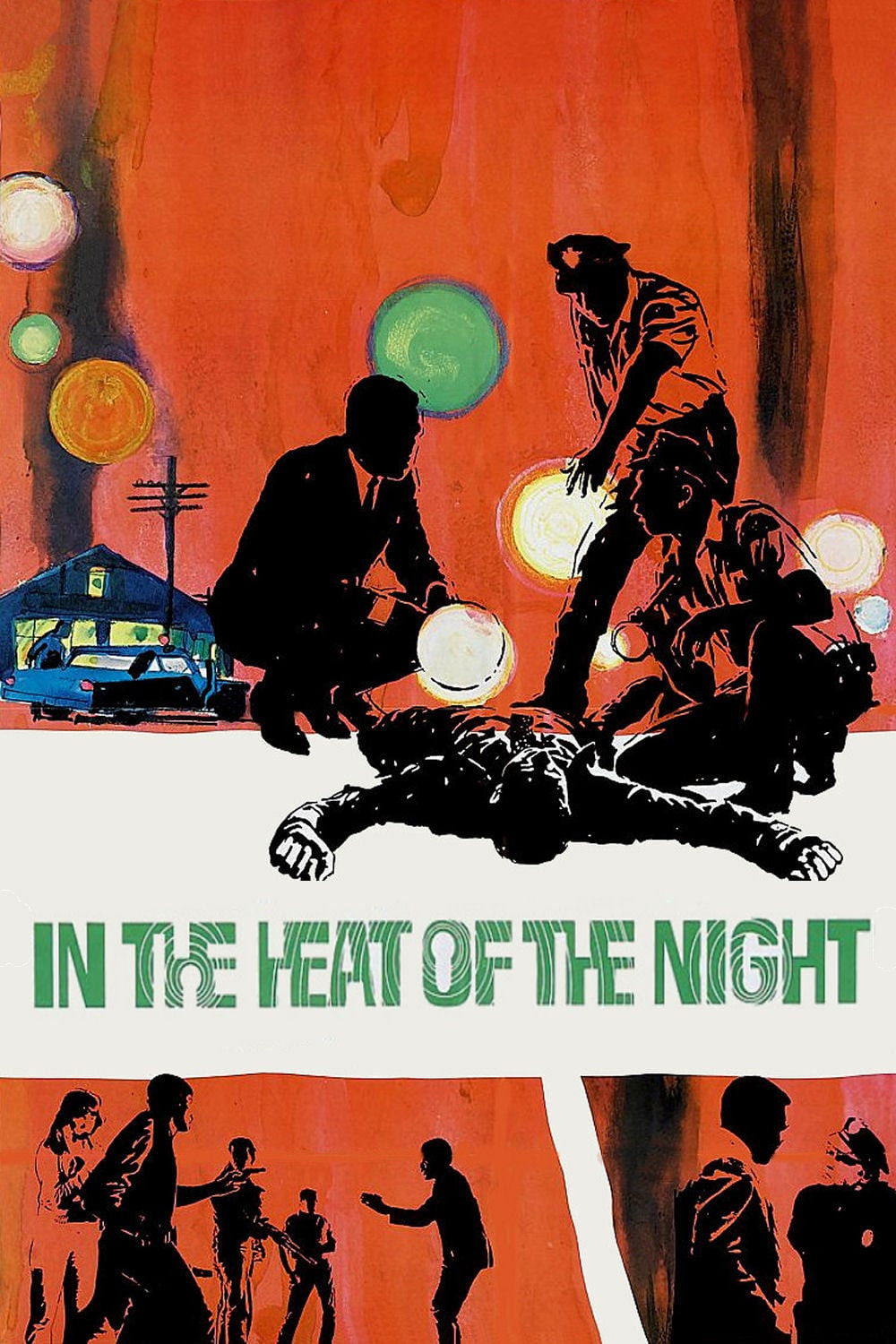
Standing in Sparta, Mississippi: Confrontation as Catharsis
There’s a moment in “In the Heat of the Night” that has never left me—the swelter of a Southern town, the oppressive hiss of cicadas outside, and the silent, simmering defiance in Virgil Tibbs’ eyes as he’s asked, “What do they call you up there?” I remember my skin tingling, as if the film itself was pressing me into the frame, making me an unwilling witness to a collision of eras, values, and identities. The movie never lets me feel like a distant observer; it drags me into its moral quagmire, reminding me that the confrontation at its center is not just between men, but between Americas—one desperately grasping at its old ghosts, the other demanding to live in the present. “In the Heat of the Night” isn’t content with being a murder mystery; it’s a film about the necessity and violence of change, and the deeply personal price of dignity.
Sidney Poitier’s Virgil Tibbs: A New Kind of American Hero
All these decades later, I still find myself startled by the sheer gravity Poitier brings to every scene. His Virgil Tibbs is not a cipher or a symbol, but a man whose intelligence and self-assurance threaten to unravel a whole way of life in Sparta. The choice to make Virgil not just competent but brilliant—far outstripping the white officers—subverts every expectation the townspeople, and perhaps the era’s moviegoers, bring to the table. Even Tibbs’ name, revealed in that taut early exchange, is an assertion of personhood in a place intent on denying it.
I never see Virgil as just a victim of circumstance. He’s a man who knows exactly what’s at stake each time he refuses to lower his gaze. This is not passive resistance; this is survival as an act of protest. The film’s most famous moment—when Tibbs returns a white man’s slap—lands not just because of its audacity, but because of the shockwave it sends through the world of the film and through every viewer watching at the time. For a brief, electric second, the rules of 1960s America flicker and threaten to collapse.
The Heat Beneath the Mystery
Ostensibly, the film is a procedural—a murder, a suspect, a slow unraveling of clues. Yet it’s always the heat that matters more than the crime. The sweltering temperature is more than meteorological; it’s the fever dream of a nation sweating under the weight of its own hypocrisies and ruptures. Sidney Poitier’s suit is always immaculate, but I’m hyper-aware of the sweat collecting at his brow, of the way every character seems to be physically oppressed by the air around them. The heat is the emotional temperature of the town, set to a boil the moment Virgil arrives.
I often think the real investigation happening here isn’t about a murdered industrialist, but about the murder of comfort. The townsfolk—especially Rod Steiger’s Gillespie—are being forced to confront that which they have always been able to ignore: their own complicity, their own fragility, and the myth of their innocence. The procedural is a skeleton; the real narrative is in the flesh and blood of these revelations.
Rod Steiger’s Gillespie: Prejudice, Power, and Possible Redemption
If Tibbs is the catalyst, Gillespie is the crucible. Watching Steiger’s performance, I’m reminded of how prejudice functions less as cartoon villainy and more as an armor against vulnerability. Gillespie is not evil; he is afraid—afraid of losing his grip on a town, a life, an identity structured around being on the top of a crumbling hierarchy.
The arc of their uneasy alliance is, to me, the film’s most delicate anatomy. Gillespie’s resentment is not erased by exposure to Tibbs’ brilliance; instead, he’s compelled, with great reluctance, to acknowledge reality. There’s a moment late in the film—a small, wordless gesture of respect—that feels, for all its subtlety, like an earthquake. The possibility of change, the possibility that someone like Gillespie might one day see someone like Tibbs as an equal, is radical enough to feel dangerous.
Mirrors, Windows, and the Architecture of Division
Norman Jewison’s direction is meticulous in how it uses space to reinforce subtext. I find myself drawn to the windows and doorways that constantly frame the characters, splitting them into separate worlds even as the camera keeps them in a single shot. The physical separation between Tibbs and the white citizens of Sparta is not just spatial, but psychic—a visible architecture of otherness that the film refuses to let us ignore.
Some of the film’s most arresting moments happen in silence, where glances are exchanged through glass or from the other side of a door. Jewison makes us complicit, inviting us to peer through windows at scenes we are not meant to witness, and in doing so, implicating us in the system the film critiques. The set design itself, from the police station’s oppressive interiors to the sweltering fields, underlines every theme of exclusion and exposure. I come away feeling that the world of “In the Heat of the Night” is built on invisible lines—and that every character is asked, at some point, how far they are willing to cross them.
The Sound of Isolation: Quincy Jones and the Score of Alienation
Music is rarely discussed as central to “In the Heat of the Night,” but Quincy Jones’ jazz-infused score is, for me, the film’s emotional undertow. The music is playful, tense, mournful by turns, always reminding me that Tibbs is both inside and outside every room he enters. The bluesy motifs signal solitude and yearning—and sometimes, a flicker of triumph—without ever letting me forget the precariousness of Tibbs’ position.
There’s a recurring motif—a kind of languid, looping melody—that seems to underscore every instance of confrontation or misunderstanding. The score becomes a voice for all that goes unsaid, all the longing for connection and understanding that is otherwise stifled by violence or pride. It is as if the music itself is another character: a witness, exhausted but unbowed, to the endless friction between dignity and denial.
Unmasking the Southern Gothic: Decay and Denial
I’ve always seen “In the Heat of the Night” as a gothic film, though not in the traditional sense. The South of the movie is haunted not by ghosts but by denial—the crumbling mansions, the dusty fields, the sense that something vital has rotted just beneath the surface. The murder mystery is almost incidental; what matters are the ways the town’s power structures crack open when exposed to the daylight of scrutiny.
The film’s visual language, thick with shadows and cluttered spaces, brings to life a world where every surface conceals secrets. When Tibbs investigates, it’s not just the weapon or motive he uncovers; it’s the rot at the heart of a community unwilling to see itself as it is. In this sense, the film’s central question isn’t “Who killed Colbert?” but “Who are we, really, when the lights are turned on?”
What This Film Is Really Asking Me
Every time I return to “In the Heat of the Night,” I’m haunted by a sense that the movie is pointing an unblinking finger at me, demanding more than passive engagement. It’s not simply a condemnation of Southern racism or a celebration of one man’s courage, but a challenge to every comfortable fiction American society tells itself about progress and civility. The film’s deliberate refusal to offer easy resolutions—to wrap up every storyline, to reconcile every character—feels essential. I’m left, as a viewer, in the same state as the town at the end: uncertain, wary, inching toward change but unable to declare any final victory.
Most crucially, “In the Heat of the Night” is about dignity in the face of humiliation, and the cost of demanding recognition in a world determined to deny it. The act of being seen—truly seen—becomes the film’s ultimate prize, and its ultimate risk. I watch, again and again, as the characters circle each other, testing the limits of what can be said and what must remain unspoken. The film’s message is not a triumphant anthem but a sustained, urgent question: What would you risk to claim your place in a world that tells you you don’t belong?
For Viewers Hungry for More: Two Films in the Same Conversation
If the intensity and moral complexity of “In the Heat of the Night” left a mark on you, two other classic films I always return to are “To Kill a Mockingbird” and “Nothing but a Man”. Both probe the fault lines of race, justice, and integrity in America, and both ask what it means to stand your ground when the world is determined to push you back.
If you’re curious about how this film was originally perceived or how it compares to similar works of its era, these resources may be helpful.
🎬 Check out today's best-selling movies on Amazon!
View Deals on Amazon