
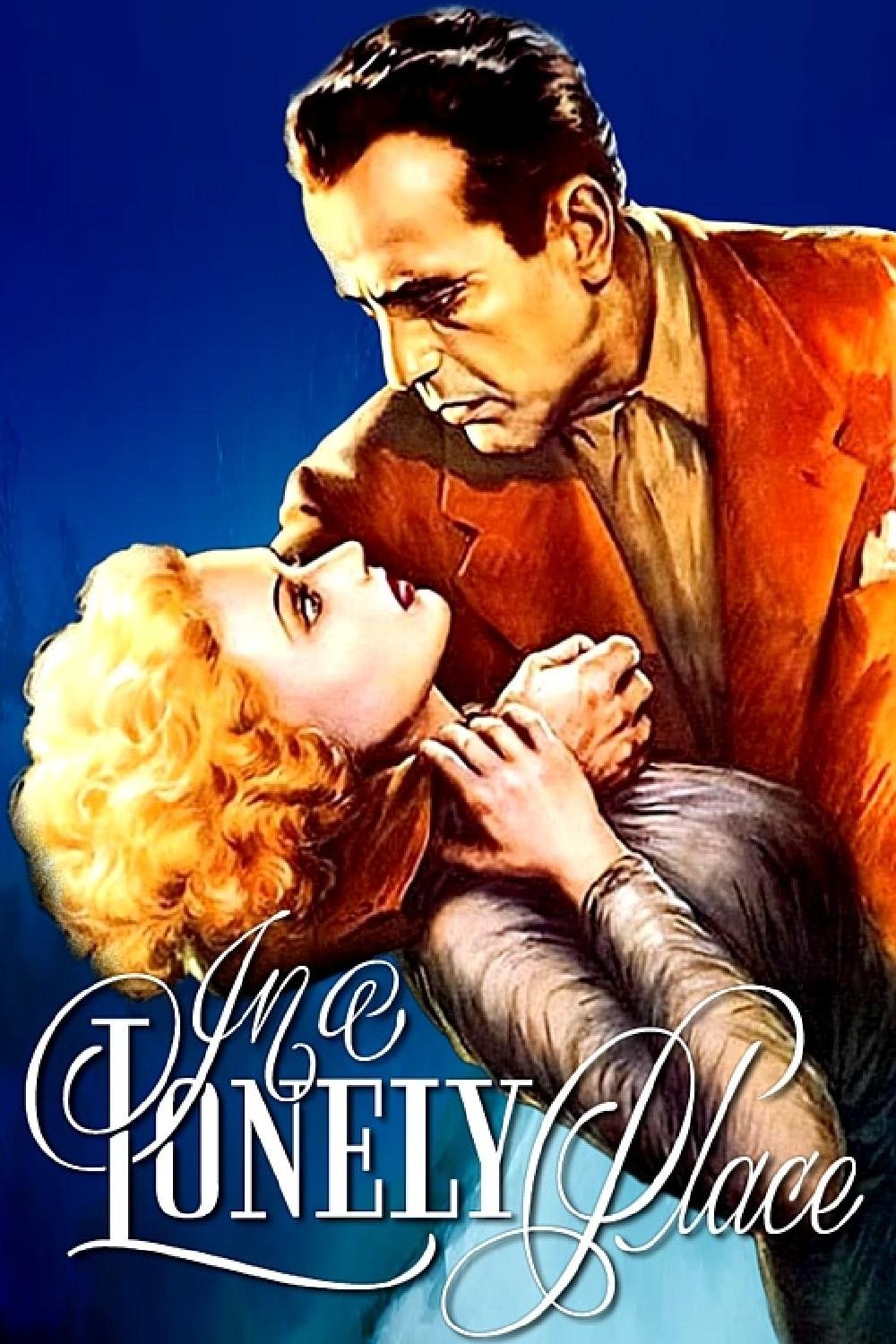
Sometimes, a film attaches itself to the bones of memory—not because it is comfortable to revisit, but because it splinters, presses, haunts. “In a Lonely Place” struck me most on a restless, rain-clattering night when its bruised world of suspicion seemed just a keystroke away from my own. What fascinated me was not the murder at its core, but the feverish doubt it spreads, the way it exposes the unseen damage between two people daring to trust. I have found myself tangled often in worlds that leave us unsure whether we are more afraid of being accused or abandoned—and in no other classic has that terror felt so immediate.
What the Film Is About
While “In a Lonely Place” might masquerade as a murder mystery on its surface, I always feel its true pulse is a wilder, lonelier thing. The film follows Dixon Steele, a Hollywood screenwriter with a reputation for volatility who becomes the prime suspect in a grisly killing. However, what unfolds is far less about the crime than about the shifting ground between trust and suspicion. Steele’s neighbor and eventual lover, Laurel Gray, offers him an alibi—one that quickly curdles as her own faith in his innocence gets corroded by his unpredictable rage.
What captivates me is the nearly surgical observation of how doubt seeps into love and poisons every glance, every touch. There’s a deep emotional anatomy on display: we witness two people desperate to save each other, but incapable of outrunning the shadow of Steele’s possible guilt—or the possibility that, even if he isn’t a murderer, he may yet devastate anyone who gets too close. For me, the central conflict is not “whodunit,” but “who are we capable of believing, and at what cost to ourselves?” With each passing scene, trust turns frail, and the romance becomes a slow-motion car crash.
Core Themes
More than noir tropes, the film’s greatest theme is the corrosive effect of doubt—in others, in ourselves, and in the possibility of a love that redeems. Dixon Steele is a man both constructed and destroyed by his own legend. In 1950, when masculinity was both worshipped and interrogated, director Nicholas Ray turned the lens unsparingly on what happens when men are expected to be both creative geniuses and ticking time bombs. The question lingers: Does society create monsters, or simply fail to save their lovers?
Today, I find these themes just as urgent. There is something terrifyingly modern about a relationship defined not just by passion, but by the constant suspicion that the past, or one’s worst impulses, will intrude. That was true in 1950, when Hollywood’s own darkness bled into its art, and it resonates now amid our era’s anxieties about trust, the performance of identity, and where the lines between truth and self-delusion are drawn. The film interrogates the fragility of human connections—and, decades later, still whispers warnings to anyone willing to listen.
Symbolism & Motifs
Few films employ the physical settings of Los Angeles quite like “In a Lonely Place.” There’s an eerie monotony to the apartment complex, with its encircling courtyard and the ever-present windows framing fractured tableaux. For me, these windows are more than architectural details: they’re visual reminders that privacy and confession, safety and exposure, are never really separate. The characters watch—and are watched in turn—never fully safe from scrutiny or judgment.
The motif of shadows is near-constant—on faces, on walls, across city streets—capturing the uncertainty and paranoia both of a murder investigation and of intimacy itself. And the film’s title, lingering in the dialogue and mood, becomes a persistent symbol of emotional exile: characters are adrift, unattached to community, and most excruciatingly, to one another. For me, the “lonely place” is not just physical but psychic, a condition you feel in the pit of your stomach even after the credits roll.
Key Scenes
The Night of the Murder: Setting the Emotional Stakes
The film’s opening scenes, particularly the night Dixon invites Mildred, the soon-to-be victim, back to his apartment, achieve a level of crackling tension that I find nearly unbearable. Instead of focusing on violence, the camera dwells on subtle, almost trivial gestures, letting anxiety fester in silences. Here, Nicholas Ray shows his brilliance: the threat of violence hangs like a storm cloud; what is said is less important than the body language and haunted gazes. For me, this scene is crucial because it instantly asserts Dixon’s unknowability and how quickly everyday moments can collapse into suspicion.
Laurel’s Confession: The Slow Poison of Doubt
When Laurel begins to unravel—confiding to a friend that she is unsure if Dixon is innocent or capable of murder—the film detonates its most devastating weapon: uncertainty. This isn’t a scene about revelations, but about the limits of loyalty and the terror of being wrong about the person you love. The dialogue needles at the viewer’s own instincts; I always wonder what I would do in Laurel’s place. This moment forces the audience to reside in ambiguity, empathizing with the agony of not knowing and the impossibility of true intimacy with someone fundamentally mysterious.
The Apartment Breakdown: Violence Without Redemption
Near the film’s close, with guilt clouding the air and suspicion calcified, Dixon erupts in a moment of fury, nearly strangling Laurel. It is an absolutely shattering scene, filmed with an honesty that spares neither character. The moment that stands out to me is not just Dixon’s capacity for violence, but the film’s refusal to offer easy absolution or to let love excuse danger. As a viewer, I feel the claustrophobia and heartbreak—Dixon’s tragedy becomes complete, not because he is caught, but because he loses the last person willing to believe in him.
Common Interpretations
Many critics read “In a Lonely Place” as a straightforward critique of postwar American masculinity, or as an exposé of Hollywood’s moral bankruptcy. There’s truth in these arguments: the film is indeed a portrait of a broken industry and the archetypal “tortured male artist.” But I feel the focus on industry and gender, while valuable, can sometimes obscure a more universal ache—that the most ferocious violence is often that between expectation and reality, between who we love and who someone can really be.
Others interpret Dixon as a pure case study in toxic masculinity and unstable genius. But for me, he is every person who fears the sharpness of their own edges—or worse, the infection of those edges on the people they love. My takeaway is less allegorical and more personal: it is a warning about intimacy without honesty, and the impossibility of forgiveness without trust.
Films with Similar Themes
- “Sunset Boulevard” – Like “In a Lonely Place,” this film unearths the hidden rot beneath Hollywood’s glamour, exploring the destructive relationships between creators and muses, and the dangerous illusions that bind them.
- “Double Indemnity” – Both films use noir stylings to investigate the fine line between desire and destruction, interrogating the lengths to which people will go out of obsession or desperation.
- “Blue Gardenia” – This lesser-known noir similarly unspools a woman’s fear that she may be implicated in a crime, underscoring themes of self-doubt, suspicion, and the deadly cost of ambiguity.
- “Possessed” (1947) – Like Ray’s film, this delves into psychological unraveling and romantic obsession, telling the story of a woman consumed by her inability to trust the man she loves—or herself.
Conclusion
To approach “In a Lonely Place” now is to surrender to questions that never quite resolve. Its genius lies in forcing us to feel not just fear of the unknown, but fear of coming to know someone too clearly. The film matters still because it refuses tidy answers, instead demanding that we see how easily trust curdles and how violently love can turn when infected by doubt. Modern viewers will find, as I did, that the slow poison of uncertainty is as potent as any on-screen crime, and that to witness it unfold is to gain an uncomfortable, necessary clarity about the high-wire act of human connection.
Related Reviews
If you found value in my perspective, you might also enjoy exploring my thoughts on other cinematic landmarks such as “The Big Heat” and “Out of the Past.”
To broaden this interpretation, you may also explore how critics and audiences responded over time.
🎬 Check out today's best-selling movies on Amazon!
View Deals on Amazon