
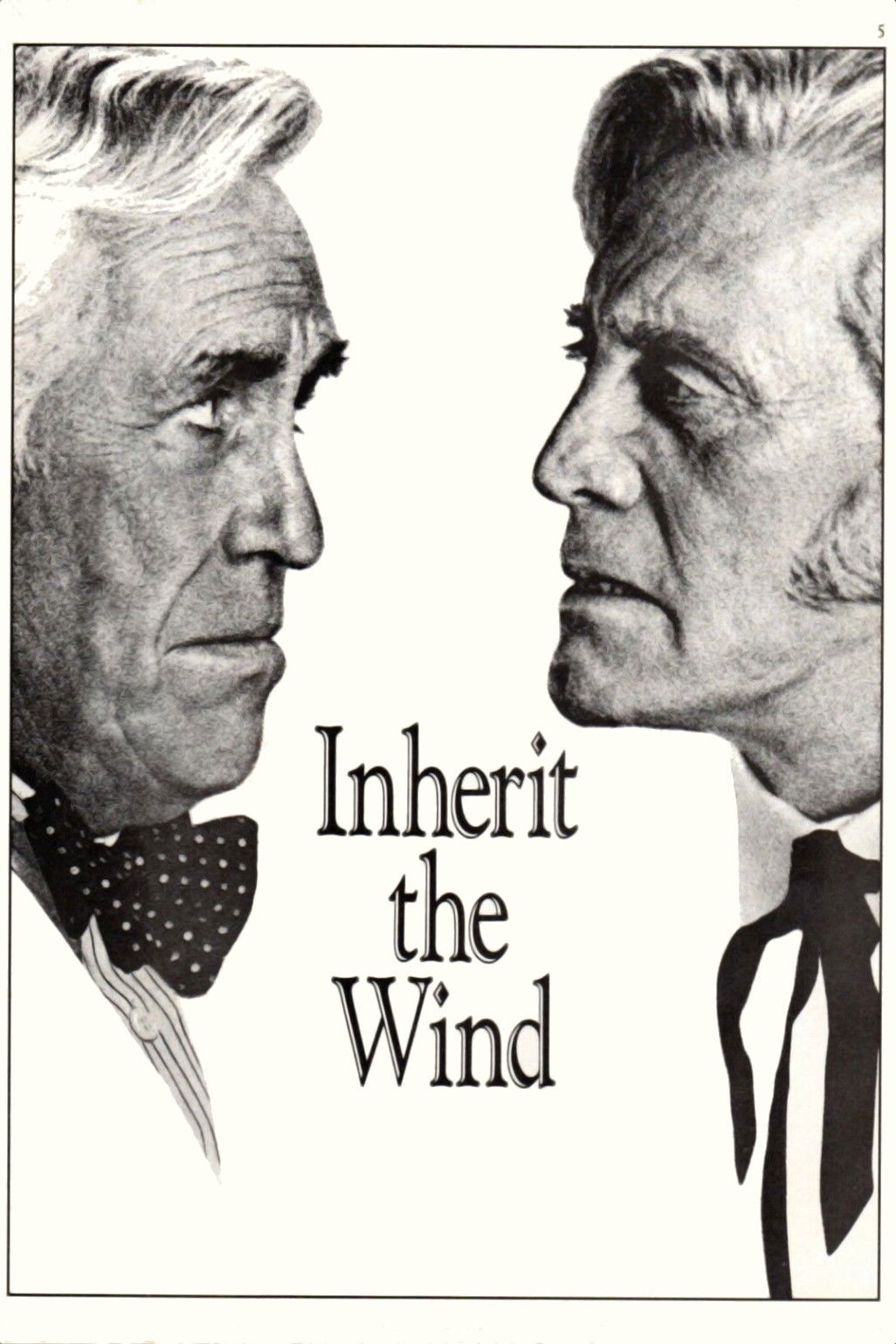
At some point in my adolescence, I realized that the most vital courtrooms weren’t made of wood and marble—they were conjured inside our own heads, where reason and faith battled for possession of our choices. Watching “Inherit the Wind” for the first time, I didn’t simply witness a historical drama; I saw an echo chamber for my own uncertainties and fascinations with the collision of ideas, the firestorm that erupts when society’s deepest values are put on trial. The film’s austerity drew me in, but it was the intellectual ferocity—each argument alive with conviction—that kept me riveted. There’s something deeply personal about observing a clash so definitive, so uncompromising, and realizing that on some level it’s a struggle each generation inherits.
The Tensions that Drive Inherit the Wind
For me, the soul of “Inherit the Wind” emerges not in its mere recounting of the infamous Scopes “Monkey” Trial, but in the emotional pressure cooker that envelops every character forced to choose between progress and certainty. The central conflict—a schoolteacher on trial for teaching Darwin’s theory of evolution in a small Tennessee town—acts less as a battle over curriculum and more as a crucible for understanding the cost of challenging tradition. I find the film’s emotional journey acute: we witness characters defending ideas that have shaped their personal sense of self and community, and risking excommunication, humiliation, or worse for daring to question the status quo.
What the film is really trying to say, in my view, is that the struggle isn’t about science or faith alone—it’s about the human yearning for dignity in the face of an overwhelming tide. Both sides of the courtroom cling to their beliefs as a lifeline, and the movie’s deeper inquiry is into the human cost of these ideological battles. The heartbreak of seeing a town turn on its own, the keen isolation of being a heretic, and the pressure to conform in order to belong—these are themes that haunt me long after the credits roll. The story becomes less about the letter of the law and more about the unwritten laws of belonging, decency, and survival.
Unpacking the Film’s Pressing Themes
Few films from 1960 so directly confront the anxiety at the heart of American identity. Themes of intellectual freedom, the fear of change, and the dangerous seduction of groupthink permeate every frame. What stands out most is the film’s raw exploration of what happens when institutional power is used not to protect knowledge, but to enforce ignorance. Watching today, I’m struck by the enduring relevance of these questions: Does society truly value the right to think for oneself, or is individuality an illusion when it confronts the collective will?
In the original post-McCarthy era climate, these themes must have felt electrifyingly subversive. The echoes of anti-intellectualism and moral panic, the manipulation of public opinion by demagogues—these were not distant problems, but daily realities in 1960. In my own time, the film hits another nerve: it subtly challenges us to ask what risks we are willing to take for truth, and whether progress is possible without a willingness to embrace discomfort. Watching “Inherit the Wind” is a reminder that the battle over ideas isn’t just historical curiosity—it’s a mirror of present anxieties, reflected through history’s lens.
Interpreting the Film’s Recurring Visual Language
One thing I admire is how Stanley Kramer deploys recurring visual motifs to emphasize the claustrophobia of dogmatic thinking. The stifling heat of the courtroom is rendered almost palpable; it seems every character is sweltering under the dual pressures of justice and public scrutiny. The ever-present ceiling fans, spinning fruitlessly as tempers rise, feel to me like symbols of ideas trapped in a closed loop, offering no true relief from the suffocating atmosphere.
Books are another motif that jumps out. They are passed gingerly, handled like dangerous contraband, and occasionally weaponized in debate. For me, this constant presence of books is a reminder that knowledge itself is on trial, a living entity that must be fought for and fiercely defended. In contrast, the steeple of the local church looming over the town is another persistent symbol, casting a long, stern shadow—almost as if challenging the Sun itself for dominion over daily life. To my eyes, the church isn’t merely a place of worship; it becomes a silent witness to the conflict, its authority never questioned, always assumed.
Moments Etched in Memory: Three Indelible Scenes
The Bible and Darwin Go Head to Head
The climactic courtroom scene where Spencer Tracy’s character grills Fredric March’s fundamentalist champion is, for me, one of American cinema’s sharpest confrontations. The cross-examination transforms into a writhing, public autopsy of faith versus reason—the tension radiating from Tracy, controlled yet relentless, while March’s bluster betrays moments of genuine vulnerability. In this moment, it’s impossible not to feel the pain and humiliation that comes when private beliefs are dragged into the harsh light of public spectacle. I always return to this scene as the film distilled to its most essential element: the desperate need to preserve one’s worldview against all odds.
When the Crowd Becomes the Mob
Another scene that resonates deeply involves the townsfolk parading and chanting outside the courtroom, brandishing banners and singing hymns. There is an almost carnivalesque joy mingled with violence; the collective fervor brings to life the film’s warnings about the dangerous transformation of individual conviction into mass hysteria. It’s chilling—watching as a community’s shared anxiety morphs into something predatory and all-consuming. This moment shows that oppression rarely arrives with villainous fanfare; more often, it sweeps in on the tide of familiar faces swept up in a cause.
Shadows in the Aftermath
Finally, I always linger on the closing moments, when the dust settles and we are left with quiet, defeated figures emerging from the empty courtroom. The weight of what has been lost is pronounced in the body language—shoulders heavy, gazes cast downward. The winner, if there is one, looks forlorn and exhausted, not triumphant. For me, this scene humanizes the cost of progress: even victories for justice leave scars, and the antagonists are rarely monsters but people broken by their own limitations.
How the Film is Often Read—And My Take
Much critical writing on “Inherit the Wind” frames it as a celebration of free thought and an earnest warning against religious fundamentalism. Many see it as a paean to the rational mind—a kind of secular sermon on the absolute necessity of open inquiry. While this assessment isn’t wrong, I find it a little too tidy for a film so haunted by ambiguity. What troubles me about the standard interpretation is that it risks reducing complex, deeply-felt convictions to caricature. I read the film as more than just a clarion call for reason; to me, it’s a tragedy of mutual misunderstanding, the sorrow that comes when dialogue transforms into trench warfare.
Where critics see martyrs and villains, I tend to see only flawed humans, each at the mercy of forces they only partly understand. The pain on both sides—the cost of being left behind and the agony of being ostracized for seeing the world differently—is palpable. For all its rousing rhetoric, the film’s true wisdom is in showing that no victory in these conflicts is ever total, and reconciliation, however elusive, should remain the goal.
Films Wrestling with Similar Questions
- To Kill a Mockingbird (1962) – Both films grapple with the individual’s fight for justice in the face of a community’s rigid values, using courtroom drama as a stage for deeper moral reckoning.
- 12 Angry Men (1957) – This film explores the dynamics of groupthink, prejudice, and the lonely struggle to uphold truth amid collective resistance—touchstones also central to “Inherit the Wind.”
- Judgment at Nuremberg (1961) – Another Kramer production, it interrogates the role of ideology and personal responsibility in the enforcement of unjust social codes.
- The Crucible (1996) – Adapted from Arthur Miller’s play, it dramatizes the destructive power of hysteria and ideological conformity, echoing the witch-hunt mentality that pervades “Inherit the Wind.”
Why the Film Still Matters
The questions posed by “Inherit the Wind” are only growing sharper in a world more divided than ever over fact, faith, and freedom. Modern viewers ought to approach the film not as a period piece, but as a living dialogue, alive with insights for any age that finds itself at war over the soul of education, science, and belief. If we recognize the humanity of those on each side—their fears, yearnings, and aspirations—the film broadens from polemic to plea. The true value, for me, is in learning to recognize ourselves in every face in that crowded, sweltering courtroom.
Related Reviews
If you found value in my perspective, you might also enjoy exploring my thoughts on other cinematic landmarks such as To Kill a Mockingbird and Judgment at Nuremberg.
To broaden this interpretation, you may also explore how critics and audiences responded over time.
🎬 Check out today's best-selling movies on Amazon!
View Deals on Amazon